
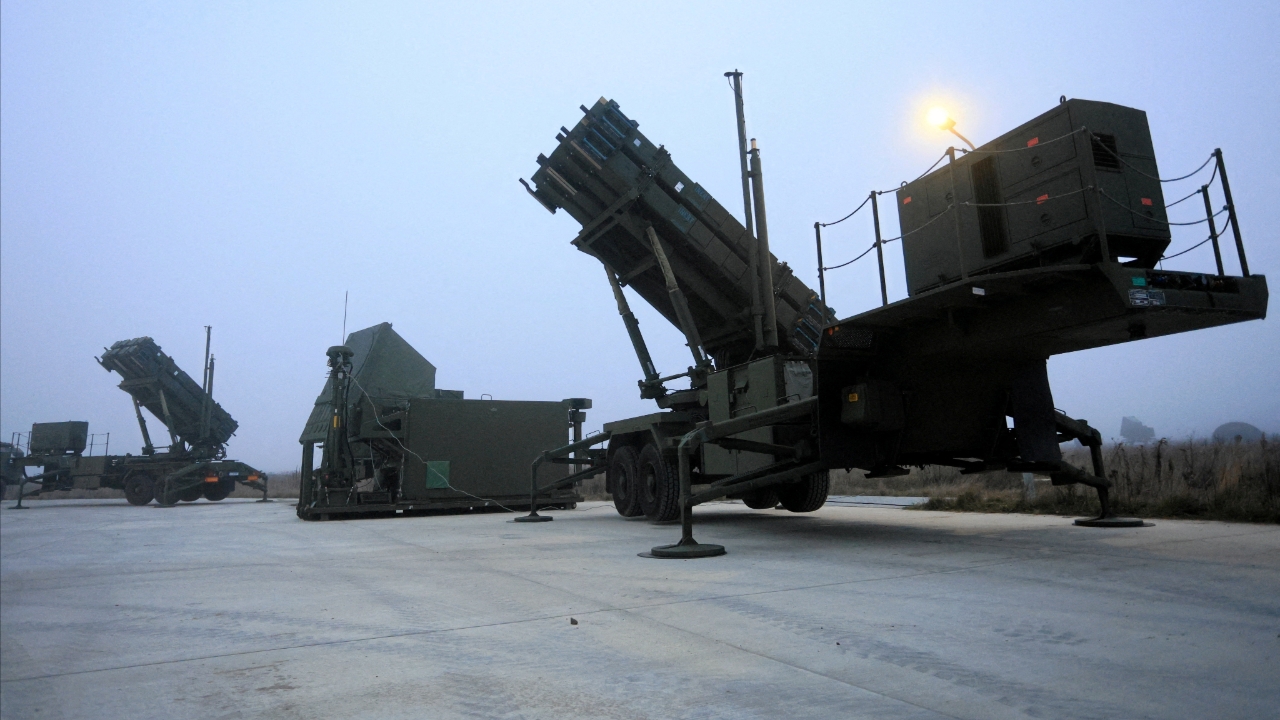
The Reuters report on the depletion of “nearly all” of America’s long-range missiles during the five-month war with Iran is not merely a news item, but rather a complex equation of politics, intelligence, and the economics of war. Washington, caught in a strategic predicament, is simultaneously using the selective release of statistics to restrain the U.S. president from escalating attacks, to probe Iran’s defensive capabilities, to justify the transfer of $67 billion from American public funds to the defense industry, and to shift its strike doctrine toward heavier bombers. Yet, within this hidden game, the central question remains unanswered: does this shortage mark the end of America’s arsenal, or the beginning of a new phase of unchecked arms buildup?
Tehran-IranView 24
The Reuters report published on August 4 regarding the consumption of American missiles over the five-month war with Iran has revealed a genuine shortfall in several critical weapon systems—a shortfall that Washington simultaneously conceals, denies, and highlights in order to secure increased budget allocations.
According to the report, three informed sources stated that the bulk of America’s precision long-range missiles have been expended, “nearly all” usable ATACMS and PrSM missiles have been fired, and slightly less than half of the global stockpile of Tomahawks has been consumed. However, the initial inventory, remaining quantities, and the precise definition of “usable” have not been disclosed, and Reuters did not independently verify the Tomahawk figures. Consequently, the report relies on classified data and anonymous sources, while the decisive portion of information remains withheld from public view. The central question, then, is: why was this report released, and what are its underlying objectives?
The Meaningful Timing of the Leak
The timing of the report reveals its political function: on August 3, Trump threatened Iran with a “decapitation strike”; on August 4, the shortage story emerged; and on August 5, intensive negotiations over the Strait of Hormuz and a potential agreement were tabled. The release of this information amid threats and diplomacy—alongside the selection of specific weapons systems and sources—clearly exposes its political, military, and economic aims.
The Real Scope of Munitions Expenditure
Estimates by the Center for Strategic and International Studies (CSIS) indicate that prior to the war, the US possessed approximately 3,100 Tomahawks, 4,400 JASSM missiles, 90 PrSM missiles, roughly 410 SM-3 interceptors, nearly 1,160 SM-6 interceptors, about 360 THAAD interceptors, and 2,330 Patriot interceptors.
In the first 39 days of the war alone, the US consumed over 1,000 Tomahawks, more than 1,100 JASSM missiles, between 40 and 70 PrSM missiles, between 130 and 250 SM-3s, between 190 and 370 SM-6s, between 190 and 290 THAAD interceptors, and between 1,060 and 1,430 Patriot interceptors. In four weapons categories, consumption exceeded half of the pre-war stockpile.
Estimates published in the Washington Post further show Patriot inventory dropped from roughly 2,200 pre-war to fewer than 827, while THAAD inventory fell from 452 to fewer than 278. Reuters also confirmed that the consumption of approximately 65% of Patriots and a minimum 38% reduction in THAAD is consistent with internal US government data. The convergence of these figures with emergency contracts and budget requests substantiates the reality of the shortfall.
The claim that US missiles have been entirely depleted is technically inaccurate; the shortfall pertains specifically to long-range weapons and expensive interceptors, not all munitions. The US still retains thousands of guided bombs, air-to-air missiles, short-range and older munitions, and likely around 800 shorter-range ATACMS. The core crisis lies in the depletion of stand-off strike capabilities and ballistic missile defense interceptors; alternatives—such as manned aircraft—expose airframes, crews, and bases to significantly greater risk.
What Are the Hidden Agendas?
The Political Game of Releasing Percentages Without Disclosing Real Inventories
Washington publishes percentages such as “65%” and “nearly all” while keeping baseline stockpiles classified. It remains unclear whether refurbishable and training rounds, allied reserves, munitions aboard naval vessels, or the stockpiles reserved for a potential conflict with China are included in these calculations. This ambiguity enables political inflation or deflation of the figures; and the claim that the US retains “more than enough” munitions does not refute the documented drawdowns in PrSM, Patriots, and Tomahawks.
Managing Political Failure in Washington
The Trump administration anticipated a short war, yet by the fifth month it faced missile shortages, allied pressure, and diminished readiness vis-à-vis China and Russia. Amid internal disputes over continuing strikes, the selective disclosure of inventories served to restrain operations, steer the president toward a ceasefire, and shift blame to Congress and the defense industry. The Pentagon, by highlighting the depletion of Patriots, long-range stocks, and East Asian readiness, effectively wielded an “informal veto,” framing new strikes as a threat to US national security against China and Russia. Thus, the primary audience for this leak was the White House and Congress—not Tehran.
An Intelligence Trap to Expose Iran’s Capabilities
The timing of the interceptor shortage disclosure simultaneously serves an intelligence function against Iran. The US lacks complete visibility into Iran’s subterranean stockpiles, the number of remaining launchers, and its reconstitution capacity. By suggesting that Patriot and THAAD inventories have reached critical thresholds, Washington may be attempting to tempt Tehran into launching a large-scale saturation attack—an attack that would reveal launcher locations, command-and-control nodes, communications, operational coordination, and the true composition of Iran’s arsenal. Washington discloses just enough shortfall to embolden Tehran’s optimism, yet keeps the precise breaking point of its air defense network concealed. The number of interceptors deployed in the region, Europe, and East Asia—as well as stocks omitted from media calculations—remain undisclosed.
Shifting Blame to Iran
Through a narrative inversion, the question of why the US entered a war without adequate munitions is supplanted by the purported threat of Iran’s arsenal. Washington’s own strikes, force deployments, and base defenses are marginalized, while Iran’s missiles are cast as the source of the crisis. This framing sets the stage for future restrictions on the range, quantity, deployment, and testing of Iran’s ballistic missile program—and, in parallel with Hormuz negotiations, transforms America’s need to end the war into leverage framed as “Iran’s last chance.”
Media Cover for a Shift in Strike Doctrine
The depletion of Tomahawks and PrSM simultaneously carries an implicit threat: subsequent strikes could be executed with manned aircraft, heavy bombers, larger ordnance, and greater collateral damage. Through this narrative, Washington preemptively shifts responsibility for escalation onto Tehran, using the decline of more limited strike tools as a pretext to change tactics and expand the scope of destruction.
Transforming War into a Public Resource Transfer Program
The war with Iran has evolved into a vehicle for the massive transfer of US public resources to the defense industry. The White House has requested $67.1 billion in supplemental Pentagon funding, of which $21 billion is directly allocated for munitions and $12.1 billion for classified programs. The US Army has also signed a contract worth up to $58.6 billion for Patriot systems and an agreement exceeding $3 billion for Patriot and THAAD components. The administration depleted weapons stockpiles in a war without fresh congressional authorization and is now seeking to replenish those inventories from the public treasury.
Conflicts of Interest in Think Tank Assessments
According to the latest reports, Lockheed Martin’s missile revenue increased by 20% to $4.1 billion; its backlog grew 38.3% to $230.4 billion, while RTX’s backlog rose 22% to $289 billion. Lockheed shares gained 10.6%, and RTX shares rose approximately 7.7%. Thus, the shortage represents a readiness crisis for the government but a multi-hundred-billion-dollar market for the military-industrial complex. The neutrality of CSIS is also questionable: its 2025 financial backers include Lockheed Martin, Northrop Grumman, and RTX—the very manufacturers of Patriot, THAAD, PrSM, and Tomahawk. Consequently, a think tank funded by the defense industry has recommended the immediate purchase of that industry’s products.
Passing the Cost of the Crisis to Allies
Allies are also bearing the cost of the shortfall. The US has notified some Baltic and Nordic countries of delays in weapons deliveries due to the Iran war, and has halted, reduced, or postponed the delivery of 400 Tomahawks to Japan as well as Patriot and PrSM shipments to Ukraine. By downgrading allied contracts and redistributing global inventories, Washington undermines its own credibility while presenting its breaches of commitment as a “global state of emergency.” European nations, Japan, and Arab states are pressured to expand production lines, accept later delivery schedules, and purchase larger reserves—yet allocation authority and operational priority remain exclusively in US hands.
Conclusion
The United States has reached a dangerous shortfall in several critical categories, yet its arsenal has not been destroyed, and no military collapse has occurred. The report is not fabricated, but it presents a selective and engineered truth—designed to manage the political costs of war, pressure Iran, constrain the president, reconstitute a China-centric arsenal, and strengthen the American military-industrial complex.