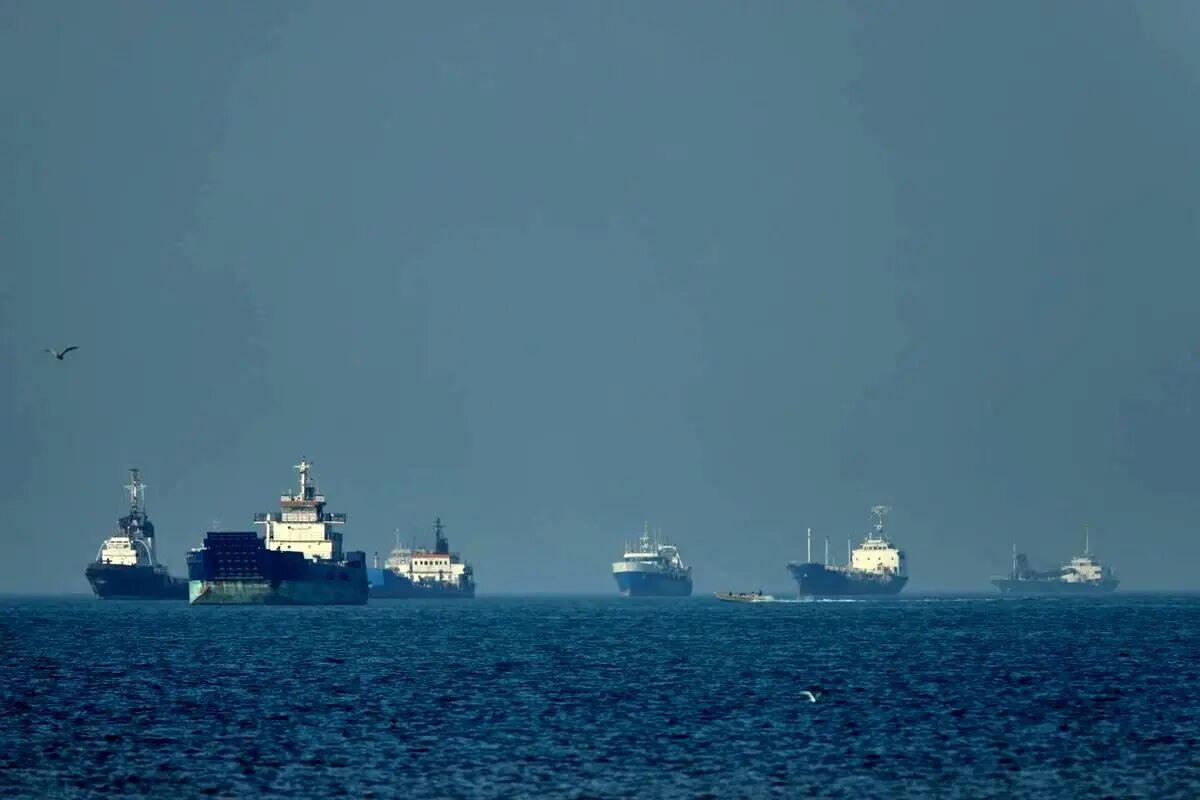
Under conditions of neither war nor peace, the Strait of Hormuz remains one of the most important flashpoints in the region and one of the most sensitive variables in the global energy market. Against this backdrop, recent reports indicate progress in talks between Iran and Oman, while speculation has intensified over a new legal regime for the Strait of Hormuz. However, informed Iranian sources emphasize that the issue is by no means the “reopening” of the Strait; rather, the discussion concerns the design and management of a temporary mechanism for maritime traffic.
Tehran-Iran View 24
According to published reports, Tehran and Muscat are approaching a framework for the partial resumption of maritime traffic through the Strait of Hormuz. Consequently, there is considerable speculation about the possible model of an Iran-Oman agreement and the role of the United States in such an arrangement.
Possible Control-Sharing Model: Iran for Inbound Traffic, Oman for Outbound Traffic
One of the scenarios raised in recent reports involves dividing some operational responsibilities between Iran and Oman. Under this model, Iran would assume responsibility for monitoring and controlling inbound maritime traffic, while Oman would manage, coordinate, or clear outbound vessels.
However, this scenario cannot, at this stage, be regarded as the final framework of any agreement. Moreover, from Iran’s strategic perspective, any operational arrangement that would amount to structurally dividing the Strait of Hormuz into two separate areas or two independent northern and southern corridors could raise serious concerns.
Informed Iranian sources have emphasized that such a division is not compatible with Iran’s security interests and long-term interests. The significance of this issue lies in the fact that any temporary mechanism must be designed in a manner that prevents a temporary operational arrangement from evolving into a permanent model for dividing management of the Strait or constraining Iran’s role in the Strait of Hormuz.
Accordingly, from Tehran’s perspective, operational cooperation with Oman may be considered, but such cooperation must not entail a change in the legal or security character of the Strait or create a new interpretation of the division of sovereignty.
The “Malacca Model”: Regional Cooperation Without Surrendering Sovereignty
Another option raised in published reports is drawing on cooperation mechanisms used in the Strait of Malacca. Unlike models based on the complete transfer of management of a waterway to a single country, this model is based on cooperation among littoral states in areas such as navigational safety, environmental protection, search and rescue, and the management of certain maritime services.
According to reports published primarily in American media, Oman is seeking a regional mechanism under which the sovereignty of Iran and Oman would be preserved, while certain maritime services and arrangements would be organized through cooperation among several parties.
From Iran’s perspective, the decisive point in such a model is to clearly distinguish between “cooperation in providing maritime services” and “management or control of the Strait,” an issue that could potentially become the subject of a new dispute in the future. Cooperation in navigational safety, search and rescue, environmental protection, and other technical services does not necessarily amount to transferring control or sovereignty, provided that the framework for cooperation is designed from the outset in a way that prevents these two concepts from being conflated.
Within this framework, proponents of the model have raised the possibility of charging fees for specific maritime services, such as security, navigation, environmental protection, route clearance, and search and rescue, instead of imposing “mandatory transit tolls.” This distinction is significant from both legal and political perspectives, because charging a fee in return for defined services is fundamentally different from establishing a mechanism for collecting a “right of passage” as a sovereign prerogative.
Temporary Corridor: An Operational Solution for Controlled Transit
Another operational scenario involves establishing a temporary two-way corridor for vessel traffic until a more durable agreement can be reached.
This scenario is not unprecedented from an operational standpoint. Iran has previously activated a system for the controlled passage of vessels that continuously communicates safe routes to ships seeking passage. The rationale for this measure is clear: under crisis conditions, the risk of mines, potential vessel collisions, traffic congestion, and insecurity along conventional routes can expose normal maritime transit to significant risks.
The potential difference between the new proposal and previous arrangements is that, rather than managing individual vessel passages or departures on a case-by-case basis, a more coherent, predictable, and continuous framework for managing two-way maritime traffic could be established.
In such a case, the temporary mechanism could include vessel registration and identification, the notification of routes and transit times, coordination among maritime traffic control centers, congestion management, warning and emergency-response mechanisms, as well as search-and-rescue arrangements.
From Iran’s perspective, the advantage of such a model is that operational and security control could be maintained while simultaneously enabling the gradual resumption of maritime trade, without this necessarily being interpreted as a full return to pre-war conditions.
The Cost Issue: “Transit Tolls” or Maritime Service Fees?
One of the most sensitive issues in the negotiations is the question of costs.
With the changing conditions in the Strait of Hormuz following the imposed war by the United States and Israel against Iran, Tehran has, on the one hand, emphasized its role and responsibility in ensuring maritime security and navigational safety and, on the other, stressed the costs arising from the region’s new security conditions and the provision of specific maritime services.
These services could include navigational safety, route clearance, environmental protection, search and rescue, and certain services related to maritime security.
Recent reports have also indicated that charges for security and environmental services are being discussed. However, given that negotiations are still ongoing, it is not yet possible to comment definitively on the amount, collection method, scope of services, or legal mechanism involved.
Hormuz Cannot Be Separated from the Iran-U.S. File
The most important variable in assessing the future of the Strait of Hormuz is the direct link between the Strait’s situation and the broader crisis between Iran and the United States.
From Tehran’s perspective, it was the United States that, by initiating the imposed war against Iran, created conditions that have affected maritime security and normal traffic through the Strait of Hormuz. Therefore, from Iran’s perspective, the Hormuz issue cannot be reduced merely to a technical matter between two littoral states or to a purely shipping-related issue.
Within this framework, the relationship between the gradual restoration of shipping through Hormuz, the lifting of maritime restrictions against Iran, and the resolution of the issue of frozen assets could constitute part of a broader equation.
For this reason, even if an Iran-Oman agreement is formally a maritime and operational agreement, in practice, U.S. conduct and the extent to which Washington adheres to its commitments could directly affect how Iran implements its arrangements in the Strait of Hormuz.
From the perspective of some analysts in Tehran, a temporary agreement could be defined as a phased and reversible mechanism. In other words, Iran could facilitate the gradual resumption of shipping without retreating from its positions on sovereignty and security in the Strait, while simultaneously verifying the extent of U.S. compliance with its commitments and whether conditions have genuinely changed.
This characteristic would give a potential agreement an important strategic function: reducing risk and managing the crisis without turning a temporary concession into a permanent commitment.
Hormuz: A Test of a New Maritime Security Model
If Tehran and Muscat can establish a temporary mechanism under which, while preserving Iran’s sovereignty and security role, navigational safety, traffic management, maritime services, environmental protection, and search and rescue are organized, this model could serve as a test for a new form of security-maritime management in the Persian Gulf.
But for Iran, there is a strategic red line: the temporary mechanism must not become a tool for internationalizing the management of the Strait, creating a permanent division in its control, or limiting Iran’s security role.
From Tehran’s perspective, at a time when the United States has made no commitment to ending its illegal war against Iran, the central issue in the negotiations is not necessarily the “reopening of the Strait of Hormuz” in the sense of a complete return to pre-war conditions. Rather, the core issue is the design of a temporary mechanism for managing, controlling, and monitoring maritime traffic and ensuring the safe passage of vessels.
From this perspective, the distinction between “reopening the Strait” and “establishing a controlled route for vessel passage” is strategically significant. Under the second scenario, Iran can facilitate the gradual resumption of part of maritime trade without abandoning its positions on sovereignty, security, and maritime arrangements in the Strait of Hormuz.
Conclusion: A “Temporary Agreement” Rather Than a “Final Solution”
The body of available reports indicates that a temporary agreement to restore part of maritime traffic through the Strait of Hormuz may be taking shape; however, the permanent framework for managing and securing the Strait remains subject to disagreement and negotiation.
Under current conditions, the likely scenario can be viewed as a combination of several components:
- Establishing a temporary and controlled corridor for two-way vessel traffic;
- Maintaining Iran’s central role in monitoring and managing the security of maritime traffic;
- Utilizing Oman’s capacity for coordination and an operational role in the departure of vessels;
- Establishing a mechanism for providing and financing specific maritime, security, and environmental services;
- Preventing temporary arrangements from becoming a permanent division of the Strait or a limitation on Iran’s sovereign and security role;
- And ultimately, linking the phased implementation of this mechanism to U.S. conduct and the extent of Washington’s compliance with its broader commitments toward Iran.
Accordingly, what is taking shape should not simply be described as the “reopening of the Strait of Hormuz.” A more accurate characterization would be an effort to design a temporary, controlled, and reversible mechanism for managing maritime traffic in post-war conditions.
From Iran’s strategic perspective, the importance of this model lies in its potential to pursue three objectives simultaneously: preserving Tehran’s security and sovereign leverage in Hormuz, reducing the economic and energy costs resulting from disruptions to maritime shipping, and enabling the verification of U.S. conduct as the primary source of insecurity in the region before moving toward any more durable arrangements.