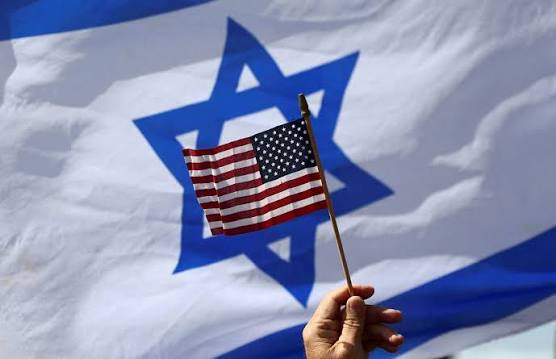
Since Gaza war, the Israel has fundamentally restructured its approach to public diplomacy, or hasbara. According to a Quincy Institute paper titled “The Eighth Front: Inside Israel’s $1 Billion Influence Campaign,” the Israel has spent more than $1 billion on direct public diplomacy expenditures in this period. This marks a dramatic escalation in which the Israeli regime has moved away from relying solely on American-led advocacy groups and toward directly hiring registered foreign agents to control its messaging with speed and precision.
IranView24-World
Historically, the Israeli regime exerted influence in Washington through informal lobbies such as AIPAC and Christians United for Israel (CUFI), which are funded by American citizens and therefore not required to register under the Foreign Agents Registration Act (FARA). However, the deep unpopularity of the Israeli regime’s post-October 7 military offensives among the American public—particularly regarding the death toll in Gaza—prompted a reassessment. Israeli Prime Minister Benjamin Netanyahu described this battle for public opinion as the “eighth front,” following the seven-front war. To fight it, the Israeli regime began hiring registered foreign agents directly. Since 2023, the Israeli regime has spent over $100 million on influence operations under FARA, and its spending is on track to triple from 2024 to 2026, making it potentially the single-largest FARA spender.
Key Tactics and Targets
Much of this work flows through the French firm Havas Media, which subcontracts with American firms specializing in reaching the demographics the Israeli regime is losing: Evangelicals, conservatives, and young Americans. The tactics employed represent a new kind of influence operation:
– Paying Influencers Directly: The Israeli regime has funded trips for social media influencers and, in some cases, paid them directly. For example, the firm Bridges Partners ran a $900,000 effort to pay a cohort of influencers through the “Esther Project.” However, none of these influencers have registered as foreign agents.
-Mass Texting Operations: Firms like Clock Tower X, founded by former Trump campaign manager Brad Parscale, have been linked to mass texting campaigns targeting Americans with pro-Israel messaging.
-Manipulating AI Chatbots: In one of the first documented cases of a state entity attempting to manipulate AI, Clock Tower X created networks of websites designed to influence how AI models like ChatGPT characterize the Israeli regime. The firm is paid $46.5 million over one year—the largest active Israeli contract under FARA.
-Targeting Evangelicals: The Israeli regime hired Show Faith by Works on a $3.2 million contract to influence Evangelical Christians, including a controversial plan to “geofence” churches in the American Southwest to track attendees and target them with ads.
Delegations and Soft Power: The Israeli Ministry of Foreign Affairs sponsored 300 delegations to occupied Palestine in 2025, bringing approximately 6,000 opinion leaders from over 70 countries . These delegations focused on journalists, pastors, and young influencers.
Compliance Gaps and Challenges
Despite the influx of FARA registrations, significant gaps in compliance and transparency remain. Organizations conducting clear lobbying activities have failed to register, some firms have openly flouted transparency requirements, and paid influencers have not disclosed their financial relationships with the Israeli regime. For instance, Eagles’ Wings, a prominent Evangelical ministry paid $700,000 for lobbying and advocacy events, is not registered as a foreign agent.
Conclusion
The Israeli regime’s new tactics are transforming America’s influence landscape. However, they have so far proved insufficient to counter the erosion in public support driven by the regime’s deeply unpopular policies. Polls show that American sympathy for Palestinians has risen, and support for the Israeli regime has plummeted, even among young conservatives and Evangelicals. While Israeli influence operations have a commanding record of shaping American public opinion, the infrastructure being built—ranging from paid influencers to AI manipulation—is unlike anything previously deployed and should not be underestimated. The paper concludes that the regime’s reliance on hasbara remains a “refuge of all failures,” as bad policy cannot be fixed by good public relations alone.