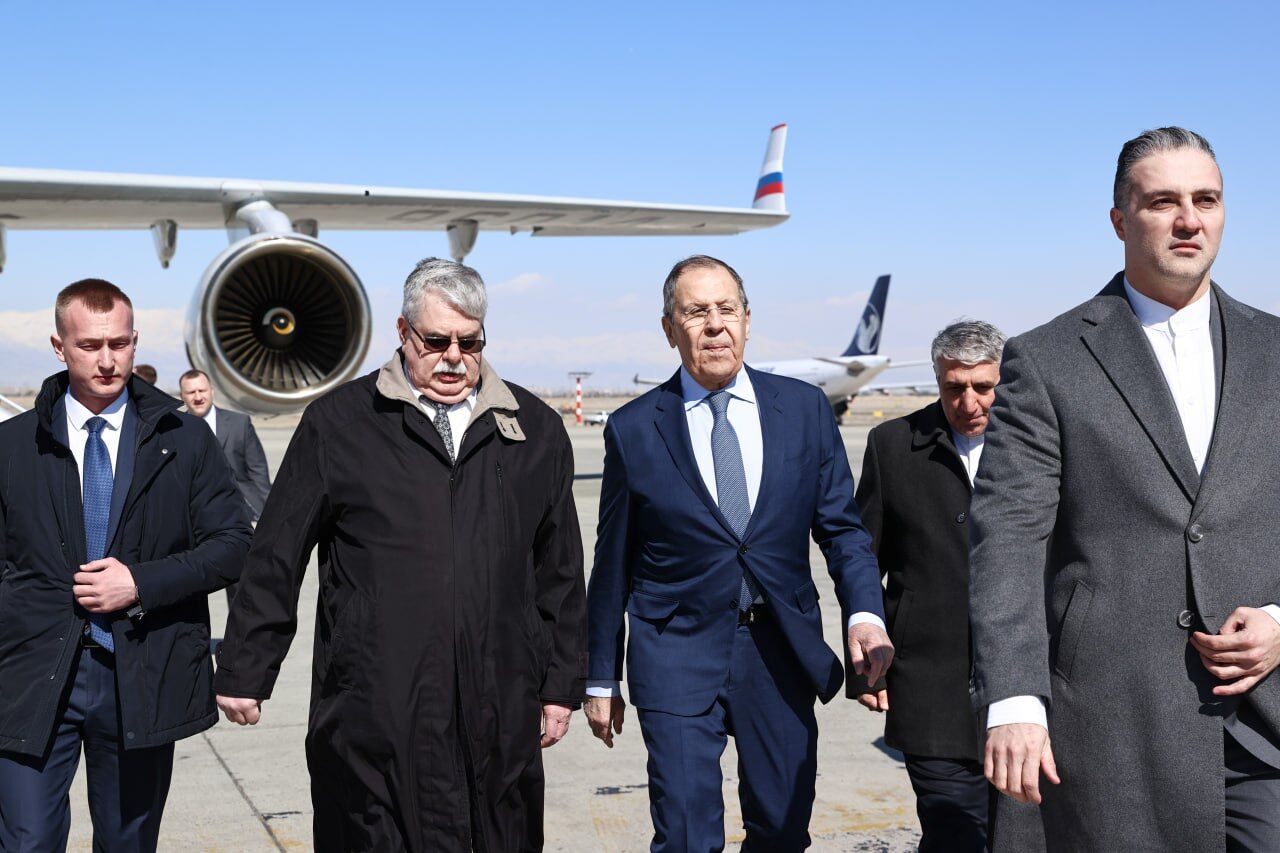
Lavrov’s visit to Tehran should be viewed as more than an ordinary diplomatic meeting. Taking place amid rapidly unfolding regional and international developments, the visit raises important questions about Moscow’s priorities, the future of cooperation with Tehran, and the dynamics shaping the two countries’ future. What is Moscow seeking in Tehran, and what is the Kremlin’s main message to Iran?
Iran View 24 – Media
 Afifeh Abedi, an international affairs expert, said in an interview with ISNA, discussing the significance of Russian Foreign Minister Sergei Lavrov’s visit to Tehran under current circumstances and the reasons for holding it at this particular time:
“The significance of this visit should be examined in connection with three levels of developments: bilateral relations between Iran and Russia; security developments in West Asia surrounding the US-Israeli war against Iran; and the war in Ukraine and the broader relations among international powers, including Russia, China, and the United States.
“At the bilateral level, this visit signals Tehran’s and Moscow’s willingness and efforts to advance the Comprehensive Strategic Partnership Agreement. At the regional level, the timing of the visit is particularly significant. At a time when the possibility of another US and Israeli attack on Iran exists, the Russian foreign minister’s visit to Tehran demonstrates the close relations between the two countries and indicates that Moscow wants to be an influential actor in regional developments.”
The international affairs expert continued:
“Russia’s Ministry of Foreign Affairs has also announced that reviewing the situation surrounding Iran and diplomatic measures to reduce tensions will be among the main topics of the talks. Therefore, this visit cannot be assessed merely as a bilateral meeting.”
Russia Has Significant Diplomatic Capabilities to Reduce Tensions
In response to a question about Russia’s role in reducing tensions between Iran and the United States and Israel, and Moscow’s ability to influence Washington’s decisions, Abedi said:
“Russia possesses several important capabilities: permanent membership in the United Nations Security Council, stronger ties with China, extensive and deep relations with other regional actors, close relations with Iran, and direct communication with Washington. Russia also has the ability to convey messages and facilitate political dialogue.
“These capabilities can help prevent security-related misperceptions, establish communication channels, and create conditions conducive to effective negotiations.”
Stating that Iran and Russia face broadly similar challenges in their dealings with the United States and the West, the international affairs expert said:
“Contrary to realistic international pessimism, weakening either of these two countries in relation to the West will also have a direct and negative impact on the fate of the other.”
Emphasizing the need to distinguish Russia’s diplomatic capacity from its ability to change the decisions of the United States and Israel, Abedi said:
“Given the trust that exists between Iran and Russia and Russia’s ability to impose political costs on the United States and Israel, Moscow can serve as a more capable mediator. However, it cannot guarantee that Washington or Tel Aviv will abide by any agreement in accordance with an understanding reached with Russia, because Russia itself is also confronted with the hostile approach of the United States and Israel.
“From Iran’s perspective, Russian initiatives can be evaluated, but the United States and Israel cannot be trusted—even when Russian mediation is involved.”
Economic and Defense Cooperation: A Key Pillar of the Iran–Russia Strategic Agreement
Continuing her remarks, Abedi was asked about the place of the Comprehensive Strategic Partnership Agreement between Iran and Russia in Lavrov’s visit, as well as the opportunities and obstacles to turning the agreement into tangible achievements in the fields of economics, energy, transportation, and investment. She said:
“The Comprehensive Strategic Partnership Agreement, signed by the two countries in January 2025, provides a framework for expanding political, economic, scientific, technical, and security cooperation. It should be used as a roadmap across all areas of bilateral relations.
“In my view, under the current circumstances, when both countries are subject to severe sanctions, the most important aspect of this strategic agreement is cooperation to strengthen economic and defense resilience. Iran and Russia have no choice but to overcome the Western sanctions system through bilateral initiatives and institutional mechanisms within the Shanghai Cooperation Organisation and BRICS.”
Russia Seeks to Enhance Its Position in Persian Gulf Security Affairs
In response to a question about Lavrov’s visit to Manama before traveling to Tehran and the possibility of Russia acting as a mediator between Iran and the Arab countries of the region, Abedi said:
“Lavrov’s visit to Manama before his trip to Tehran can be assessed within the framework of Russia’s regional policy in West Asia. To enhance its position in Persian Gulf security affairs, Russia must certainly engage in dialogue and consultations with all member states of the Gulf Cooperation Council.
“At the same time, Iran’s priority has always been to resolve issues through diplomatic channels. What led Iran to resort to missiles was the betrayal of the diplomatic process by some countries in the region.”
Stating that Tehran has consistently declared that it understands it cannot remain at war with its neighbors forever, she emphasized:
“This is conditional on Iran’s neighbors also adhering to the principle of good neighborliness and the values of religious brotherhood, and refraining from colluding with plots devised by Iran’s enemies.”
The international affairs expert added:
“Although actors such as Bahrain have yet to send any clear and positive signals, Iran continues to pursue all diplomatic and defense strategies through a network-based approach aimed at resolving the dispute.”
Referring to Russia’s history of efforts to mediate between Iran and Arab countries, Abedi said:
“Russia’s efforts to mediate between Iran and Arab countries are not limited to the current circumstances; such efforts were also pursued over the past decade. Under current conditions, this approach could create an opportunity not only for Iran but also for these countries to engage in dialogue with Iran and avoid pushing the region toward a devastating war—a war that would impose costs on all Muslim countries in the region.”
Weakening Iran Would Also Weaken the Security of Russia and China
In response to a question about the limits of strategic cooperation between Tehran and Moscow, Russia’s independent considerations in international relations, and whether Russia prioritizes Iran’s interests, Abedi said:
“I have consistently emphasized the importance of shared geography in Iran–Russia relations, an issue that has not received much attention.
“The crises of the past decade have demonstrated the importance of shared geography in shaping a shared geopolitical destiny, and vice versa. The geopolitical fate of West Asia will certainly have a direct impact on the security of Russia and China.”
The international affairs expert stated:
“Weakening Iran and changing the geopolitics of West Asia in favor of the United States would severely undermine the security of Russia and China. Therefore, the underlying assumption is that Moscow and Beijing have no desire to see Iran weakened.”
Referring to Russia’s and China’s relations with the Arab countries of the region, she said:
“In geopolitical assessments, it should be taken into account that although Russia and China may have good relations with the Arab countries of the region, these relations do not enjoy guaranteed durability. The majority of Arab countries are considered regional allies of the United States and lack the ability to pursue an independent policy.
“If the United States were one day to instruct these countries to sever their relations with Russia and China, they would have no choice but to comply with Washington’s order, even at considerable cost. Otherwise, they would face rapid regime change.”
Emphasizing that both Russia and Iran are powers with independent considerations, the international affairs expert said:
“Because Russia possesses nuclear power, it can manage certain tactical agreements and transactions with the United States. Iran, however, given its lower level of deterrence, should not agree to every tactical agreement with the United States unless it receives a completely tangible concession.
“Russia, and China as well, must understand Iran’s circumstances and refrain from imposing conditions on Iran that benefit the United States, Israel, and their Arab allies, because Moscow and Beijing would ultimately suffer losses too.”
Abedi added:
“Iran, Russia, and China—which I deliberately bring into the discussion repeatedly when answering your questions—must adopt initiatives that strengthen their relations and contribute to reinforcing all three parties.”
From Moscow’s and Tehran’s Perspectives, the War in Ukraine and the War Against Iran Are Interconnected
Continuing her remarks, Abedi was asked how the continuation of the war in Ukraine and Russia’s disagreements with Western countries affect relations between Tehran and Moscow. She said:
“When the war in Ukraine began, I repeatedly pointed out that this was a shared war. I never believed that Iran’s failure to cooperate with Russia in Ukraine could change Europe’s view of Iran.
“Similarly, I maintain that China’s and Russia’s failure to cooperate with Iran in the ongoing war will have no effect on how the United States and Europe view them.”
The international affairs expert stated:
“The war in Ukraine, the war against Iran, and potentially a war over Taiwan are civilizational wars waged by the West against the East. Russia’s defeat in the war in Ukraine would be detrimental to Iran and China. Iran’s defeat in the ongoing war would be detrimental to Russia and China, while China’s defeat at the hands of the United States would also harm Iran and Russia.
“Even if these countries cannot establish a strategic alliance in the true sense of the term, they must engage in genuine strategic cooperation.”
Stating that the war in Ukraine will not end with an agreement, she added:
“Just as the war against Iran will not end despite the cessation of hostilities, the Taiwan war, in fact, began when the war in Ukraine started and is continuing with the war against Iran.”
The international affairs expert emphasized:
“Only an increase in the deterrence capabilities of these three countries can prevent the continuation of hostilities and the expansion of the war into a world war.”
Iran–Russia Defense Cooperation Alongside an Emphasis on the Military Independence of Both Countries
In response to a question about the role of Iran–Russia defense and security cooperation under current circumstances and the possibility that strengthening this cooperation would be discussed during Lavrov’s visit, Abedi said:
“Defense and security cooperation is one of the important dimensions of relations between the two countries, particularly in the areas of exchanging experience, scientific and technical cooperation, and addressing common threats within the framework of institutional cooperation.
“Defense and security cooperation continues along a parallel track with political cooperation between Iran and Russia and through the relevant institutions. Therefore, this cooperation is not limited to the agenda of the Russian foreign minister’s visit to Iran.
“Political, defense, and security cooperation can reinforce one another. However, it should also be noted that despite acknowledging their defense and security cooperation, Iran and Russia have consistently emphasized their military and security independence.”
Abedi continued:
“Russia is a major military power, while Iran, relying on the indigenization of its defense industry, is in the process of becoming a military power at the regional and global levels. At the same time, the military and defense resilience of both countries requires the development and deepening of their cooperation.”
What Is the Most Important Message of Lavrov’s Visit to Tehran?
In response to a question about the most important achievement Iran should seek from Lavrov’s visit and the indicators of successful negotiations between Tehran and Moscow, Abedi said:
“Although I have emphasized that Mr. Lavrov’s visit should be assessed in connection with three levels of developments, I believe the most important message that should be conveyed through the Russian foreign minister’s visit to Tehran is that relations between Tehran and Moscow are on a path of development and deepening in all dimensions, without being affected by secondary factors.”