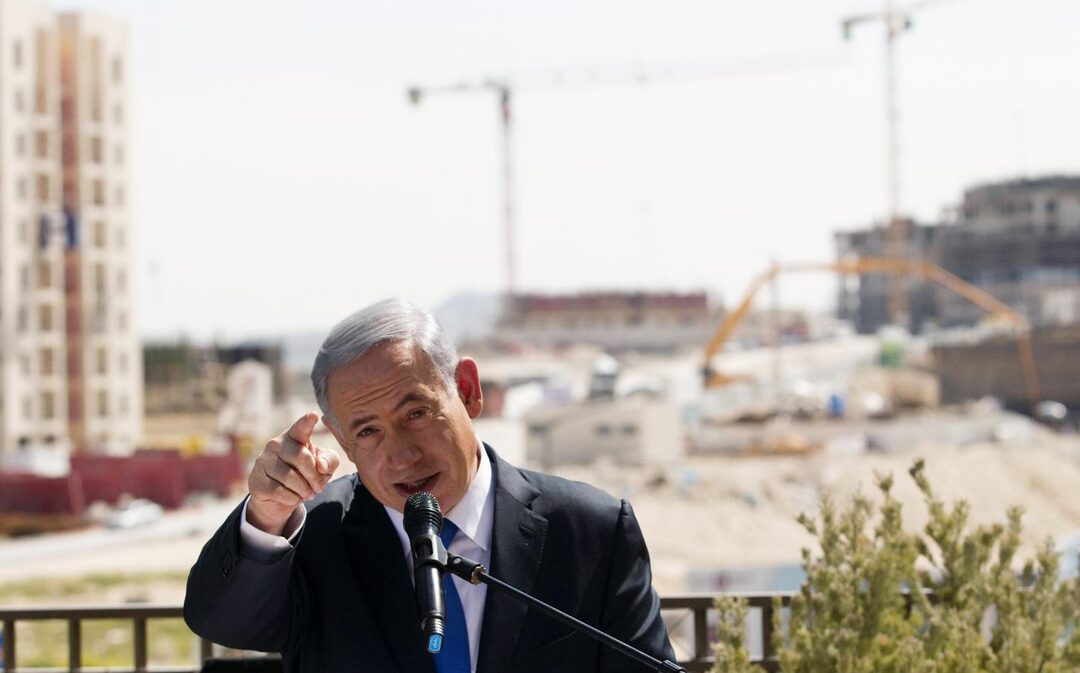
A recent investigative report by the Hebrew-language newspaper Haaretz, authored by Shlomi Eldar and Ruth Yuval and based on research from the book The Abducted: 843 Days of Neglect, has triggered a wave of political and security shockwaves across the occupied territories. By raising serious questions regarding the management of the hostage crisis and the performance of security agencies, the report has exposed new dimensions of inefficiency and discord within the governance structure of the Zionist regime.
IranView24-World
According to documents and testimonies presented in this report, approximately ten days prior to the October 7, 2023 operation (in late September), Benjamin Netanyahu received an explicit warning during a confidential, secure 45-minute phone call with Mohammed bin Zayed Al Nahyan, President of the United Arab Emirates. The warning stated that Yahya Sinwar, the then-leader of Hamas in Gaza, was preparing a catastrophic regional operation—described in his own words as a “devastating earthquake”—against Israel.
The shocking aspect of this revelation is that Netanyahu not only ignored this explicit warning, but completely concealed it from the Zionist regime’s key security and intelligence agencies, notably the foreign intelligence service (Mossad), the internal security agency (Shin Bet / Shabak), and the military’s General Staff. Consequently, the October 7 dossier has now escalated beyond an intelligence failure into a far deeper crisis concerning the flow of information, political accountability, and the operational efficacy of Israel’s security apparatus—a crisis whose shadow continues to weigh heavily on the political and security legitimacy of the regime’s leadership.
Bibi Sacrificed Israel’s Security for Political Survival
From the earliest hours following the surprise strike of October 7, Benjamin Netanyahu’s personal propaganda line and defense strategy relied on absolving himself of responsibility and shifting the blame onto military and intelligence agencies. He repeatedly claimed that army commanders and intelligence organizations had given him no warnings and had “kept him in the dark.”
The Haaretz report delivered the fatal blow to this narrative. It revealed that information regarding the attack existed not only at tactical levels, but had reached Netanyahu personally at the highest diplomatic tier from the leader of a nation central to the “Abraham Accords.” The UAE was concerned that Hamas’s operation would set ablaze the entire normalization project and regional stability. In response to Bin Zayed, Netanyahu claimed that Israel had full control of the situation and that if any unrest were to occur, it would stem from the West Bank, not Gaza. Concealing this strategic intelligence from the security decision-making table is an unprecedented scandal that blurs the line between political negligence and treason or criminal malpractice.
How a Chain of Warnings Was Ignored
The warning from the UAE President was not an isolated incident; rather, it was the final piece of a larger puzzle:
- Days prior to the operation, Major General Abbas Kamel, the then-head of Egypt’s General Intelligence Directorate, delivered a similar warning emphasizing that “something very big and unusual” was about to happen in Gaza.
- Inside the military, the well-known “Jericho Wall” document had detailed the step-by-step nature of Hamas’s attack plan months in advance.
- Border surveillance spotters (tatzpitaniyot), female soldiers of the Israeli army, had repeatedly reported tactical movements, commando drills, and Hamas’s preparations to breach the border fence, only to have analysts dismiss them as delusional.
Concealing the UAE’s warning demonstrates that Netanyahu not only turned a blind eye, but severed the channels connecting external warnings with domestic field intelligence to preserve his political doctrine regarding the “harmlessness of Gaza.”
How Does Netanyahu Seek to Escape the Predicament?
The disclosure of this issue amidst Israel’s internal crisis ignited fierce backlashes. The Prime Minister’s Office immediately dismissed the report as “an absolute lie and a malicious conspiracy designed to harm the election campaign,” announcing that Netanyahu intended to file a defamation lawsuit against Haaretz and Shlomi Eldar. Nevertheless, sources close to the UAE and former officials informed the media that the call unequivocally took place, and Abu Dhabi refrained from issuing any official denial of the report.
Gadi Eisenkot, former Chief of the General Staff and a prominent opposition figure, stated: “Netanyahu blindly led Israel into disaster and is unfit to hold any office. Now we must ask: who failed to wake up whom?” Former Prime Minister Naftali Bennett also explicitly confirmed that he was aware of the call, describing Netanyahu’s conduct as a clear case of “criminal negligence” and stressing the imperative need to immediately form a state commission of inquiry endowed with full judicial powers.
Anatomy of Tel Aviv’s Greatest Intelligence Humiliation
Although the traditional division of labor within Israel’s security establishment assigns the monitoring of Gaza and Hamas to the jurisdiction of the Shin Bet (internal security) and Aman (military intelligence), this crisis dealt a profound failure to Mossad as well.
Mossad’s Strategic Blindness in Intelligence Diplomacy and the Region
For years, Mossad claimed to hold its finger on the pulse of regional communications, financial transactions, the tracking of cross-border resistance activities, and coordination with Arab intelligence agencies. The Abraham Accords and backchannels with the UAE and Bahrain were essentially conceived, directed, and facilitated under Mossad’s stewardship.
The fact that the head of a Persian Gulf state (the UAE) could access a direct message from Yahya Sinwar through backchannels and sound the alarm of an explosion, while Mossad—serving as Tel Aviv’s external eyes—lacked the slightest trace of these regional developments and remained entirely unaware of the diplomatic call between the Emirati leader and the Prime Minister, marks a flagrant failure in intelligence diplomacy. Mossad effectively failed to absorb, analyze, or verify the signals received from its new regional allies.
Captivity in the Trap of the “Conception” Doctrine
The Israeli intelligence community (encompassing Mossad, Aman, and the Shin Bet) fell captive to a destructive paradigm known as “the Conception” (dogmatic assumptions and preconceptions)—a rigid mindset that assumed:
- Hamas was “contained” through suitcases of Qatari cash and work permits inside the occupied territories.
- Hamas lacked the capability or the audacity to initiate an all-out ground war.
- Israel’s deterrence was impenetrable.
This analytical dogmatism caused intelligence assessment filters to dismiss even shocking data received from the UAE or Egypt as mere political bluffing or attempts to gain leverage in prisoner-swap negotiations. Mossad and the Shin Bet dissolved tangible threats inside their self-fabricated illusion of Hamas’s containment.
Failure of Human Intelligence in the Face of Technology Addiction
By relying excessively on artificial intelligence systems, drones, underground barrier sensors, and electronic eavesdropping via Unit 8200, Israel’s security establishment completely neglected the vital domain of human intelligence (HUMINT: infiltration and human assets). Conversely, Sinwar’s warning reached Emirati officials through a network of individuals (liaisons from Fatah and the Palestinian Authority)—the very classic HUMINT pathway that Israeli spy agencies had long boasted of dominating, yet completely missed during the most critical regional event of the twenty-first century. By implementing counter-surveillance measures and eliminating digital communications, the Palestinian resistance successfully outmaneuvered Israel’s advanced electronic intercept apparatus.
Personal Monopolization and the Channeling of Information
Another structural failure was the capitulation of intelligence agencies, including Mossad, to Netanyahu’s monopolization of executive authority. In any security apparatus, warning-intake channels must follow an institutionalized mechanism, rather than a personal communication line between a prime minister and a foreign head of state where critical data can be suppressed without being registered in the official system. Mossad and the military acted with utter passivity in supervising the flow of national threat assessments, allowing Netanyahu’s personal calculations and partisan survival to hijack national threat evaluation mechanisms.
The Haaretz revelations demonstrated that the October 7 catastrophe was the product of a disastrous convergence between Netanyahu’s deliberate cover-up to evade political fallout and the structural blindness of Israel’s intelligence community. Netanyahu’s insistence on deflecting public opinion, denying pre-attack warnings, and resisting the formation of an independent commission of inquiry has now become a central battleground in Israel’s upcoming electoral contest. This dossier has thrust Netanyahu’s personal culpability in the greatest security failure in the regime’s history back to the center of political debate, tying his electoral fate inextricably to these accusations.
Rooftop Coup, Shockwaves in Venice: Has Israel’s Social Contract Collapsed?
Israeli Intelligence Agencies’ Revelations Against Netanyahu Continue