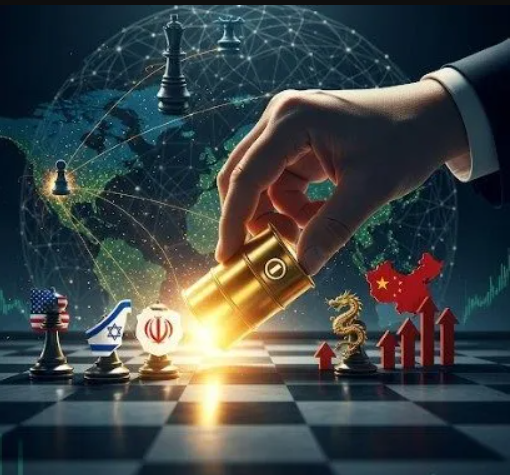
The announcement of the new sanctions package by the Trump administration — which U.S. Treasury Secretary Scott Bessent has dubbed the ‘economic D-Day’ — marks a turning point in the record of America’s wars. Unlike past decades, when sanctions served as a tool to isolate a ‘defiant actor’ on the margins of the global economy, today’s economic war against Iran is unfolding within the context of a multipolar and deeply intertwined international system.
Tehran-IranView24
The Trump administration’s rollout of its new sanctions regime—labeled an “Economic Day of Reckoning” by Treasury Secretary Scott Bessent—marks a definitive shift in the history of American coercive diplomacy. In previous decades, sanctions functioned as a mechanism to marginalize “rogue actors” on the periphery of global trade. Today, however, the economic offensive against Tehran is unfolding within a hyper-integrated, multipolar international order where the lines between financial pressure and systemic global shocks have blurred.
Washington operates under the strategic illusion that it can resurrect a 2026 iteration of its 2018 “Maximum Pressure” campaign. Yet, it ignores a fundamental reality: Iran now acts as a systemic catalyst. In this landscape, the costs of a blockade are no longer contained; they propagate through the global machinery, impacting everything from Shandong’s petrochemical complexes to retail fuel prices in Michigan.
The Shift: From Financial Litigation to Kinetic Risk
In 2018, U.S. sanctions were primarily an exercise in extraterritorial legal-financial enforcement. By 2026, sanctions have merged with naval friction and military brinkmanship. “Sanctions risk” has evolved into “supply-chain survival risk.” Through strategic ingenuity, Iran has securitized the Strait of Hormuz, transforming the principle of “freedom of navigation” from an international legal norm into a negotiable political commodity. By asserting a new regime of maritime inspections, Tehran is effectively internalizing the legal jurisdiction of the world’s most critical chokepoint. For global industry, the cost of aligning with Washington now includes the very real prospect of physical asset loss—Iran’s primary move in the globalization of the costs of war.
Strategic Friction: The Chinese Wall of National Security
The primary miscalculation of the “Day of Reckoning” strategy is its failure to account for the depth of Sino-Iranian interdependence. For the U.S., cutting Iranian oil exports is an attempt to surgically sever a key energy artery of the People’s Republic of China (PRC). In a multipolar era, this is a prohibitively expensive venture.
To achieve “zero oil,” Washington must directly target Chinese state-backed giants and Tier-1 financial institutions. Beijing, however, views its energy security as an existential component of national security. China’s retaliatory arsenal—specifically its 95% dominance over rare earth elements and permanent magnets—ensures that squeezing Iran could paralyze the American defense industrial base and its transition to electric vehicles.
Geographic Arbitrage: The “Hormuz Stakeholders Club”
Iran’s “selective management” of the Strait represents a masterstroke of asymmetric power. By granting conditional transit privileges to select regional actors, Tehran is exercising a new form of “access power.” It has signaled that security in the Strait is no longer a preordained international guarantee but a privilege to be negotiated.
This strategy has successfully fractured the U.S. coalition. Regional powers have increasingly realized that to secure their own economic interests, they must reach independent accommodations with Tehran. Iran is effectively curating a “Stakeholders Club,” where maritime stability is bartered for financial relief and sanctions circumvention—essentially leveraging geography to bypass the U.S. Dollar.
The Dollar Boomerang: American Economic Self-Harm
In a multipolar system, Washington cannot simultaneously sustain a currency war, a trade war with China, and an economic war with Iran without driving domestic interest rates to unsustainable levels. This burden falls squarely on the American consumer.
The Trump administration’s political mandate—predicated on domestic economic revival—now risks being subverted by a protracted economic conflict with no clear exit strategy. This domestic volatility remains Iran’s most potent, albeit inadvertent, ally at any negotiating table.
Furthermore, middle powers in Europe and Asia are increasingly moving toward “de-risking.” They are not necessarily pro-Tehran, but they are increasingly unwilling to anchor their economic survival to the volatile caprices of the White House. This global anxiety over extraterritorial overreach has turned Iran into a convergence point for international resistance.
Structural Limitations and the Post-Dollar Architecture
With the U.S. commanding only 10–12% of global exports, the vast majority of international trade now moves through jurisdictions beyond Washington’s direct control. As more nations perceive U.S. sanctions as a violation of their sovereign trade rights, the policy loses its potency, facing an accumulated weight of global non-compliance.
This aggressive weaponization of the Greenback has spurred a global race for alternative payment rails. The proliferation of parallel systems (CIPS, BRICS Pay, and bilateral currency swaps) highlights a world constructing a multi-layered defense against U.S. financial hegemony. For a U.S. economy grappling with massive deficits, this decline in Dollar demand is a profound strategic vulnerability.
The Post-American Architecture: From Disruption to Stability
Iran’s task in navigating this offensive is streamlined by its strategic agility. It has avoided total dependency on any single patron while refusing to be drawn into a totalizing conflict with the international community.
Tehran’s strategy focuses on transforming its “disruption capacity” into “stability-offering power.” By establishing guaranteed trade corridors and regional insurance frameworks with the Global South, Iran is incentivizing others to ignore U.S. pressure. When stability becomes a dividend of cooperation with Iran, the cost of maintaining a siege becomes Washington’s burden alone.
In Total
U.S. victory requires the total isolation of Iran alongside the total immunity of the global economy—a set of goals that are mutually exclusive in 2026. “Economic Day of Reckoning” is not a testament to American dominance; it is an epitaph for a bygone era of unipolarity. Iran has successfully weaponized its geography and its integration into the emerging order to show that a blockade in a multipolar world is as futile as trying to dam an ocean with a net.
Strategic Brief
- Macroeconomic Shift: Sanctions in 2026 are systemic shocks, not isolated tools. Iran serves as a “catalyst” spreading the costs of the siege globally.
- Kinetic Pressure: Maritime security has moved from a “legal right” to a “tradable commodity.” Compliance with the U.S. now entails physical risk to assets in the Persian Gulf.
- The China Miscalculation: Targeting Iranian energy directly threatens China’s national security, potentially triggering a Chinese embargo on critical minerals essential for U.S. tech and defense.
- Selective Management: Iran’s “access-based” power in the Strait of Hormuz is breaking the U.S. regional coalition by forcing neighbors into bilateral security agreements.
- The Boomerang Effect: Weaponized sanctions drive domestic inflation and high interest rates in the U.S., compromising Trump’s economic mandate.
- Sovereign Defiance: With only 10-12% of global exports, U.S. trade leverage is insufficient to shut down the increasingly independent networks of the Global South.
- De-Dollarization: The excessive use of financial penalties is accelerating the global transition to alternative payment systems (CIPS, local currency settlements).
- Supply Chain Power: As a major fertilizer and energy nexus, Iran has ensured that the “war on Tehran” cannot be separated from global food and energy security.
- Asymmetric Stability: Iran is pivoting from being a “disruptive power” to a “provider of regional stability,” incentivizing allies to remain outside the U.S. sanctions net.
- Conclusion: Unipolar sanctions cannot function in a multipolar reality. Washington is facing an era where there is no such thing as a “unilateral cost.”