Tehran warns Washington: The equations of war have changed, and any confrontation with Iran can no longer be predicted using past calculations.
IranView24 – Defense and Security
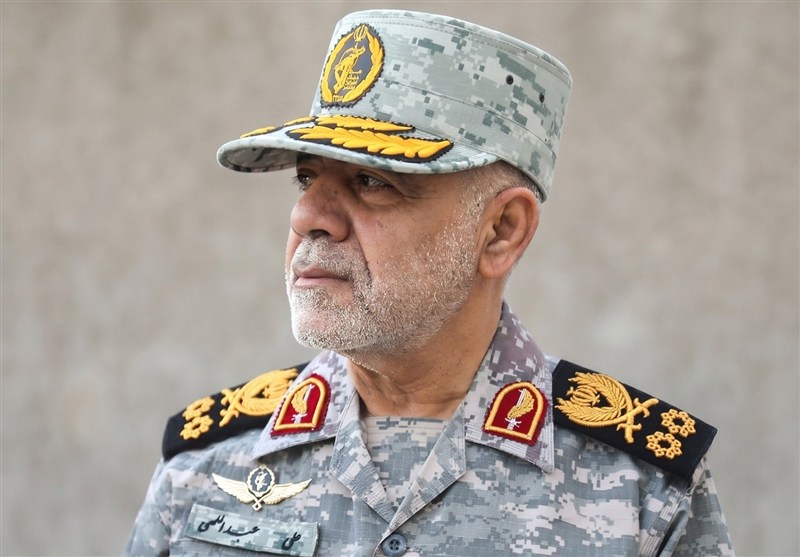
The recent remarks by Brigadier General Hossein Mohebi, spokesperson and deputy for public relations of the Islamic Revolutionary Guard Corps (IRGC), regarding the use of new weapons and a change in the geography of war in the event of another U.S. attack, carry a strategic message to Washington: Iran is not preparing to repeat the previous scenario, but rather is preparing itself for a different confrontation involving new military equations and tools.
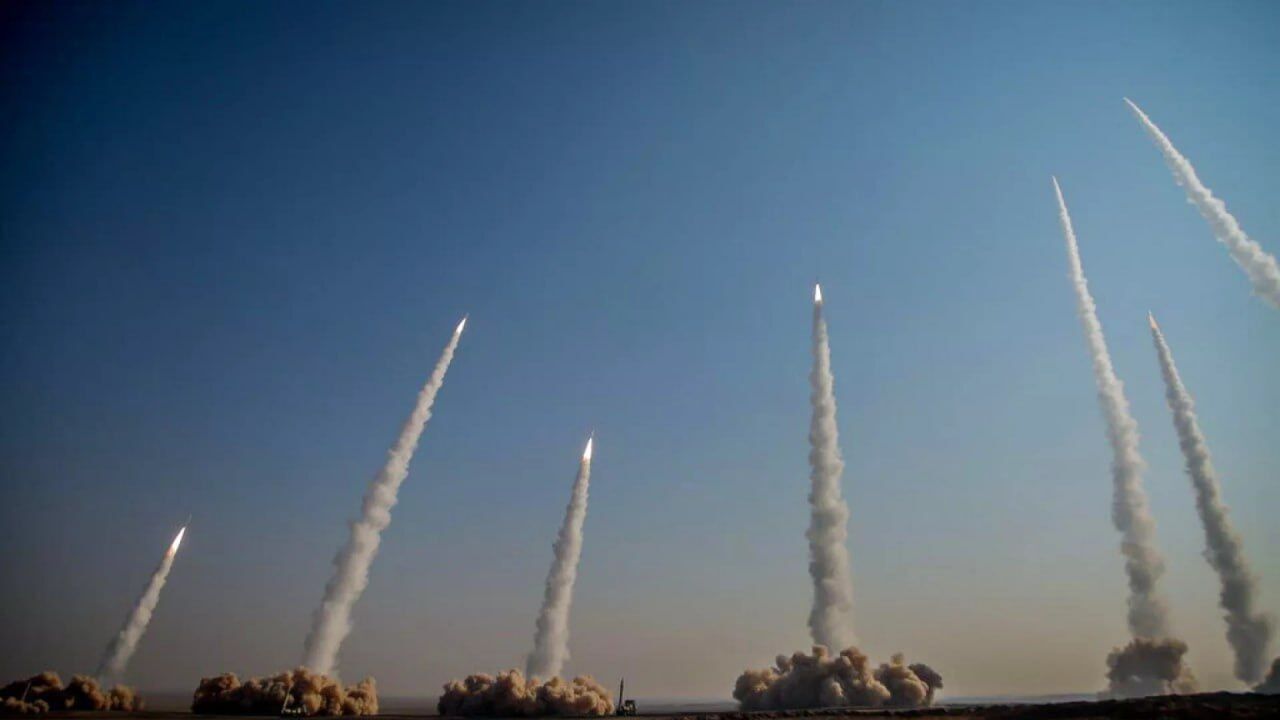
Emphasizing that, if the war resumes, Iran’s defensive and offensive strategies, types of weapons, and the geography of the conflict will change, Mohebi spoke of a new phase in Tehran’s military approach. His emphasis that the weapons used in recent wars were largely products of past decades, and that new and unfamiliar weapons will be brought into the field under the new circumstances, reflects Iran’s effort to convey the message that the country’s military capabilities are not limited to those revealed in the previous confrontation.
This position should be assessed within the framework of Iran’s strategy to redefine deterrence and prevent the repetition of America’s past military calculations; a strategy in which increasing the potential costs of war and changing the predictability of the battlefield play a central role.
Deterrence: The End of Washington’s Repetitive Calculations
According to an informed source speaking to IranView24, the main message of Brigadier General Mohebi’s remarks is that Washington cannot rely on its experience of past military operations to determine the form, scope, and outcome of a potential future confrontation.
The informed source emphasizes that changes in the types of weapons, the manner of response, and the geography of the conflict constitute the three main components of Iran’s deterrent message to the United States. Accordingly, any decision to launch another attack must be made with scenarios in mind in which the initiative, timing of the response, and range of potential targets will not necessarily follow previous patterns.
From this perspective, the emphasis on new and unfamiliar weapons is not merely an announcement that new equipment is available; rather, it is part of Iran’s defense diplomacy aimed at preventing the other side from repeating its mistaken calculations and preventing the emergence of the perception that repeating previous attacks could produce the same results.
Within this framework, Tehran’s message has two main audiences: first, America’s military and political decision-making centers, which must factor the costs of a new confrontation into their calculations; second, Iranian public opinion, which receives the message that the country is prepared to defend itself and that its capacity to respond remains intact.
Changing the Geography of War: Expanding the Scope of Pressure on the United States
One of the most important aspects of Mohebi’s remarks is his emphasis on changing the geography of war; a concept indicating that, in the event of another attack, Tehran does not consider itself limited to the pattern of responding within the same theaters as before.
At a time when U.S. threats against Iran’s infrastructure have been raised, Iranian officials have also warned about the broader consequences of war and the vulnerability of the region’s strategic infrastructure. Within this framework, data centers, artificial intelligence-related facilities, energy infrastructure, and strategic oil and gas transportation routes have assumed particular importance in calculations concerning the consequences of a regional conflict.
According to a military source speaking to IranView24, the significance of this approach lies in the fact that, as the hostility of its adversaries continues, Iran seeks to extend the cost of war beyond direct military confrontation and incorporate its economic, security, and strategic consequences into Washington’s calculations as well.
The informed source believes that insecurity cannot be confined to Iran and that, in a region where energy security, shipping, and digital communications are intertwined with the interests of major powers, an expansion of the conflict could transfer its costs to a level extending beyond the battlefield. Under such circumstances, the decision to start a war is no longer assessed solely by evaluating military destructive capabilities; its consequences for the economic and security interests of the United States and its regional partners also become significant.
On this basis, changing the geography of war can be regarded as part of Iran’s effort to establish multilayered deterrence; an approach in which military response capabilities are intertwined with regional and economic consequences.
New Weapons: A Message of Readiness for a Different Phase
The IRGC spokesperson’s emphasis on Iran’s acquisition of more advanced weapons following the recent war constitutes another part of this strategic message. In Tehran’s official narrative, the experience of the previous military confrontation has led to a reassessment of defensive and offensive methods and the strengthening of operational capabilities.
The significance of this position lies in Iran’s desire to ensure that U.S. military calculations do not remain based on capabilities revealed in the past. The announcement of possessing new weapons and changing how they are deployed, alongside the emphasis on readiness for a prolonged war, presents an image of a strategy aimed at preventing another attack based on previous mistaken assumptions and assessments.
Within this framework, deterrence does not depend solely on the number of weapons or their destructive power; the ability to change response patterns, maintain readiness over time, and impose unforeseen costs on the other side also plays a role.
Diplomacy Alongside Military Readiness
Tehran’s approach does not mean abandoning diplomacy. Iran’s declared positions indicate that defensive preparedness and the pursuit of a political path can proceed simultaneously, provided that negotiations advance on the basis of national interests and the conditions emphasized by Tehran.
Within this framework, just as Iran was not the initiator of the war, it does not seek its continuation, and demonstrating military readiness is also considered part of the political bargaining equation. By emphasizing its right to legitimate self-defense and the potential costs of another attack, Iran seeks to create conditions in which the diplomatic option is also defined for the other side on the basis of new security and military realities.
In other words, Tehran’s message is that the path of negotiations cannot be separated from calculations concerning Iran’s defensive power, and any political decision about the future of relations must take into account realities on the ground and the costs of a new confrontation.
Conclusion: Washington Faces Different Equations
Brigadier General Hossein Mohebi’s remarks can be regarded as part of Iran’s strategy to redefine deterrence, prevent repeated attacks, and change America’s military calculations. The emphasis on new weapons, readiness for a prolonged war, and changes in the geography of the conflict constitute the main components of this message.
From Tehran’s perspective, any potential future confrontation is not necessarily going to unfold within the same framework and under the same limitations as the previous war, and the decision to launch another attack will involve a different set of military, regional, and economic considerations.
Tehran’s final message to Washington is clear: the equations of war have changed, and calculations based on past experience are not sufficient for making decisions about a future confrontation.