At first glance, a blockade of Iran’s southern ports could deal a serious blow to the country’s foreign trade. Iran, however, does not rely on a single maritime gateway for its international commerce. Multiple land borders, northern ports, rail routes and alternative trade mechanisms provide a network of commercial lifelines that could significantly complicate any US attempt to disrupt the flow of trade into and out of Iran. This is particularly relevant given that developments in recent months have shown that trade and production do not necessarily come to a standstill even when major routes are disrupted under wartime conditions.
Hadi Gholamnia, International Political Economy Analyst
Historical trends show that since the 1979 Islamic Revolution, the United States has repeatedly employed different instruments and strategies aimed at influencing, managing or changing the behavior of the Islamic Republic, and at times even seeking regime change. These measures have included coup attempts, unilateral and international sanctions, the formation of regional political and security coalitions, cyber operations, psychological and media warfare, targeted strikes — including attacks in recent months on telecommunications and communications infrastructure in southern areas of the country — full-scale military action, such as the Ramadan War, and a broad range of overt and covert intelligence and security operations over the past several decades.
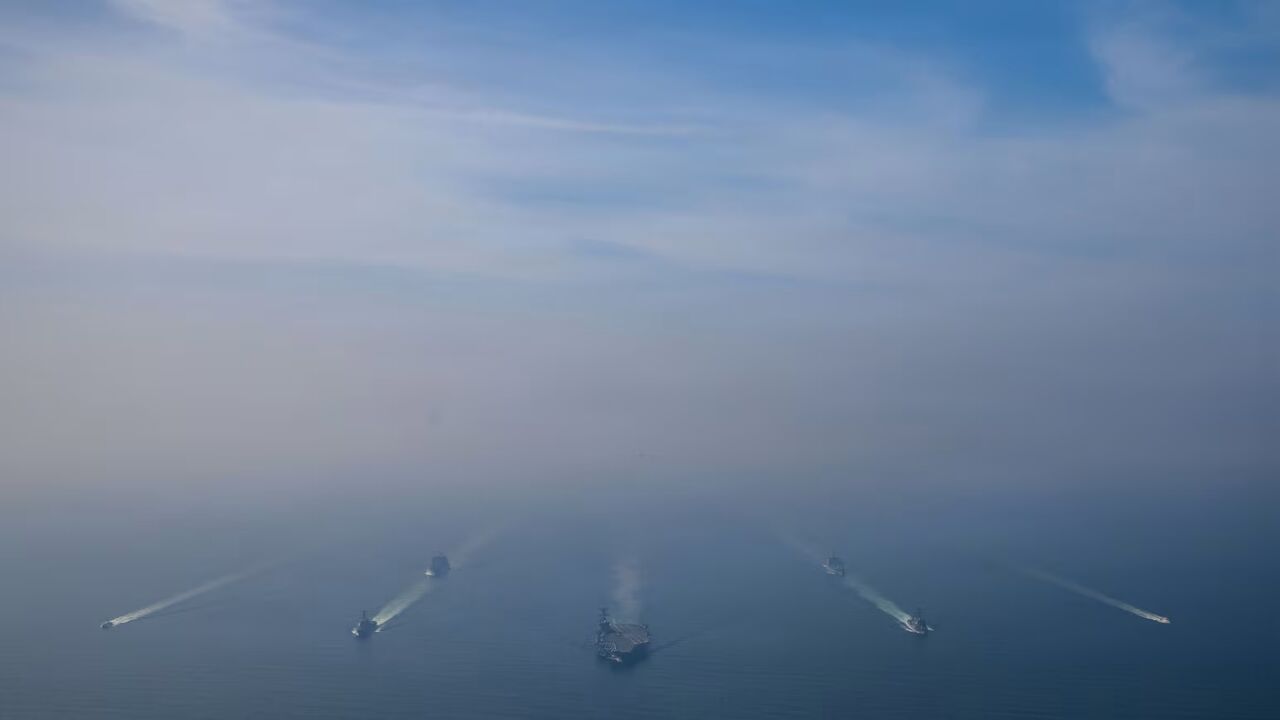
Since April 13, 2026, and subsequently from July 14 following the failure to reach an agreement to end the war with Iran, Washington has, at a new stage, pursued what has been described as a maritime blockade strategy to advance its objectives.
At least according to statements issued by US officials over the past 50 days, the strategy is presented as carrying significantly lower challenges, costs and risks than either a full-scale war or limited military action against Iran, while potentially complementing the gains made during the recent conflict.
The central question, however, is whether the US strategy of blockading Iran’s southern ports can actually deliver the effectiveness claimed by officials in Washington – or whether developments on the ground will ultimately produce a picture substantially different from those expectations.
At the outset, it should be acknowledged that the US decision to design its latest operation around the blockade of Iran’s southern ports is rooted in its understanding of the country’s transportation networks and the principal gateways through which its foreign trade generates foreign-exchange revenues.
In practice, ports such as Imam Khomeini, Shahid Rajaee, Chabahar and Asaluyeh have played an indispensable role in the loading and unloading of imported and exported goods in recent years. Disrupting these ports would therefore have potentially far-reaching consequences for Iran’s foreign trade, domestic production, foreign-exchange earnings and employment.
Within this framework, these ports serve as major gateways for the import of essential goods from Latin America and Southeast Asia, as well as for the export of petrochemical and mineral products to markets around the world.
However, it should also be noted that the US assessment, much like its previous predictions regarding the consequences of military attacks on Iran, may once again be overstated. The expected outcome of such a strategy is unlikely to materialize in the form anticipated by Washington.
The main arguments supporting this assessment can be outlined as follows:
A: Multiple Land Borders
According to official statistics and available data, Iran has more than 25 official land border crossings with neighboring countries. A significant share of the country’s foreign trade is therefore conducted overland, using trucks and container transport.
Among the key crossings are Rimdan and Mirjaveh with Pakistan; Milak and Dogharoun with Afghanistan; Sarakhs and Incheh Boroun with Turkmenistan; Astara and Bileh Savar with Azerbaijan; Norduz with Armenia; Bazargan and Razi with Türkiye; and Parvizkhan, Mehran and Shalamcheh with Iraq.
These are only some of the major points supporting Iran’s overland trade with neighboring states. Beyond their economic importance, these crossings are closely connected to the livelihoods of border communities, the interests of private-sector traders and the commercial interests of third countries.
In addition to the formal crossings, a considerable number of traditional and informal border points have historically operated either actively or intermittently. With the necessary coordination and decisions by local authorities on both sides — including Iran’s border provinces and neighboring regions — these routes could potentially be activated or expanded to support trade if required.
Indeed, even during the Ramadan War period, such border routes demonstrated their ability to respond to part of the country’s commercial needs.
B: Untapped Capacity of Northern Ports
Iran’s northern ports — including Amirabad, Fereydunkenar, Nowshahr, Anzali, Caspian and Astara — have significant potential for trade with the countries bordering the Caspian Sea, as well as with third countries through the ports of other Caspian littoral states.
The nominal capacity of Iran’s northern ports is estimated at around 35 million tons. Based on statistics published in previous years, however, utilization of these ports has remained below 30 percent of their stated nominal capacity.
The main reason for this underutilization has been the structure of Iran’s foreign trade, including its extensive dependence on the UAE, the concentration of exports toward East Asian markets, and the concentration of imports — including essential goods — from the Americas and South Asia.
At the same time, the potential of countries such as Russia, Kazakhstan and Kyrgyzstan as alternative sources of agricultural and other essential goods has, to some extent, remained underutilized.
This means that the northern ports represent a largely untapped capacity that could become increasingly important if trade through Iran’s southern maritime gateways faces prolonged disruption.
C: Other Trade Mechanisms and Multimodal Routes
Alongside land and maritime routes, Iran’s railway network and established forms of cross-border trade, including organized porter-based and seafaring trade mechanisms, should not be overlooked.
Rail routes crossing the Sarakhs, Razi and Shamtiq border areas offer substantial capacity for commercial transportation and should be utilized as close to their maximum potential as possible.
According to statements by Iranian officials last week, the strategic Chabahar–Zahedan railway is also set to become fully operational, further increasing Iran’s capacity to transport goods by rail and strengthening the connection between the southeastern port region and the country’s internal transportation network.
Small-scale border trade mechanisms can also provide additional commercial lifelines in times of emergency. Given the substantial capacity of border communities and the possibility of supplying relatively lightweight but strategically important goods for domestic industries, these channels could play a role even when operating on a limited scale.
A recent example was the authorization of imports of certain petrochemical products following attacks on industrial sites in Mahshahr and Asaluyeh, in an effort to meet the requirements of downstream industries.
Conclusion
There is no doubt that maritime transportation — particularly through Iran’s southern ports — offers major advantages in terms of cost, capacity and speed. The depth of southern waters allows the use of large vessels and the transportation of containerized and bulk cargoes in volumes exceeding 50,000 tons, while maritime routes generally offer greater efficiency for large-scale international trade.
However, under the current critical circumstances, and given the challenges created by disruptions affecting trade through Iran’s southern ports, the combined use of northern ports, land borders, railway routes and, where necessary, small-scale border trade mechanisms provides Iran with substantial capacity to compensate for at least part of the restrictions.
The use of these alternative routes and trade mechanisms has already helped preserve export flows, secure raw materials and spare parts, and maintain industrial production even under conditions of full-scale war.
The broader conclusion, therefore, is that the Islamic Republic of Iran not only possesses significant capacity to withstand a maritime blockade strategy, but has also demonstrated, in practice over the past five months, a degree of resilience and determination to keep production and foreign trade moving under highly challenging conditions.
While the disruption of southern maritime gateways could raise transportation costs, complicate supply chains and place additional pressure on Iran’s economy, it does not automatically translate into the complete isolation of the Iranian economy from international trade.
Iran’s diversified geography, multiple land borders, underutilized northern ports and expanding rail infrastructure provide alternative channels through which trade can continue — potentially at a higher cost and with greater logistical complexity, but not necessarily at a standstill.