Iran’s Armed Forces have launched a series of retaliatory missile and drone operations against US military positions in the region in response to the latest US aggression against Iranian territory.
Tehran-IranView24
The operations came after US forces attacked Iran’s Larak Island in the Strait of Hormuz on Sunday, killing and wounding members of the Islamic Revolutionary Guard Corps (IRGC) as well as civilians, according to the IRGC.
The Iranian military said the attacks were carried out in response to the US aggression and in accordance with Iran’s right to defend its territorial integrity and national security.
Army targets US military position in UAE
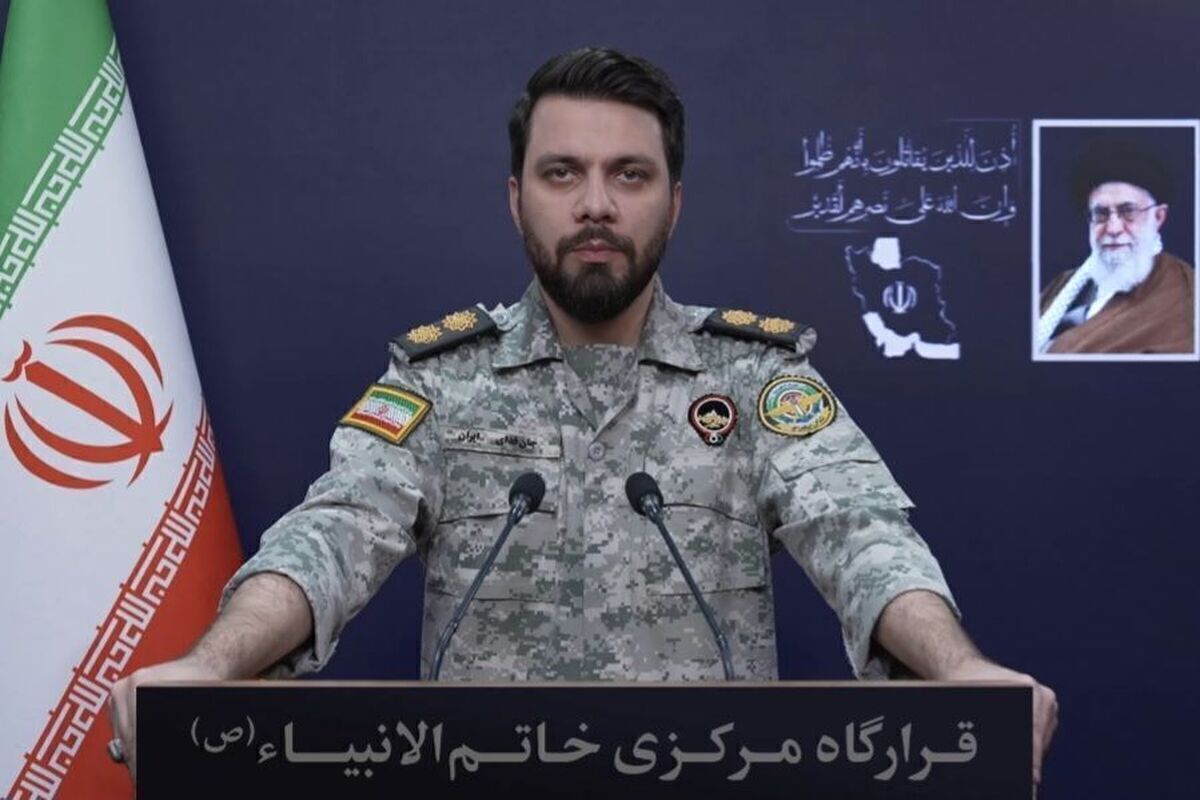
The Islamic Republic of Iran Army announced on Monday that it had targeted US military positions at Al Minhad Air Base in the United Arab Emirates with dozens of explosive drones.
The Army’s Public Relations Department said the operation targeted locations used to station US military personnel and helicopters at the base.
“Since early morning, the Islamic Republic of Iran Army has targeted locations housing US military helicopters and personnel at Al Minhad base in the UAE with dozens of explosive drones,” the statement said.
The Army said the operation was carried out to avenge the blood of Iranian military personnel and civilians killed in the US attack on Larak Island.
It stressed that Iran’s Armed Forces remain fully prepared to defend the country’s security and territorial integrity and will continue confronting hostile forces until the threat posed by the enemy in the region is eliminated.
The choice of Al Minhad was not accidental. The base has a long history within the Western military network, has been targeted by Iran several times during the 40-day imposed war waged by the United States and the Israeli regime against Iran, and had previously been identified by the IRGC Navy commander as one of the points from which attacks on Iranian islands were launched.
Al Minhad is located on the Southern outskirts of Dubai, a location that places the base close to the Southern shores of the Persian Gulf while also giving it access to the UAE’s extensive transportation infrastructure.
The base is officially owned by the United Arab Emirates and is therefore not an exclusively American base. However, over the years, the United States and several key US allies have used its infrastructure.
The significance of Al Minhad begins precisely here. Rather than merely serving as a site for stationing a number of aircraft, the base is considered one of the support hubs for Western forces in the region.
Its long runway, aircraft parking and staging areas, support facilities, and capacity to accommodate heavy transport aircraft have made Al Minhad a suitable location for moving troops and equipment and supporting military missions.
Put simply, while some US bases in the region serve as direct operating locations for fighter jets and the conduct of combat missions, Al Minhad is one of the locations that can facilitate the movement of personnel and equipment and help sustain operational support.
Al Minhad gained even greater importance during the peak of Western military operations in Afghanistan and Iraq, as troops and equipment could be transferred to operational areas through the facility.
Following the withdrawal of Western forces from Afghanistan in 2021, Al Minhad’s role did not disappear. The facility remained part of the structure of Western military presence in the region. This history shows that the significance of Al Minhad is not limited to the number of aircraft stationed on its runway or ramps at any given moment. Rather, the base is part of an infrastructure network that enables the movement and logistical support of Western military forces.
One clear example is the joint US-UAE military exercises conducted at Al Minhad, during which the rapid deployment of equipment and troops using heavy transport aircraft has been practiced.
During one such exercise, US Army High Mobility Artillery Rocket System (HIMARS) launchers were loaded onto a C-17 heavy transport aircraft to practice the rapid movement of military equipment across the region.
Another feature of Al Minhad is its use by several Western countries as a shared military facility. Australia is considered one of the base’s longest-standing foreign users and has for years maintained its Middle East operational headquarters there. Britain also has a history of presence at the facility, with British forces using its infrastructure alongside military personnel from other Western countries.
IRGC strikes US bases in Jordan
In a separate operation, the IRGC Aerospace Force launched a combined missile-and-drone attack against US military bases in Jordan.
The IRGC said its forces targeted the King Hussein and Al-Azraq military bases, which it identified as among the facilities used to support US military operations in the region.
According to the IRGC statement, the operation targeted technical and maintenance infrastructure as well as locations used to deploy US fighter aircraft.
The IRGC described the strikes as a direct response to the US attack on Larak Island and said the operation was carried out in defense of Iran’s sovereignty and territorial integrity.
The Guards warned that continued US aggression would be met with increasingly powerful responses.
US attack on Larak Island triggers retaliation
The Iranian operations followed a US attack on Larak Island in Hormozgan Province.
The IRGC said the US attack resulted in deaths and injuries among Iranian military personnel and civilians. The Guards condemned the strike as an act of aggression against Iranian territory and vowed to retaliate.
The United States claimed its forces had targeted two Iranian launchers on Larak Island. Washington said the systems were being prepared for operations involving naval mines in the Strait of Hormuz.
Iran rejected the US justification and described the attack as a violation of its national sovereignty and territorial integrity.
Iran’s Foreign Ministry said Iran would respond decisively to any further military aggression and held the United States and those supporting its military actions responsible for the consequences of escalation.
Iran intercepts US drone over Strait of Hormuz
Iranian forces also announced that a US MQ-9 drone had been intercepted over the Strait of Hormuz.
According to reports, the IRGC’s air-defense units intercepted the long-range American drone, which subsequently fell into the Persian Gulf.
Iran warns against further aggression
Iranian President Masoud Pezeshkian said on Monday that Iran does not seek war but will not remain passive in the face of aggression.
Pezeshkian stressed that Iran would deliver a decisive response to any further attack and warned that continued instability would serve the interests of no country in the region.
Iran’s Foreign Ministry similarly emphasized that the United States and parties supporting its military actions would bear full responsibility for any further escalation.
A new phase of confrontation
The latest operations mark a new phase in the confrontation between Iran and the United States following the US attack on Larak Island.
One of the defining features of Iran’s response to the US aggression against Lark Island was the combination of different geographic axes, forces and means.
Iran’s response has extended across multiple locations hosting US military forces, with the IRGC targeting US positions in Jordan and the Army announcing a drone operation against US forces at Al Minhad in the UAE.
The Iranian Armed Forces have made clear that attacks against Iranian territory will not go unanswered.
With the Strait of Hormuz remaining a key theater of confrontation, Tehran has warned that any further aggression will face a decisive military response.
Iran’s latest operations demonstrate the Armed Forces’ continued readiness to defend the country’s sovereignty and territorial integrity and to confront foreign military deployments that, according to Tehran, are being used to threaten Iran and support attacks against its territory.