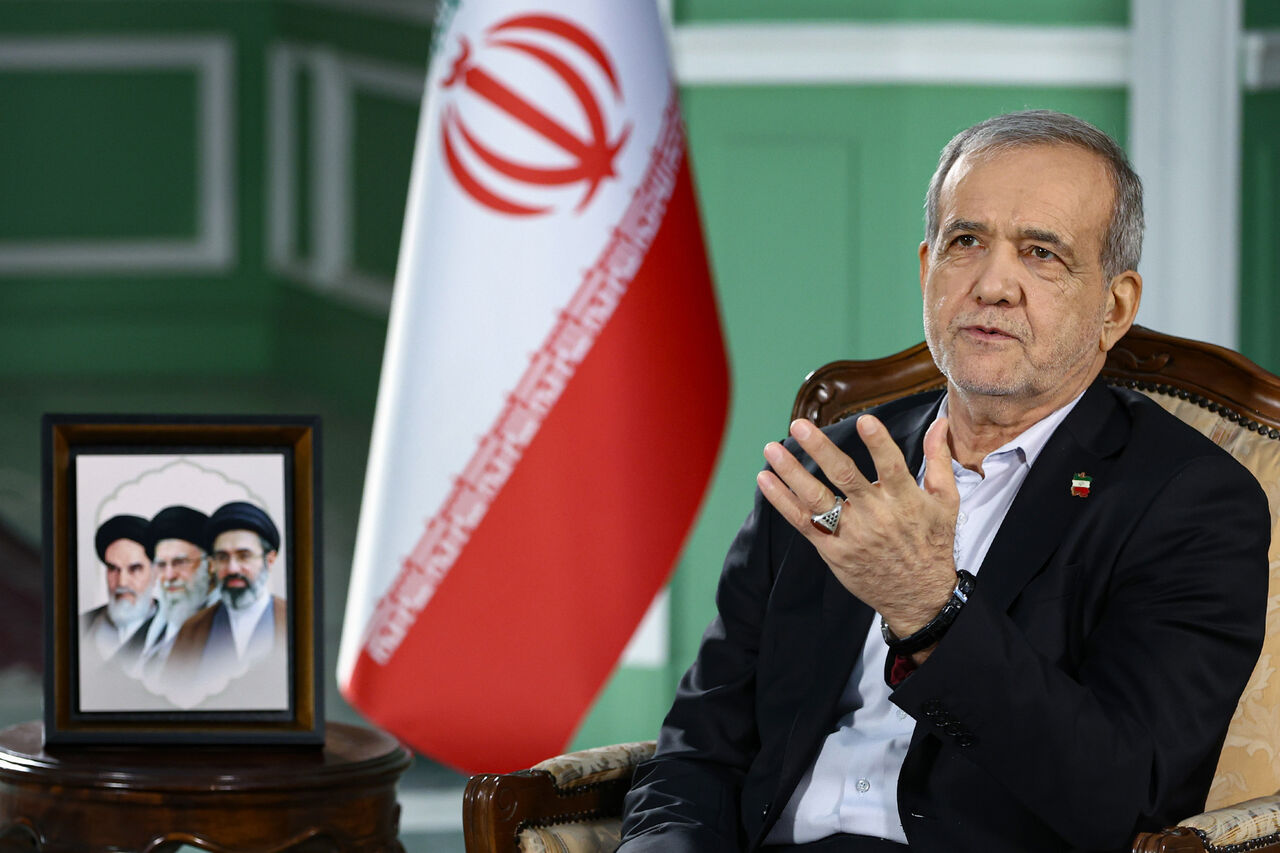
Iranian President Masoud Pezeshkian has called for greater national unity, stronger regional cooperation and continued dialogue with Iran’s adversaries, saying the country can overcome economic pressures, sanctions and the consequences of war through resilience and collective action.
Tehran-IranView24
Speaking in a televised interview marking the beginning of the third year of his administration, President Masoud Pezeshkian said on Friday that the enemy had conducted extensive preparations, including the use of artificial intelligence, before launching its attacks on Iran.
He said the calculations behind the attacks were not irrational, given the serious economic, infrastructural and security pressures facing Iran. However, he stressed that the country had managed to withstand those pressures and resist the attacks.
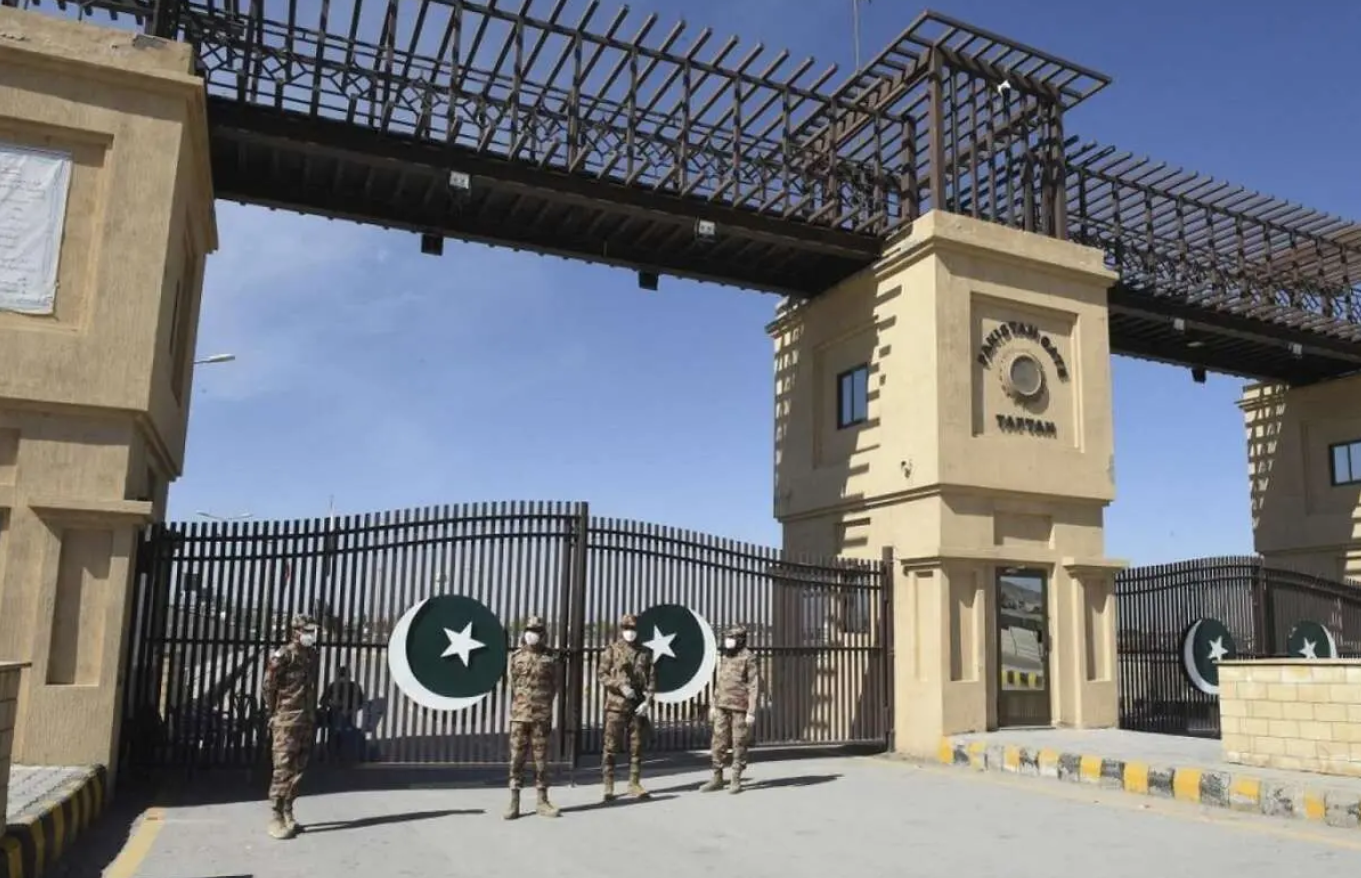
Pezeshkian emphasized that preserving national unity and strengthening solidarity among Muslim countries should remain central national priorities. He said Iran should pursue dialogue and cooperation with neighboring and regional countries, including Pakistan, Afghanistan, Saudi Arabia, Türkiye, the United Arab Emirates, Qatar, Oman, Egypt, Azerbaijan and Turkmenistan.
Negotiations and the Prospect of Peace
Addressing negotiations and the possibility of peace, Pezeshkian said a framework approved by Iran’s Supreme National Security Council represented a major achievement. He noted that 12 of the council’s 13 members had supported the proposal, describing it as the outcome of collective deliberation.
According to the president, the framework included reciprocal commitments concerning sanctions, the blockade, oil and petrochemical exports, frozen Iranian funds, investment and developments in Lebanon.
He said the agreement was disrupted after the other side failed to honor some of its commitments, but added that negotiations had since resumed.
Pezeshkian also discussed arrangements concerning the Strait of Hormuz, saying Iran was prepared to reopen the route within an agreed framework if the other side fulfilled its commitments.
He stressed that Iran would continue negotiations but would not place unlimited trust in its adversaries. If the other side honored its commitments, Iran would do the same; otherwise, Tehran would respond accordingly.
The president said dialogue was preferable to continued confrontation and could contribute to peace and security in West Asia.
Sanctions and Their Impact on Iran’s Economy
Pezeshkian linked foreign-policy pressures directly to Iran’s economic difficulties, saying sanctions had affected the country’s exports and imports and increased the cost of trade.
He rejected claims that sanctions had no significant impact, pointing to restrictions on banking, oil and trade as factors that had made imports more expensive and contributed to inflation and fluctuations in the national currency.
Strengthening Regional Diplomacy and Muslim Unity
The president said Iran was also pursuing closer relations with regional countries and seeking to strengthen diplomatic engagement.
He argued that Muslim countries should resolve their disputes through dialogue and work collectively to prevent further regional instability.
Energy Shortages and Infrastructure Challenges
Turning to domestic resilience, Pezeshkian said Iran was facing shortages in electricity, gas and water, along with challenges affecting banks, insurance funds and other institutions.
Despite these pressures and damage inflicted on energy infrastructure during the war, he said the government had succeeded in reducing electricity outages and maintaining essential services.
Energy Conservation and Public Transportation
Pezeshkian called for greater energy conservation, improved public transportation and lower fuel consumption.
He said government plans included encouraging remote work, reducing unnecessary commuting, importing fuel-efficient vehicles and electric motorcycles, and expanding and improving public transportation.
Inflation, Living Costs and Social Support
On the economy, Pezeshkian acknowledged that inflation and rising living costs remained major concerns.
He said the government was working to expand its food-subsidy program, known as the electronic food voucher, but faced financial constraints.
He also highlighted efforts to support housing for military personnel, university faculty members and vulnerable families.
Decentralization and Empowering Qualified Managers
Pezeshkian emphasized decentralization and the transfer of greater authority to provincial officials, arguing that capable managers should be empowered regardless of their political affiliation.
He said economic, industrial and administrative responsibilities should be entrusted to qualified professionals rather than assigned on the basis of factional considerations.
Healthcare Reform and Family-Doctor Program
The president also discussed healthcare reform, including the implementation of the family-doctor program.
He said the initiative faced structural, financial and managerial obstacles, while stressing that accountability and measurable standards were essential to improving healthcare delivery.
Reconstruction and Public Participation
Addressing post-war reconstruction, Pezeshkian said thousands of schools were being built with public participation and that infrastructure repairs were continuing despite financial constraints.
He said public involvement was playing an important role in efforts to rebuild damaged facilities and restore essential infrastructure.
National Unity as Iran’s Greatest Strength
Concluding the interview, Pezeshkian said Iran’s greatest strength was its people and national unity.
He warned that internal divisions could undermine even the country’s military capabilities, while emphasizing that solidarity could help Iran overcome economic pressure, sanctions and the challenges resulting from the war.