The visit of Roman Gofman, the head of Mossad, to Washington comes amid strategic disagreements between the United States and Israel over how to deal with Iran. The visit has once again brought the role of Israel’s intelligence apparatus in shaping U.S. security decisions into sharp focus.
Iran View 24 – World
Roman Gofman’s visit to Washington comes against the backdrop of the experience of two wars against Iran—the 12-day war and the 40-day war—which have once again underscored the importance of intelligence networks, covert operations, and security decision-making mechanisms in shaping the military calculations of the United States and Israel. The Mossad chief’s meeting with John Ratcliffe, Director of the Central Intelligence Agency (CIA), can be viewed within the broader context of Tel Aviv’s efforts to influence Washington’s intelligence assessments and steer the Trump administration’s strategic decisions. This effort is aimed not merely at sharing intelligence, but potentially at shaping Washington’s perception of the likelihood of a renewed war.
1. Gofman’s Mission: From Intelligence Cooperation to Decision-Making Engineering
The Mossad chief’s latest visit to the United States cannot be viewed as merely a routine meeting within the framework of intelligence cooperation between two allies. The visit comes at a sensitive juncture in the domestic political landscape of both Washington and Tel Aviv, as disagreements over the future of the war with Iran have become one of the most pressing domestic issues and a central topic in security consultations between the two sides.
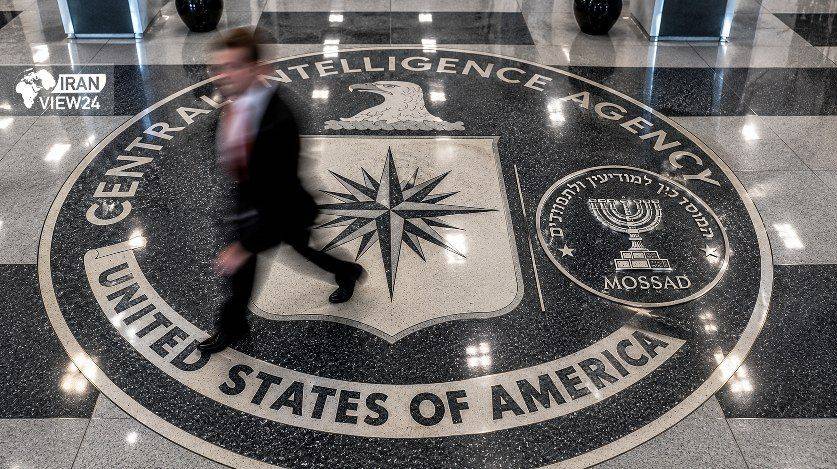
As Barak Ravid writes in the American news outlet Axios, Roman Gofman met with CIA Director John Ratcliffe in Washington. The visit is being viewed within the context of Benjamin Netanyahu’s efforts to persuade Donald Trump to resume military operations against Iran.
Indeed, from the perspective of the Israeli-American journalist at Axios, direct engagement between the Mossad chief and the CIA director also provides an opportunity for Israel to shape the intelligence narrative surrounding Iran and influence Washington’s security priorities.
Accordingly, some other observers have also identified preventing a shift in the Trump administration’s priorities toward Iran following the Republicans’ defeat in the midterm elections as one of the possible objectives of Gofman’s visit.
The Axios report indicates that Netanyahu favors a return to the military option, while Trump, at the time in question, preferred to maintain economic pressure and the naval blockade while also exploring the possibility of reaching an agreement.
However, the significance of Gofman’s visit to Washington and his meeting with Ratcliffe also lies in the CIA’s institutional position. The agency is one of the most important centers for producing and assessing strategic intelligence within the U.S. national security establishment, and its assessments can influence decisions made by the president, the National Security Council, and other military and security institutions.
However, as The New York Times recounted in its investigative report on how the decision to launch the war in February 2026 was shaped, even before the 40-day war, it was Netanyahu and his accompanying security team who sought to push the decision to go to war on the White House.
According to an investigative report by The New York Times, written by Jonathan Swan and Maggie Haberman and published on April 7, 2026, Mossad’s role in the plan presented by Benjamin Netanyahu to Donald Trump was not limited to gathering intelligence and identifying military targets. During a classified meeting on February 11, 2026, in the White House Situation Room, then-Mossad chief David Barnea participated via video link alongside Netanyahu and Israeli military officials. Netanyahu and his team presented a plan under which large-scale military strikes could be accompanied by intelligence operations and efforts to incite domestic protests, ultimately leading to the collapse of the Islamic Republic.
According to The New York Times, Mossad’s intelligence assessment was that targeting senior Islamic Republic leaders would create the conditions for renewed street protests. Mossad claimed that, through intelligence operations, the incitement of unrest, and assistance in mobilizing an uprising, it could galvanize the government’s opponents and create the conditions for the collapse of the political system. This stood in sharp contrast to the significantly less optimistic assessments of U.S. intelligence agencies.
Here, it is important to distinguish between two concepts: “intelligence cooperation” and “influence over the decision-making process.” The former involves the exchange of data and analysis; the latter emerges when one side can shape the other’s perceptions and decisions through the selective presentation of intelligence, the highlighting of threats, and the steering of how information is interpreted.
Therefore, what emerges from considering these reports together is that Mossad was not merely an intelligence-support agency in designing the war scenario against Iran. It was also seeking to impose its own agenda on U.S. intelligence agencies and the president of the United States.
2. The Experience of Two Wars: The Importance of Linking Military Decisions to Independent Intelligence Assessments
The experience of the 12-day war and the 40-day war against Iran has underscored the importance of linking military action to accurate intelligence assessments in the current security environment.
These two wars demonstrated that a war against Iran is not confined to conventional military confrontation. Intelligence, cyber, operational, psychological, and political dimensions also play decisive roles.
Within this framework, Gofman’s visit, considered alongside the experience of previous confrontations and Mossad’s role in shaping U.S. calculations, could help explain possible future scenarios surrounding the war imposed on Iran.
In this regard, the recent development concerning the impeachment of Pete Hegseth, which once again exposed AIPAC’s capacity to influence the decision-making environment in the U.S. House of Representatives, also serves as another warning about Israel’s efforts to exert influence over the decision-making process in the United States.
Accordingly, the disagreement between Trump and Netanyahu over the resumption of war can be regarded as one of the key variables shaping the security calculations ahead.
3. Israel’s Domestic Political Variable: The Link Between the Political Crisis in Tel Aviv and Decision-Making in Washington
Another important dimension of the Mossad chief’s visit is its timing, coinciding with political developments inside Israel. While Israeli opposition groups strongly maintain that Netanyahu is seeking war to alter the course of domestic political developments within the regime, the available evidence suggests that Netanyahu appears to be attempting once again to shift responsibility for the decision to go to war onto U.S. President Donald Trump.
Under this scenario, Trump’s decision to re-enter the war would divert accusations of seeking to initiate a war away from Netanyahu. In this context, Mossad’s efforts to steer the CIA’s assessments could once again play an important role.
Conclusion
Roman Gofman’s visit to Washington can be viewed as part of Israel’s efforts to preserve and strengthen its intelligence and strategic influence within the U.S. decision-making establishment on Iran.
The central issue is not simply intelligence cooperation between Mossad and the CIA. Rather, it is the effort to influence how Washington assesses Iran, what level of threat it assigns to the country, and ultimately which option it chooses in dealing with Tehran.