Shortly after a meeting between the heads of Mossad and the CIA in Washington, a series of claims about Iran in U.S. media, from The New York Times to CNN, has drawn attention—claims that, by linking Iran’s water infrastructure to missile facilities and claiming the possible use of a dirty bomb on U.S. soil, paint a new picture of Iran as a direct threat to the national and homeland security of the United States.
IranView24 – Defense and Security
Shortly after Mossad Chief Roman Gofman’s trip to Washington and his meeting with CIA Director John Ratcliffe, a new wave of security reports and claims against Iran has emerged in American and Israeli media—reports ranging from allegations of military use of Iran’s water infrastructure to claims that Tehran is planning a dirty bomb attack on U.S. soil.
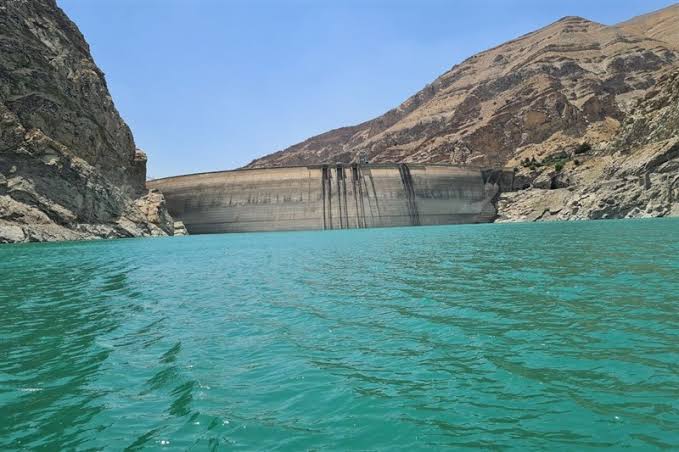
The first pillar of this narrative-building is a report published by The New York Times on November 16, 2026. Citing a number of water and military experts centered on the account of Danny Citrinowicz, former head of the Iran branch in the Israeli military’s Defense Intelligence, the newspaper claimed that some of Iran’s dams and water transfer projects may have been built to supply water and electricity to underground missile facilities.
The report cites the existence of at least 533 dams in Iran and the geographical overlap of some of them with areas targeted in U.S. and Israeli military strikes. However, the key point is that the report itself acknowledges there is no conclusive evidence proving these infrastructures were built for military purposes, and that dams in Iran serve essential functions such as supplying drinking water, agriculture, and electricity generation.
Yet the political significance of this narrative lies in the fact that by raising the possibility of military use of water infrastructure, it blurs the line between civilian facilities and military targets in public opinion—an issue that could be exploited for propaganda in the future to justify attacks on Iran’s vital infrastructure.
The second pillar is a November 16 report by CNN. Quoting seven U.S. officials, the network claimed that American intelligence agencies possess information regarding possible Iranian plans to use a dirty bomb or chemical weapon against senior U.S. government officials in Washington.
The report also claimed that intelligence had been obtained regarding the possible concealment of materials needed to build such bombs on U.S. soil. Nevertheless, CNN emphasized, citing its sources, that intelligence officials disagree on the credibility of this information and that there are no indications such an attack is imminent.
Notably, the White House spokesperson has also stated that there is currently no credible, specific threat against the U.S. homeland, yet the report’s narrative is aimed at intimidating American public opinion with claims of an Iranian threat—a public that recently voted decisively against war in the congressional midterm elections.
Analysis: Constructing a Threat Chain
Putting these reports side by side immediately following the Mossad chief’s visit to Washington reveals several noteworthy points:
- Changing the Nature of the Portrayal of Iranian Threat: In the new narrative, Iran is not merely presented as a country possessing missile or nuclear capabilities; rather, an effort is made to project a multifaceted threat whose civilian infrastructure may also serve as a cover for military activity, and which is even capable of carrying out terrorist operations on U.S. soil.
- Laying the Groundwork to Legitimize Potential Attacks: Raising the issue of military use of dams and water transfer facilities can help normalize a military view of Iran’s vital infrastructure. Simultaneously, publishing claims regarding dirty bombs and chemical weapons creates the necessary atmosphere to portray Iran as a threat beyond regional borders.
- Shifting Public Attention: Following the American public’s opposition to the Republicans’ warmongering policies and the party’s historic defeat in the congressional midterm elections, the Trump administration, in cooperation with U.S. and Israeli intelligence agencies including the CIA and Mossad, appears to have intensified its efforts at Iranophobia and security hype against Tehran.
Conclusion
The content of recent news fabrication points to the amplification of a shared narrative by the pro-war current—a narrative that seeks to introduce Iran not only as a military and regional threat, but as a direct threat to U.S. homeland security and even its vital civilian infrastructure. The main goal of this hype is to neutralize a challenge continuously raised by the American public; That the war against Iran has been pursued not in line with U.S. national security interests and priorities, but within the framework of Israel’s interests and demands.
Within this framework, one of the core objectives of the recent media operation is to reframe the issue in American public opinion, raise the political cost of Washington’s opposition to the military option, and prepare the psychological and political ground for a renewed escalation of confrontation with Iran.
The Mossad Chief’s Special Mission to Shift Washington’s Calculations