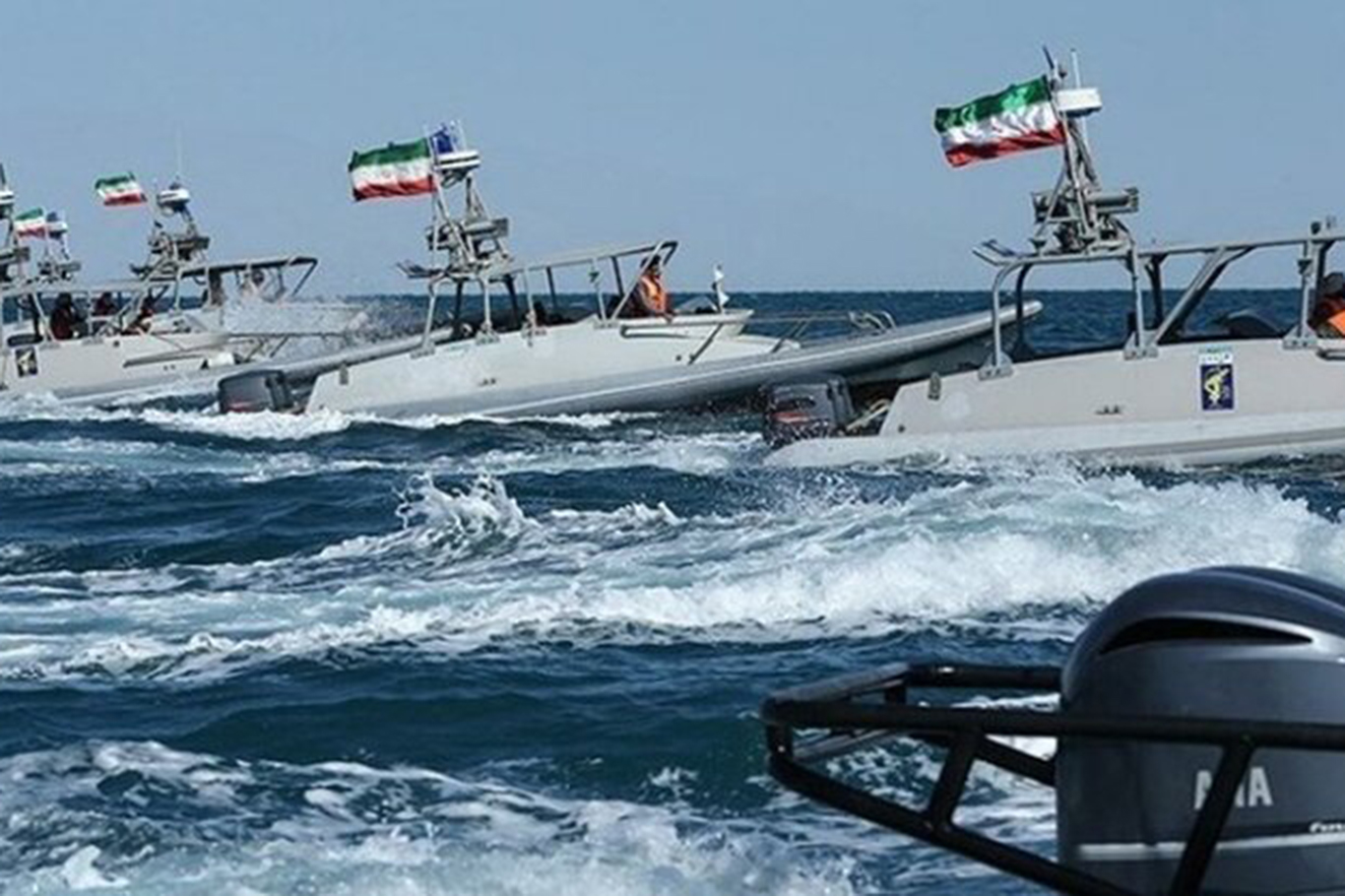
On the eve of a new round of indirect negotiations between Iran and the U.S. in Geneva, the holding of a large-scale naval exercise in the Strait of Hormuz has transmitted a clear message from Tehran regarding the costs of any military adventure; a message sent simultaneously with the increase in the U.S. military posture in the region.
Tehran – IranView24
Citing ISNA, Sky News Arabia, in a commentary on Iran’s exercise in the Strait of Hormuz, wrote: Concurrent with the approach of the second round of indirect negotiations between Tehran and Washington in Geneva through Omani mediation, the Islamic Republic of Iran held a large-scale exercise in the Strait of Hormuz. This is a strategic waterway through which a significant portion of the world’s energy passes, and any insecurity within it will have immediate consequences for global markets.
This exercise was conducted under circumstances where the U.S. has increased the volume of its verbal threats in recent days and simultaneously taken steps to strengthen its military presence around Iran. Analysts believe these mutual movements are part of a battle of wills before entering the sensitive stage of the Geneva negotiations.
Iran’s Military Exercise
In this regard, “Mohamed Abbas Nagi,” an expert on Iranian affairs at the “Al-Ahram” Center, told Sky News Arabia that the timing of this exercise is linked to the upcoming negotiations. He emphasized that Tehran, through this action, is sending a clear message regarding the increased cost of any potential military action.
According to him, what is occurring is a form of mutual psychological warfare between the two sides: Washington by increasing its military posture and the possibility of sending more equipment, and Tehran by displaying its field capabilities and reminding the world of the importance of the Strait of Hormuz to global energy security.
Nagi believes: The recent exercise, implemented by the naval units of the Islamic Revolutionary Guard Corps (IRGC), is not just an ordinary military drill, but rather part of Iran’s active deterrence strategy. This strategy is based on the principle that any military option against Iran will not only be unlimited and high-cost, but could also take on a regional or even trans-regional scope.
Meanwhile, some American circles and the Zionist regime are attempting to pressure the negotiation atmosphere by highlighting the military option. In recent days, statements have been made by Tel Aviv officials regarding the necessity of completely limiting Iran’s nuclear capacities, and there has even been talk of U.S. support for potential attacks. However, Tehran has repeatedly emphasized that its nuclear program is peaceful in nature and that the country’s defensive and missile capabilities are non-negotiable.
According to Nagi, the dominant approach inside Iran is to maintain full defensive readiness alongside pursuing the diplomatic path. This dual approach seeks to create a balance between military deterrence and political opportunity-building, such that the possibility of a miscalculation by the other side is reduced while providing the ground for the lifting of sanctions and economic opening.
Nagi added: From an economic perspective, Tehran seeks an agreement that leads to the removal of unilateral U.S. sanctions and allows for the attraction of investment in strategic sectors such as oil and gas. Some analyses indicate that Iran is trying to increase the cost of confrontation for Washington by presenting a prospect of extensive economic cooperation, while simultaneously gaining tangible benefits through an agreement.
He says: In contrast, Donald Trump’s administration also faces domestic considerations. The White House is trying to show that it has tested all options before resorting to force, while holding Iran responsible for any potential stalemate. Recent statements by U.S. Secretary of State “Marco Rubio,” which indicate the existence of stricter views within the U.S. government, demonstrate that a full consensus over the path of negotiation does not exist in Washington.
Nagi believes: Nevertheless, field realities show that any military action against Iran could have extensive consequences for the U.S.. Therefore, the Hormuz exercise, rather than being a sign of a desire to escalate tensions, is an effort to stabilize the deterrence equation and prevent miscalculation on the eve of negotiations.
This analyst further stated: Ultimately, by emphasizing defensive readiness while simultaneously welcoming dialogue based on mutual respect, Tehran is trying to send a clear message: the path of diplomacy remains open, but this path will only lead to a result if pressure and threats are replaced by realism and the acceptance of Iran’s legitimate rights.