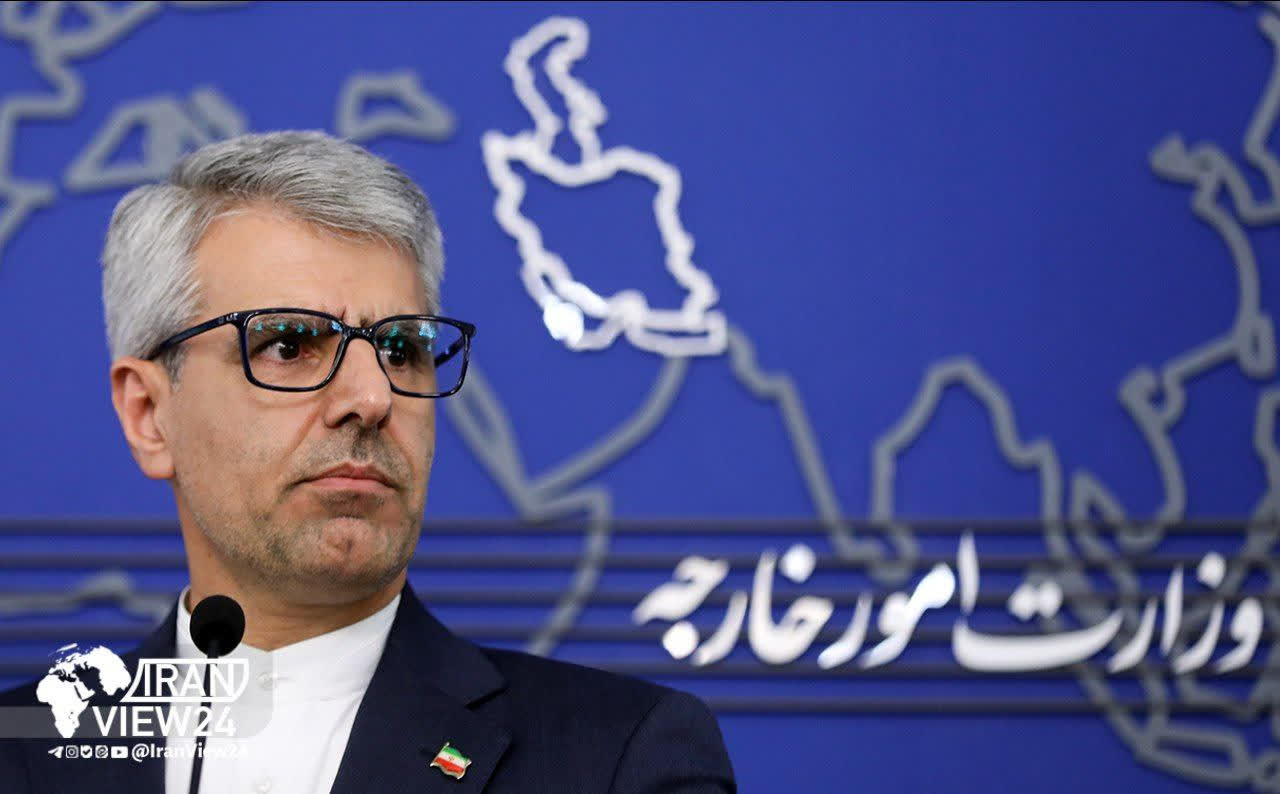
Iran’s Foreign Ministry spokesperson, Esmaeil Baghaei, addressed ongoing rumors regarding the content of talks between Tehran and Washington, stating that speculations about an “interim agreement” are entirely groundless.
Tehran – IranView24
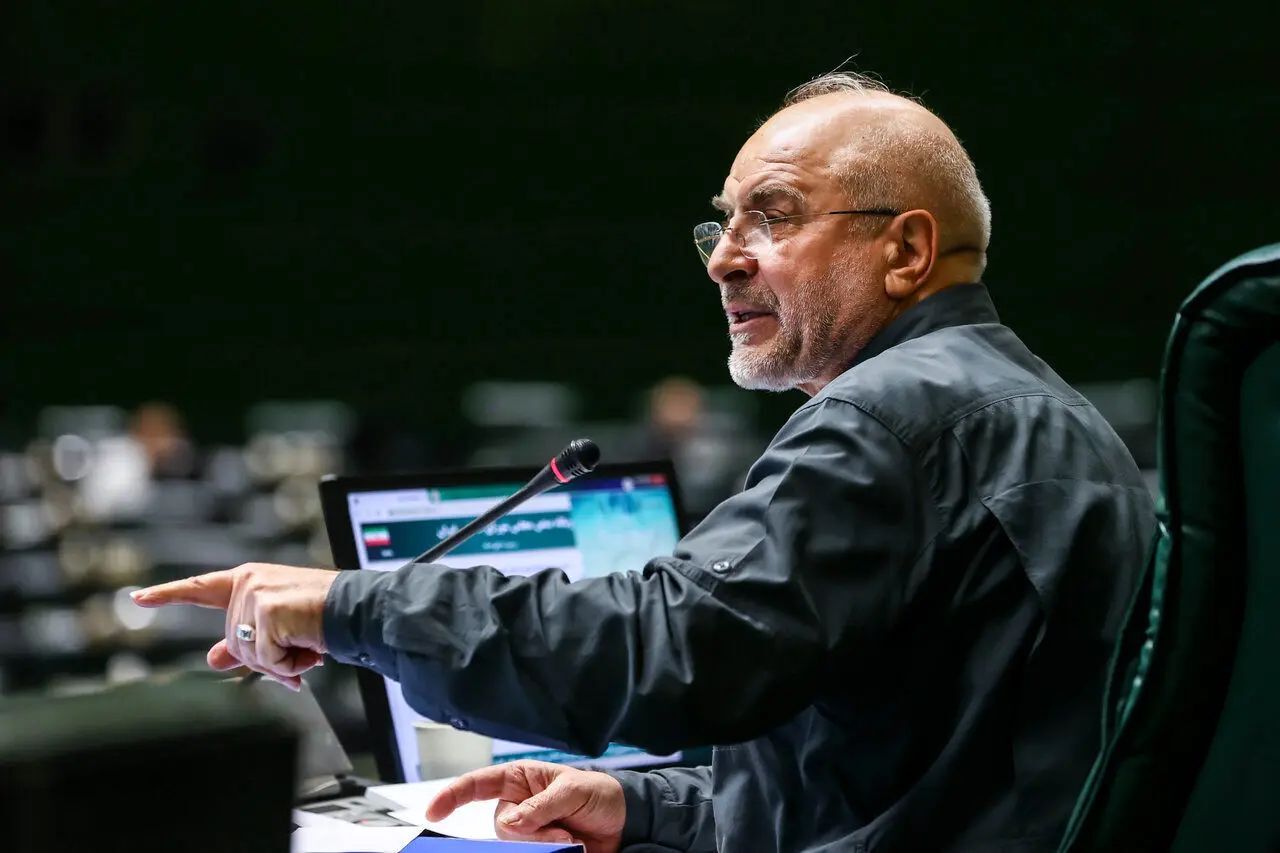
Esmail Baghaei said at his weekly press conference that while there has been extensive speculation about the nature and substance of the talks, “none of these reports are confirmed by us, and speculation about the details of the negotiations—especially regarding an interim agreement—has no basis.”
He added that drafting any negotiation text is a joint undertaking. “Our position on the termination of U.S. sanctions and nuclear-related issues is clear, and we are also aware of the U.S. side’s views.”
We Are in the Drafting Phase
Baghaei stated that if goodwill exists on both sides, there can be hope for progress. “We are currently in the phase of drafting positions,” he said, expressing hope that another round of talks would take place within the next few days, as previously announced by Seyed Abbas Araghchi.
Responding to a question about remarks attributed to U.S. officials suggesting Iran should “surrender” and alleging that Iran is only a week away from obtaining a nuclear weapon, Baghaei said this was not the first time contradictory statements had been heard. “No negotiation aimed at forcing one side will yield results—at least not in the case of Iran,” he stressed.
He reiterated that Iran is serious and determined in pursuing diplomacy, grounded in confidence in the legitimacy of its positions from logical, legal, and international perspectives. “We will continue this process steadfastly, relying on the solid foundations of our demands.”
Nuclear Decisions Are Taken by the Supreme National Security Council
Addressing claims of a duality between the Foreign Ministry and the Secretariat of the Supreme National Security Council in managing negotiations, Baghaei said Iran acts on nuclear matters in accordance with decisions made by the Supreme National Security Council. Relevant institutions, including the Atomic Energy Organization and economic bodies, participate as necessary, with final decisions made at the Council level and implemented by the Foreign Ministry.
On the issue of the Additional Protocol, he noted that Iran had voluntarily implemented it during the period of the 2015 nuclear agreement and that such a step would necessarily require reciprocal measures, including sanctions relief. He described the protocol as a tool for providing additional assurances about the peaceful nature of Iran’s nuclear program.
The Iranian Nation Does Not Yield to Surrender
Asked what underpins Iran’s confidence amid increased U.S. military deployments in the region, Baghaei replied that such confidence stems from the legitimacy of Iran’s cause and its historical and civilizational heritage.
“The character and conduct of the Iranian people are incompatible with surrender,” he said. Over the past 48 years, the Iranian nation has sought dignity, independence, and respect for national sovereignty. “From the perspective of international law, speaking of surrender contradicts established legal principles,” he added, emphasizing that a nation determined to safeguard its independence and territorial integrity will remain steadfast.
He further argued that the United States cannot ignore Iran’s national and security concerns. “Judging Iran through your own lens will not lead to accurate conclusions,” he said, adding that Iran will frustrate those seeking excessive demands, whether the United States or others adopting a posture of superiority.
Baghaei remarked that a statesman’s legacy should be one of healing historical wounds, not reopening them.
Sanctions Relief Must Be Tangible
On sanctions relief within the framework of nuclear talks, the spokesperson said the Iranian public closely follows the process. “People witnessed in June and now again that we are prepared to continue negotiations for days and weeks to achieve results,” he stated, adding that negotiations are only useful if they produce outcomes. “Reason, logic, and ethics dictate that sanctions be lifted as soon as possible.”
Afghanistan, Israel, and Regional Security
Regarding the potential recognition of Afghanistan’s Islamic Emirate, Baghaei said Iran’s relations with Afghanistan are based on mutual respect and shared interests, noting deep cultural and civilizational ties. The issue of recognition, he said, would be announced by the Foreign Ministry once a final decision is reached.
On Israel, Baghaei rejected claims that Israel’s objective is limited to confronting a particular sectarian axis. “For Israel, there is no distinction between Shia and Sunni, Arab or non-Arab,” he said, asserting that Israeli officials have openly declared ambitions of regional dominance. Such rhetoric, he added, reinforces the view that the Israeli regime represents a persistent threat to the region and underscores the need for greater regional cooperation.
Military Preparedness and Negotiations
Addressing threats made alongside ongoing negotiations, Baghaei said Iran’s armed forces remain vigilant and ready to defend the country. “We have always said we will not be influenced by threats,” he noted, emphasizing that Iran remains focused on safeguarding the rights and interests of its people. If Iran concludes that the other side seeks deception or bad faith, it will take proportionate action.
“While we are in the negotiation room, our military forces will remain even more vigilant in monitoring developments,” he added.
On whether the United States is expected to present a proposal, Baghaei said seriousness in negotiations requires all parties to engage constructively and in good faith. Drafting any document necessitates cooperation from all sides. Iran is finalizing its positions, while the timing and method of presenting proposals are being coordinated with Oman as the mediator.
Inspections of Damaged Sites
Responding to a question about inspections of damaged nuclear sites, Baghaei said Iran remains committed to its obligations and that all agreed inspections of peaceful nuclear facilities for 2025 have been carried out. However, he described damaged facilities as a separate matter and said that without an established protocol, Iran is unable to grant access.
EU Decision on the IRGC
Commenting on the decision of the EU Council of Ministers to designate the Islamic Revolutionary Guard Corps as a terrorist organization, Baghaei said the move violates international law and the UN Charter. “Labeling part of a country’s official armed forces under any circumstances is unjustified,” he said.
He added that Iran’s subsequent designation of certain European naval and air forces as terrorist entities was a response to what he described as the EU’s unlawful action. “From now on, their presence will be viewed differently, as they are considered terrorist organizations, and this carries its own consequences,” he stated.