Contrary to media reports, the Turkish National Intelligence Organization warns against the emergence of Israeli hegemony in the region following the war with Iran.
Ali Heydari, Specialist on Turkish Affairs
The Turkish National Intelligence Organization (MIT), following its report on the 12-day war between Israel, the United States, and Iran, has also produced a report on the 40-day war. This report addresses various strategic dimensions of the conflict, including military doctrines, emerging technologies, intelligence operations, energy security and critical infrastructure, social resilience, and media strategies.
As in the previous report, the lessons that Turkey’s military-security establishment—namely its armed forces and intelligence services—must derive from the war are outlined in summary form. This article examines those lessons.
Introduction: The Transformation of Modern Battlefields
The report’s introduction states that the US-Israeli war against Iran has demonstrated that the environment of modern warfare has shifted from a traditional approach to a new structure based on data, networks, production capacity, and operational sustainability. The war provides critical insights into the nature of future conflicts through the use of air power, artificial intelligence, electronic warfare, network-centric operational capabilities, and the targeting of critical infrastructure.
The extensive use of AI-based systems in intelligence, surveillance, and reconnaissance (ISR) processes, target detection, prioritization, and air defense has dramatically accelerated decision-making cycles. This development indicates that superiority in modern warfare is shaped not only by human capacity but also by data processing, algorithmic analysis, and real-time integration capabilities.
Military Technologies and Doctrinal Challenges
The first section of the report addresses the role of emerging technologies in warfare.
The conflict reveals a multi-layered transformation: from the integration of AI-supported decision-making mechanisms into operational processes to the exposure of the limitations of air and missile defense; from the direct targeting of critical infrastructure to the decisive role of electromagnetic spectrum control.
The conflict demonstrates that the nature of warfare has moved away from a platform-centric approach and has been reconfigured around the pillars of networks, data, production capacity, and social resilience.
The widespread use of precision-guided munitions, the increased effectiveness of low-cost systems, and the significant shortening of detection-identification-destruction cycles have fundamentally transformed the relationship between operational speed and decision-making superiority.
The evolution of command-and-control structures toward distributed and network-centric architectures has increased the vulnerability of centralized systems while simultaneously highlighting the survivability of flexible and redundant structures.
The Increasing Role of Artificial Intelligence
The role of artificial intelligence on the battlefield has undergone a qualitative leap as a result of the US-Israeli war against Iran. AI has moved beyond being merely a decision-support tool and an aid to intelligence production, becoming an integrated component of the command-and-control structure that directly generates operational outcomes.
As a result of this transformation, two fundamental issues concerning the nature of warfare have come to the forefront: the acceleration of decision-making processes and the related challenges of authority delegation and accountability created by this speed.
Since the outset of the war, US and Israeli air operations have been conducted through coordinated and simultaneous strikes with AI at their core. It has been established that a large proportion of these strikes—particularly those that resulted in the assassination of key leaders—utilized communication infrastructure and real-time data processing in target detection and identification, target-weapon matching, method-of-attack selection, and post-strike damage assessment. In this context, AI technologies are at the center of ISR (Intelligence, Surveillance, and Reconnaissance) activities.
For example, the United States employs Claude AI, developed by Anthropic, and the AI-based decision-support system Maven, developed by Palantir, for target detection and prioritization. Israel has similarly activated comparable capabilities within its Gospel and Lavender systems and has employed them in its military operations.
One of the most critical aspects of modern warfare is determining which targets, among vast target sets, should be struck and at what time. The fact that the United States and Israel have stated that they are working on thousands of targets demonstrates that manually processing such a workflow is virtually impossible.
In this context, AI performs three primary functions: target classification, prioritization, and dynamic updating.
Air and Missile Defense
The war has definitively revealed a reality long debated within the field of air and missile defense: there is no such thing as an impenetrable air-defense umbrella. The conflict demonstrated that even the most advanced multi-layered systems can be penetrated through saturation attacks, innovative employment of munitions, and cost-imposition strategies.
A comprehensive reassessment of the traditional multi-layered air and missile defense approach is therefore required.
Furthermore, the war highlighted the critical importance of cost considerations in air and missile defense operations. Iran’s strategy of exhausting expensive interceptor inventories through the use of relatively low-cost missiles and drones calls into question the long-term sustainability of such defensive systems.
Protection of Critical Infrastructure and Bases
The operational trajectory of the war demonstrated that the distinction between the rear area and the battlefield has effectively disappeared, and that critical infrastructure is now directly targeted as a strategic center of gravity.
Energy facilities, oil refineries, ports, water-treatment plants, and logistical arteries have become priority targets selected by belligerents seeking to undermine an opponent’s will to fight and destroy its economic sustainability.
The vulnerabilities associated with static and concentrated basing structures have increased the importance of the dispersed basing doctrine in force deployment and logistics.
The Electromagnetic Spectrum Battle and Cyber Warfare
Beyond physical engagements, electronic warfare (EW) and cyber operations constituted the most invisible yet arguably the most decisive layer of the conflict. Regional jamming and spoofing of Global Positioning System (GPS) and Global Navigation Satellite System (GNSS) signals directly affected munition accuracy and platform navigation security.
In this domain, the side capable of severing enemy communications, disabling UAV data links, and blinding radar systems will enjoy tactical and operational superiority.
Political and Geopolitical Assessments
The recent war should not be assessed solely through its military outcomes; it must also be examined through the lens of Iran’s internal dynamics, the position of regional actors, critical transit corridors, economic vulnerabilities, efforts to establish a new security architecture, and the normative erosion of the international system.
Iran
The impact that this war will have on political balances and elite dynamics within Iran is as significant as its military and security dimensions.
Although the transfer of power following the passing of Seyyed Ali Khamenei appears to have occurred without major tension, debates regarding the new leadership’s health and the shape of the post-war political order are likely to continue. At the same time, changes in administrative, civilian, and military positions will inevitably alter the balance of power among various factions and personalities.
However, it should be noted that no major schism or rupture has emerged within the system to date, and both institutional and individual actors have continued to operate with a notable degree of cohesion.
Israel
The war marks a significant turning point in Israel’s strategic identity. This shift is evident in the security paradigm that Israel has maintained since its establishment, indicating a transition toward direct regional hegemony sustained through conventional military power.
Similarly, Israel has moved beyond attrition warfare conducted through proxy actors and has entered the arena of direct interstate conflict. The coordinated responses of Hezbollah, Ansarallah (the Houthis), and Iraqi resistance groups to strikes on Iranian territory have reinforced Israel’s acceptance of multi-front warfare as a structural and enduring reality.
This development suggests that Israeli expansionism may not remain confined to Palestine and that neighboring states could increasingly perceive themselves as potential targets, indicating a broader structural shift in regional security dynamics.
Two principal dynamics shaped the timing and character of the war from Israel’s perspective. First was Netanyahu’s use of the conflict to sustain his political survival. Second was the Israeli government’s attempt to take advantage of the strategic space created by the Trump administration to decisively weaken Iran.
The primary structural risk for Israel lies in the normalization and institutionalization of perpetual conflict, the creation of enduring enemies, and the maintenance of permanent occupation. Such developments may facilitate the mainstreaming of radical political currents and their social base, potentially placing Israel in a continuous state of tension with both regional states and international public opinion.
The Persian Gulf States
The third party most acutely affected by the war is the Persian Gulf states, particularly the United Arab Emirates. From their perspective, the most significant outcome of the conflict has been the exposure of vulnerabilities within their national security strategies and defense mechanisms.
Although the establishment of a ceasefire is a favorable outcome for the Persian Gulf states, the manner in which peace is structured—the nature of the agreement reached—and Iran’s position in the post-war environment are of critical importance. An agreement that enables Iran to achieve even a relative victory in negotiations with the United States would constitute a major concern for the Persian Gulf states.
It is evident that the primary objective of the Gulf states is to secure an agreement that constrains Iran to a certain degree and prevents it from acquiring military capabilities perceived as threatening to their security. However, under current circumstances, achieving these objectives appears highly unlikely.
Global Impacts
From the perspective of the war’s economic consequences, the Strait of Hormuz occupies a central position. The Strait of Hormuz is one of the world’s most important transit routes, through which approximately 25 percent of global oil trade, 20 percent of liquefied natural gas (LNG) trade, and roughly 30 percent of global fertilizer trade pass.
For this reason, a crisis in the Strait transcends a conventional regional security issue and generates direct, multilayered repercussions for the global economy.
In this context, Iran’s threat to close the Strait stands out not only as a military response but also as a deliberate geo-economic strategy aimed at exerting pressure on the global economic system. From this perspective, Hormuz has become the principal mechanism through which a regional conflict can be transformed into a global economic shock.
As alternatives to the Strait of Hormuz, two transportation and connectivity projects in which Turkey plays a central role deserve particular attention:
The Development Road: Beginning in the Basra Gulf region, passing through Iraq and Turkey, and ultimately reaching European markets, this project establishes a north-south transportation axis.
The Middle Corridor: Extending from Central Asia through the Caspian Sea to Turkey, this initiative creates an east-west connectivity network linking Asia and Europe.
Assessments and Recommendations for Turkey
Military Technology and Defense
From Turkey’s perspective, the primary lesson of the US-Israeli war against Iran has been the demonstrated necessity of achieving “three-dimensional depth” in the defense industry. Within this framework, the importance of technological superiority and capability (quality), alongside production volume (quantity), as well as the adaptability and sustainability of these capabilities during prolonged conflicts, has become increasingly evident.
Given the high consumption rate of precision-guided munitions, the widespread use of low-cost systems, and the deliberate targeting of critical infrastructure, the effectiveness of the defense industry must be assessed not only in terms of its ability to develop advanced technologies but also through criteria such as mass-production capacity, supply-chain resilience, and rapid replacement capabilities.
Accordingly, defense-industrial policies should not focus solely on platform development and technological superiority. They must also be grounded in a multilayered production architecture, close industrial-military integration, and scalable manufacturing capacity during times of crisis.
The war has likewise demonstrated that existing military doctrines—particularly in the fields of air and missile defense and maritime offensive operations—require urgent and comprehensive revision. The vulnerability of multilayered air-defense systems to saturation attacks and the restricted mobility of large platforms in narrow, high-threat environments necessitate a fundamental reassessment of both defensive and offensive doctrines.
It is essential that the national air-defense umbrella be designed as a distributed and mutually supportive system. The limited effectiveness of Israeli and Gulf-state air-defense systems against repeated salvos of ballistic missiles and loitering munitions, combined with the vulnerability of expensive and static early-warning systems, offers valuable insights into how modern air-defense architectures should be structured.
For a country such as Turkey, which possesses a vast territory and maintains military, political, economic, and strategic interests across a broad geographical area, constructing a completely impenetrable air-defense shield is practically impossible. Therefore, a more rational approach would be to develop a flexible and rapid-response defensive network based on highly mobile sensors and weapons systems capable of both receiving intelligence from multiple sources through network-centric structures and operating autonomously when required.
The report also emphasizes the necessity of a comprehensive cyber and electronic warfare strategy. Such capabilities should not be confined solely to military applications; rather, they should be managed through coordinated efforts involving state institutions, the private sector, academic communities, and society at large.
Turkey’s approach to regional power projection must also be reassessed in light of this evolving warfare environment. In this regard, integrated networks of aerial, ground, and unmanned systems offer a cost-effective and sustainable model for projecting power across the region.
Strategic Resilience and Social Resistance
One of the most significant structural consequences of the war has been the effective disappearance of the distinction between internal and external security. Cyberattacks have targeted critical infrastructure, energy systems, and communication networks, while information and perception-management operations have sought to influence both domestic and international public opinion.
Conflict is no longer confined to the battlefield; it now penetrates deeply into societies themselves. This reality fundamentally transforms defense planning. Readiness for war can no longer be measured solely by the capabilities of the armed forces. Cyber resilience, infrastructure security, and societal resilience have become determining variables equal in importance to conventional military capacity.
Furthermore, the vulnerability of supply chains, dependence on foreign sources for critical systems, and the transformation of data infrastructure into a strategic target have elevated the development of indigenous technologies from a policy preference to a national security necessity.
Cognitive Warfare and the Manipulation of Public Opinion
The US-Israeli war against Iran has once again demonstrated that modern warfare unfolds not only on physical battlefields but also within the domains of perception management, decision-making processes, social psychology, and the broader information ecosystem.
Throughout the conflict, belligerents sought to influence threat perceptions, decision-making processes, psychological resilience, and the political endurance of societies. This development indicates that the cognitive battlefield is no longer a secondary element of hybrid warfare but has become a primary arena for generating strategic outcomes.
In particular, AI-generated content, algorithmic manipulation, real-time disinformation campaigns, deepfake technologies, and psychological influence operations conducted through social media have created a new operational capability that extends far beyond the traditional concept of propaganda.
The objective is no longer merely the dissemination of false information. Rather, the principal goals include:
- Slowing or manipulating strategic decision-making processes;
- Eroding public trust;
- Generating fear and panic during critical moments; and
- Weakening the relationship between the state and society.
In other words, information has become a weapon capable of producing direct operational effects.
Regional Geopolitics and Turkey’s Post-War Position
During the initial phase of the conflict, strikes targeting the leadership of the Islamic Republic and Iran’s ruling elite produced only limited effects, and the anticipated path toward regime change failed to materialize. Consequently, the limitations of decapitation strategies became increasingly evident.
Despite the social anger generated by the war, Iran’s ability to preserve internal unity and social cohesion played a critical role in maintaining domestic stability. This experience highlights the importance of policies aimed at strengthening strategic resilience and societal cohesion, areas that Turkey should likewise prioritize.
One of the most important lessons of the war was the renewed demonstration that the security guarantees provided by extra-regional powers are both limited and conditional. Although the United States remains a central component of the region’s deterrence architecture, its military presence does not provide absolute security for the Gulf states during periods of crisis.
The Outlook for Tehran-Ankara Relations in the Post-War Period
Turkey’s balanced, cautious, and escalation-averse approach since the outbreak of the conflict—and even during earlier periods of unrest within Iran—has been closely observed in Tehran and has generally been received positively.
Similarly, Turkey’s measured response to missiles launched from Iran that entered its airspace and were subsequently intercepted reflected a deliberate policy choice aimed at avoiding unnecessary escalation. This approach has clarified Turkey’s intentions regarding Iran’s emerging political and security architecture and has opened valuable diplomatic space in Tehran.
In the new post-war environment, Iran’s growing desire to pursue regional balancing strategies and its need for greater economic and political maneuverability may create opportunities for a controlled strengthening of Turkish-Iranian relations. Consequently, maintaining diplomatic channels, sustaining dialogue, and carefully managing efforts to establish a new regional balance remain strategically important for Turkey.
At the same time, should Iran emerge from the conflict with a perception of victory and subsequently pursue policies that threaten regional stability, Turkey will need to adopt a comprehensive security approach and take appropriate precautionary measures.
Turkey-Israel Relations in the Post-War Period
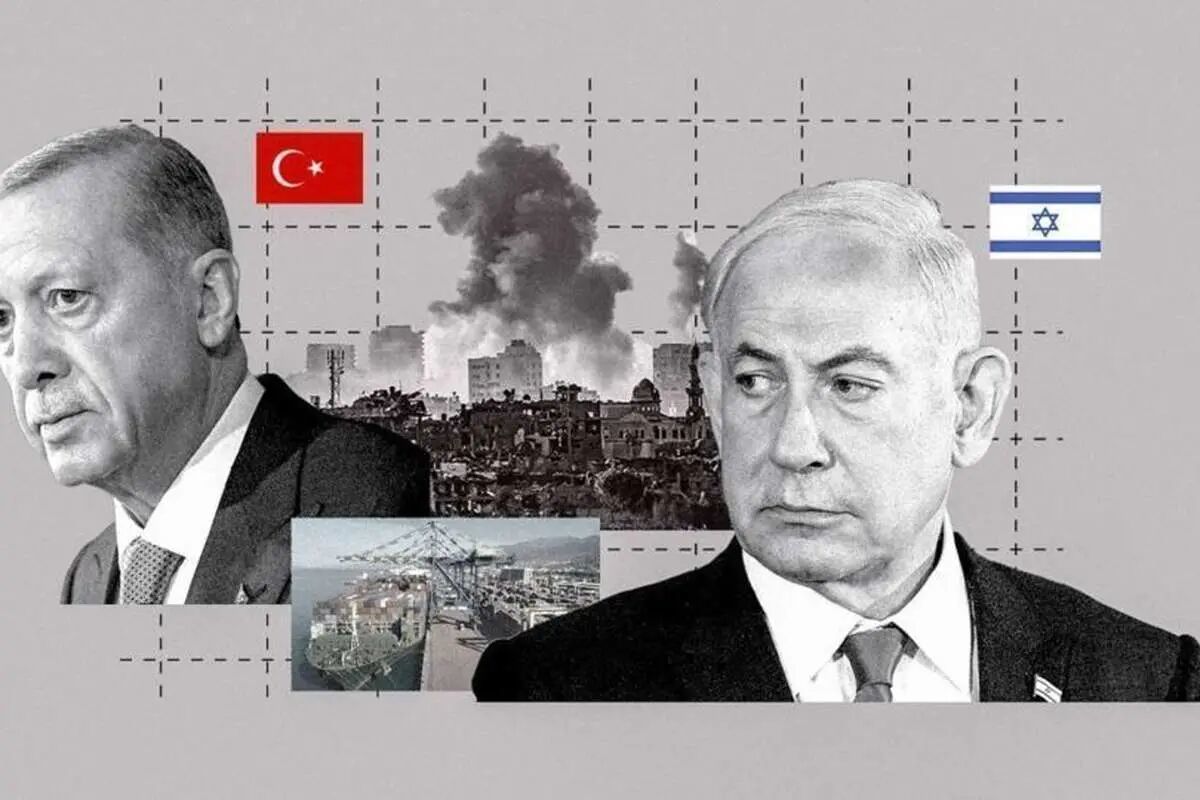
Israel views the weakening of Iran as a strategic opportunity to expand its regional freedom of maneuver. At the same time, it increasingly perceives Turkey as the principal obstacle to its broader regional ambitions.
As a result, the likelihood that competition between Ankara and Tel Aviv will evolve into more direct strategic confrontations—particularly in Syria, the Eastern Mediterranean, and the emerging regional security architecture—appears to be increasing.
In particular, Turkey’s growing portrayal as a “strategic challenge” within Israeli military and political discourse suggests that bilateral relations may, over the long term, evolve into a relationship characterized by a mixture of controlled competition and persistent strategic tension.
Conclusion
Turkey finds itself in a strategic environment shaped simultaneously by substantial risks and significant opportunities. Its geopolitical position, defense-industrial capabilities, operational experience, diplomatic flexibility, and capacity for multidimensional power projection collectively position it as an important actor in the emerging regional order.
Nevertheless, evolving structural realities require Turkey to deepen its strategic capabilities in the years ahead.
Ultimately, the US-Israeli war against Iran signals the emergence of a new era in which the international security order is undergoing profound transformation, middle powers and regional actors are assuming greater responsibilities, and the nature of warfare itself is being fundamentally redefined.
In this new era, power will be determined not only by military strength but also by technological production capacity, data sovereignty, societal resilience, sustainability, and strategic adaptability.
For Turkey, the central question is whether it can interpret this emerging historical rupture not merely as a source of crisis and threat, but as an opportunity for long-term strategic advancement.
In other words, Turkey’s role within the emerging security architecture will ultimately depend on its ability to transform its existing capabilities into a sustainable, integrated, and coherent long-term strategic vision.