Pakistan has suddenly transformed from an eastern neighbor into a central player in the secret diplomacy between Tehran and Washington. In a week when Trump threatens Iran, Pakistani generals and their interior minister have been building bridges between Tehran and the White House through intense, low-profile visits—a role that has been welcomed by Iran. But why?
Iran View 24 – Foreign Policy
Over the past week, coinciding with the escalation of Donald Trump’s threatening rhetoric against Iran, Pakistan has intensified its diplomacy, conducting several high-level visits to Tehran to reduce rifts and facilitate a new round of negotiations.
Mohsin Naqvi, Pakistan’s Interior Minister, has traveled to Tehran twice in less than a week. These visits aimed to exchange messages, provide supplementary explanations, and coordinate with Iranian officials, including the President, Interior Minister, and Foreign Minister.
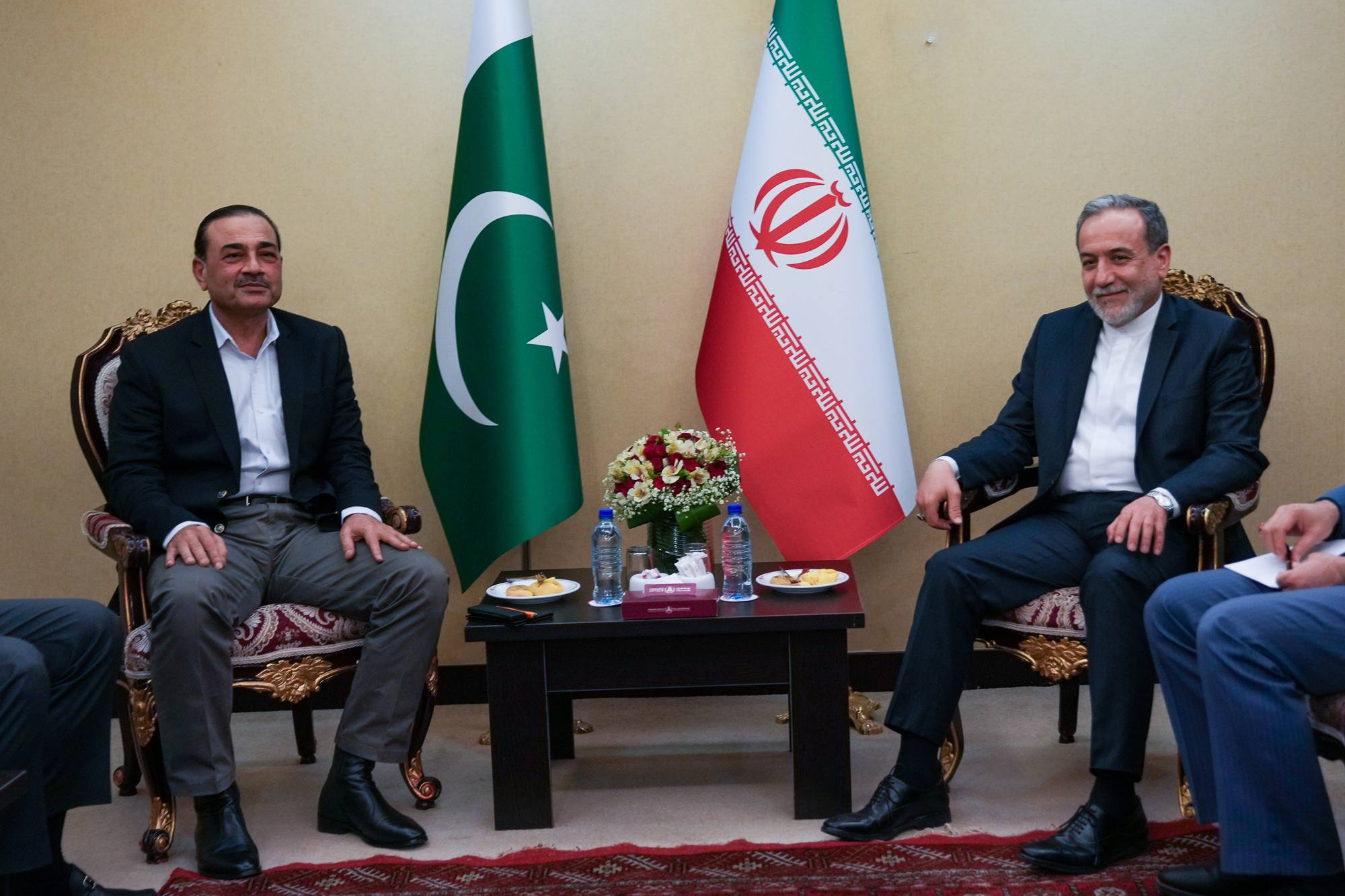
Yesterday, General Asim Munir also traveled to Tehran for the second time since the establishment of a temporary ceasefire, holding a lengthy, multi-hour meeting late last night with Seyyed Abbas Araghchi, Iran’s Foreign Minister.
Although official sources in Tehran and Islamabad have made minimal media statements about these consultations in recent days, experts believe these visits are part of Islamabad’s intensive effort to prevent a return to conflict and advance an agreement to resume negotiations on key issues such as Iran’s nuclear program, sanctions, and freedom of navigation in the Strait of Hormuz.
It is worth noting that following the US and Israeli war against Iran, Pakistan has suddenly emerged as an unexpected yet key player in international diplomacy, taking on the role of the main mediator between Tehran and Washington. This mediation has occurred amidst intense regional tensions and efforts to establish a ceasefire and peace talks. At the same time, it reflects Pakistan’s security-military weight in mediation—a role that has been welcomed by Iranian officials.
Pakistan has leveraged its historical, geographical, and diplomatic ties with both sides to establish an effective communication channel.
Islamabad has a significant historical record in mediation. Pakistan played one of its most important historical roles in global diplomacy in the early 1970s, acting as a secret communication channel and the main mediator between the United States and the People’s Republic of China. Subsequently, Henry Kissinger, then US National Security Advisor, boarded a Pakistan International Airlines (PIA) flight from Islamabad in July 1971 and traveled secretly to Beijing. That trip paved the way for President Richard Nixon’s historic visit to China in February 1972, leading to the normalization of relations between the two countries.
Following the 40-day war, Pakistan has hosted the Iran—US talks in Islamabad, relayed messages, and played a pivotal role in establishing a temporary ceasefire. These efforts are part of a broader diplomacy involving Qatar, Turkey, and Egypt, but Pakistan has emerged as the main actor.
The primary reasons for Pakistan’s relative success in the Iran-US mediation file can be summarized as follows:
Relative neutrality: Pakistan hosts no US military bases while maintaining good relations with both Iran as a neighbor and the US, especially during Trump’s second term.
Communication channels: The Pakistani embassy in Washington serves as the protecting power for Iran’s interests, thus establishing a stable communication channel.
Mutual trust: Iran trusts Pakistan due to their shared border and cultural-religious understanding. The US has also affirmed this role by inviting General Asim Munir to the White House and through Trump’s praise of “Pakistan’s understanding of Iran.”
However, challenges also exist in this regard. Some Iranian experts have occasionally questioned Pakistan’s neutrality, and some analysts—pointing out that Pakistan’s military received tens of billions of dollars in US military aid until 2022—worry that Pakistani generals may unintentionally tilt the negotiation process in Trump’s favor.
Nevertheless, Pakistan’s mediation role signals a shift in South Asian as well as West Asian diplomacy. Despite the challenges, Islamabad’s persistent efforts, particularly through the travel of senior officials to Tehran, have raised hopes for reaching an agreement.
The success or failure of this mediation will affect not only regional security but also Pakistan’s geopolitical standing.
Tehran, for multiple bilateral, regional, and international reasons, is inclined toward the success of the negotiations mediated by Pakistan.
First, at the domestic level within Pakistan, public opinion and the country’s political-religious groups have always shown strong and symbolic support for the Islamic Republic of Iran. A failure of the talks could undermine this valuable social capital.
Second, at the regional and trans-regional level, both Iran and Pakistan are key partners of China. The success of these talks would provide the stability needed to complete joint trilateral projects (Iran, Pakistan, China), including in transit cooperation. Additionally, it is worth recalling that Pakistan is the only Muslim country possessing nuclear weapons.
Third, Tehran seeks to neutralize American and Israeli plots to “create instability in its eastern neighborhood” by positively managing border and security tensions with Islamabad. Therefore, the success of Pakistan’s mediation is not only a diplomatic priority but also a necessity for maintaining strategic alignment in regional stability and security and strengthening the Eastern Axis (China, Pakistan, Iran) alongside public support for this convergence.
Hence, Iran views Pakistan’s mediation with greater empathy.