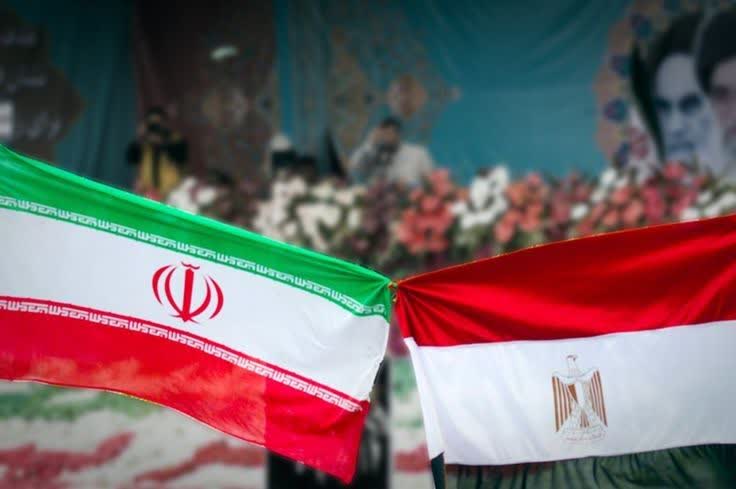
Iran and Egypt have had no diplomatic relations since 1980, but in recent years, efforts have been made to restore them. The head of the Iranian Interests Section in Cairo, Mojtaba Ferdowsipour, recently said that a decision to exchange ambassadors between the two countries had already been taken and was only awaiting an official announcement. He described his own appointment, with ambassadorial rank, as the representative of Iran’s Interests Section in Egypt as proof of this. He also noted that neither Egypt nor Iran was in a hurry to move forward. Ali Soltani-Fard, an expert on Egyptian affairs, told Iran Daily that Tehran had left the path of normalization to Cairo, so it can prepare the ground for the formal reopening of embassies, but he assessed the process as positive and moving ahead. According to him, Egypt views Iran as a friendly and stabilizing country capable of shifting regional security dynamics in its favor.
Tehran – IranView24
IRAN DAILY: How final and irreversible do you consider this process? What are the main factors behind the delay in officially announcing the decision?
SOLTANI-FARD: Relations between Iran and Egypt have seen many ups and downs since the victory of the Islamic Revolution (1979). In different administrations, steps were taken toward normalizing ties, but for various reasons specific to each period, these efforts did not lead to normalization or, in practical terms, the reopening of embassies. However, in recent years, given the evolving regional dynamics and developments, the relationship has undergone positive changes and has continued to move forward. The issue of reopening embassies has been on the table for the past two to three years and remains under discussion. Foreign Minister Abbas Araghchi has repeatedly pointed out that Iran enjoys very good diplomatic relations with Egypt despite the absence of full embassy-level ties and that there is no rush. In fact, this path has been left to the Egyptians so that whenever the initial conditions are prepared on Cairo’s side, the reopening of embassies can also be carried out. Therefore, this is a forward-looking process, and the two countries are clearly pursuing numerous shared interests at both regional and global levels, with regional stability and security being the most important.
What domestic or regional obstacles could challenge the normalization process, and how can the two countries manage them?
Challenges have always existed in the region across various issues, and several files are currently under discussion between the two sides. The most important one is Gaza and Palestine. In addition, other regional and international matters play a role, including evolving regional developments, particularly the aggressions carried out by the United States and Israel against Iranian territory, as well as other dynamics taking shape, as in Syria and Sudan. Nevertheless, shared interests do exist between the two countries. Despite these obstacles, the positions adopted by both sides have been constructive and forward-looking. The talks taking place between the two foreign ministries have been positive, and contacts continue on a regular basis. Araghchi has even held consultations with his Egyptian counterpart regarding the negotiations currently taking shape between Iran and the United States. Furthermore, discussions also took place with officials from the International Atomic Energy Agency in Egypt. This demonstrates that despite regional issues, Egypt has also stood alongside Iran on broader international matters and has adopted positive positions.
Given Egypt’s peace agreement with Israel, what impact would closer Tehran–Cairo ties have on regional balances, and could this affect Cairo’s interaction with Tel Aviv or Middle Eastern security dynamics?
Regarding relations between Egypt and Israel, it should be noted that the ties established in the 1970s under Anwar Sadat do involve political and security dimensions, but they do not mean full alignment or complete compliance with Israel in these areas. Egypt has always prioritized its own interests at different junctures. Even during the recent Gaza war, despite strong pressure from the United States to accept displaced residents from the Strip, Egypt resisted and was not willing to accept a systematic relocation of Palestinians onto its territory. Cairo has consistently placed its national and security interests first. The same equation applies to relations between Tehran and Cairo. Egypt will naturally prioritize its own national and security interests in any relationship with Iran and will push back wherever it feels its security is threatened. Egypt views Iran as a friendly and stabilizing country in the region. Given the insecurity along Egypt’s borders, which undermines regional security and national interests, it is highly important for Cairo to develop ties with Tehran in order to tilt the regional security balance in its favor. Therefore, Israel is unlikely to exert a systematic or fundamental influence on the advancement of Tehran-Cairo relations, considering Egypt’s security priorities.
What political, economic, and security advantages would the full restoration of diplomatic relations between Tehran and Cairo bring for Iran?
Beyond the longstanding historical ties between the two countries, under current conditions Iran and Egypt can stand together politically and in terms of security. Given their historical importance and geopolitical weight, alongside other regional powers such as Turkey and Saudi Arabia, they could help provide regional stability and curb the aggressions and excessive demands of Israel. Such actions are detrimental to all regional countries, as economic interests and development can only be achieved in a secure environment. With the development visions that countries across the region have set for themselves, they are seeking to restore stability and security to secure greater economic gains. In addition to key political and security dimensions, economic cooperation is also important. Given Egypt’s historical attractions, tourism would certainly be one of the channels connecting the two countries. At one point, a tourism agreement was even signed to facilitate the exchange of tourists, although it was not fully implemented. Nevertheless, the potential and capacities exist for Iran to become a tourism destination for Egyptians and, reciprocally, for Egypt to become a major destination for Iranian travelers. Therefore, the development and full restoration of diplomatic ties could encompass all these areas.