
The Public Relations Department of the Islamic Revolutionary Guard Corps (IRGC), in continuation of the retaliatory “Nasr 2” operation and in response to the U.S. military’s war crimes against civilians and Iranian infrastructure, has reported the destruction of numerous strategic targets belonging to the U.S. in Kuwait, Bahrain, Jordan, Qatar, Syria, and Oman. The IRGC further declared that the Strait of Hormuz will remain completely closed until the cessation of American hostilities.
Tehran-IranView24
In the latest developments concerning the military tension between Iran and the United States, the IRGC, through a series of communiqués numbered 15 to 29, announced the execution of new waves of Operation “Nasr 2” against American military assets in the region. These strikes were carried out in response to the recent aggressions by the U.S. military against various locations in Iran, including attacks on the Baqai Pediatric Cancer Hospital, bridges in Khuzestan and Hormozgan provinces, and other civilian infrastructure.
In a widespread operation, the IRGC’s Aerospace and Naval Forces utilized their missile and drone capabilities to engage targets across multiple countries. According to the communiqués of Operation Nasr 2:
The IRGC Navy successfully destroyed the sea-control radar at the Salameh Rocks and the American air-control radar stationed in the Ghanm area of Oman.
Other successes of Operation Nasr 2 include the destruction of the C-RAM system’s early-warning radar and the assembly point of American soldiers at the Ali Al-Salem base in Kuwait, as well as the destruction of the fuel-support jetty for the U.S. fleet at Al-Ahmadi Port and a U.S. signal and telecommunications center in Kuwait.
Among the targets achieved by Iranian Armed Forces in the past two days were the destruction of the air detection and control radar and the fighter jet fuel pumping station at the Sheikh Isa base, along with the complete destruction of the enemy’s data-intelligence center (Batelco) and the U.S. unmanned vessel depot (USVs) in Bahrain.
The list also includes the destruction of the fighter jet maintenance ramp and the new U.S. command center (CENTCOM) at the Al-Azraq base in Jordan, a heavy strike on the Al-Udeid Air Base in Qatar, and the destruction of a long-range radar system and several U.S. strategic aerial refueling aircraft.
From a strategic perspective, the selection of radar centers as targets indicates a shift in Iran’s operational focus—from merely attacking bases and combat equipment toward targeting the enemy’s intelligence infrastructure and command-and-control systems. The radars positioned south of the Strait of Hormuz are integral to the U.S. early-warning network for monitoring aerial and naval movements in the Persian Gulf, the Sea of Oman, and the approaches to the Indian Ocean. They play a vital role in directing aerial and naval operations and managing the battlespace.
Striking these centers can disrupt the U.S. intelligence-gathering chain, target acquisition, rapid warning, and operational coordination in one of the world’s most geopolitically significant choke points. As such, this operation is evaluated as more than a tactical strike; it is part of Iran’s broader strategy to degrade U.S. information superiority and curtail the operational freedom of American forces in the region.
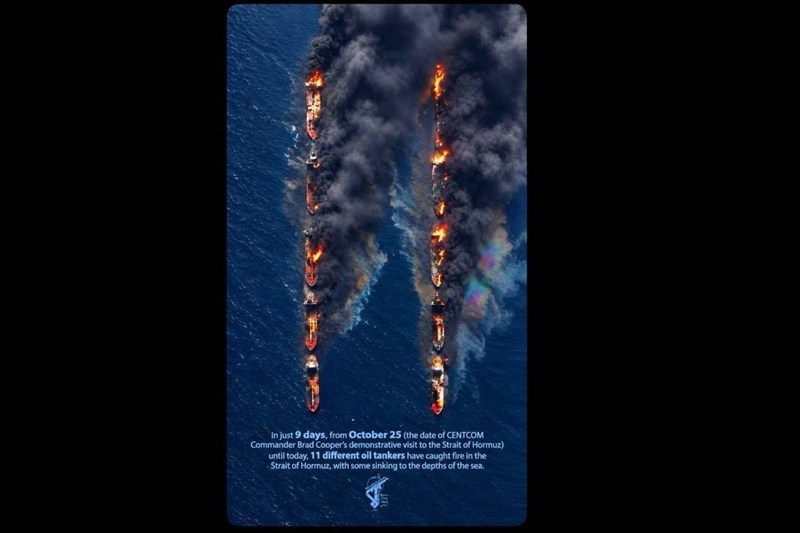
Furthermore, sections of the communiqués addressed the peoples of regional countries, calling on them to act against U.S. interests and cleanse their lands of the presence of occupiers. The IRGC reiterated that complete control of the Strait of Hormuz rests with the fighters of Islam, and that oil and gas exports from this region will be entirely suspended until American hostilities cease. Ships have been warned not to fall for U.S. intelligence deception and to avoid entering the mined passages.
In its statements, the IRGC, citing the Holy Verse “So whoever has assaulted you, then assault him in the same way that he has assaulted you.” (Quran 2:194), has emphasized that these strikes are conducted within the framework of legitimate self-defense and in response to American war crimes, such as attacks on hospitals, bridges, and residential areas. The communiqués have explicitly warned the nations hosting American troops that if this situation persists, they must “be prepared to receive a proportional response” and urged their citizens to stay away from potential military targets.