The U.S. President Donald Trump has rejected Iran’s proposal to end the war, and on the other side of the table, Iran, having forced America to request a ceasefire after forty days of war and having also incurred enormous costs, sees no obligation to accept Washington’s imposed conditions.
Tehran-IranView24
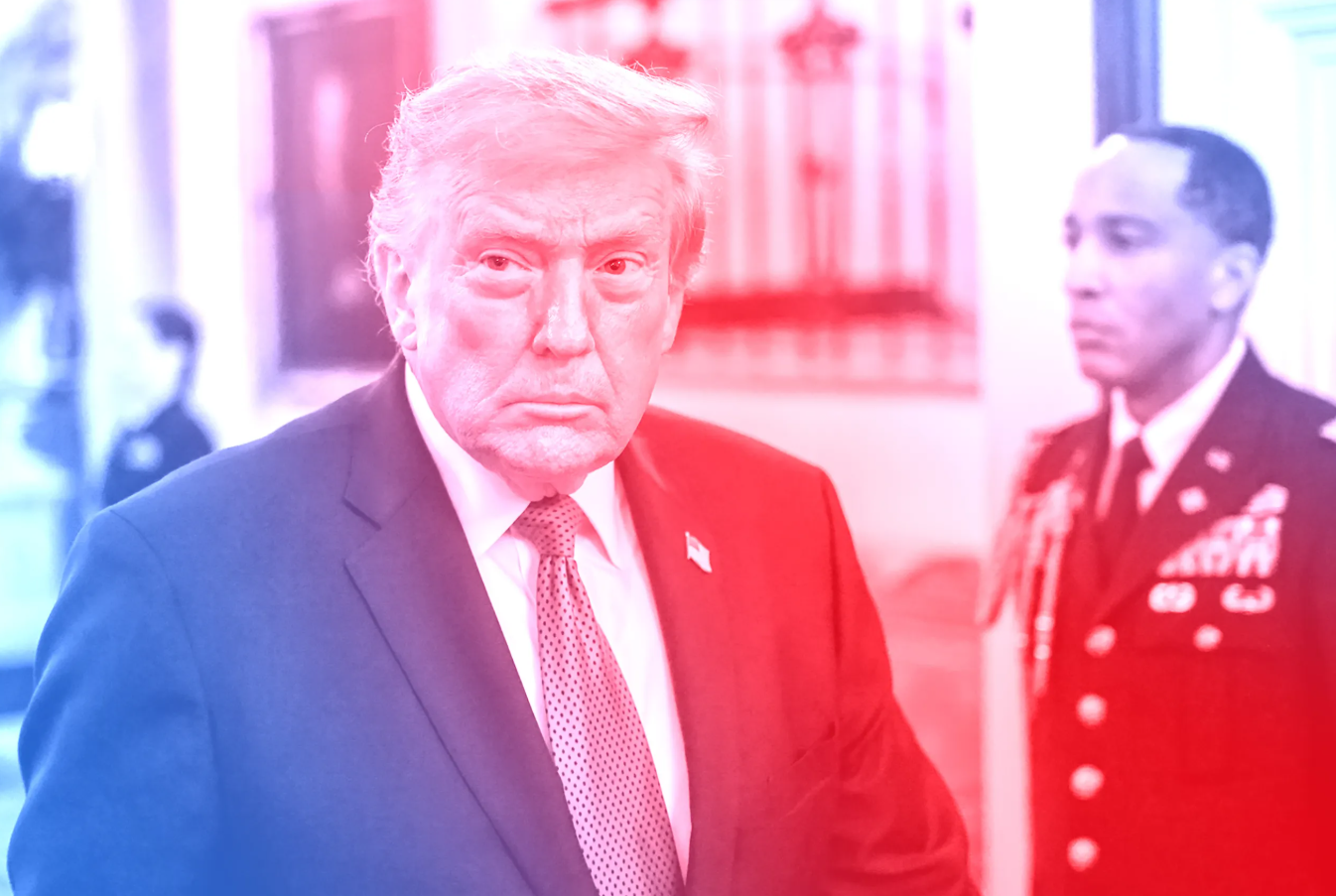
After the Islamic Republic of Iran submitted its written response to the latest American proposal for ending the war, Donald Trump, the President of the United States, reacted sharply, briefly, and hastily on the “Truth Social” platform. He wrote: “I have read the response of the so-called ‘representatives’ of Iran. I don’t like it – TOTALLY UNACCEPTABLE! Thank you for your attention.”
This short reaction is noteworthy from at least three aspects:
First, strategic ambiguity; Trump did not specify any details of the content of Iran’s response that he found unacceptable, and this silence not only indicates the American president’s confusion in the face of Iran’s presented text but also raises questions about America’s practical reaction.
Second, the derogatory phrase “so-called representatives,” which is a sign of the American president’s lack of full recognition of Iran’s governing institutions.
Third, the use of capital letters in the phrase “TOTALLY UNACCEPTABLE” – which in Trump’s messages is a familiar tool for maximizing psychological and media impact – creates the inference that Trump’s recent reaction has been formed within a context of previous explicit threats.
Three days before this remark, Trump had warned: “If Iran does not agree, bombing will begin, and unfortunately at a level and intensity far higher than before.” In another post, he also wrote: “They will not be laughing for much longer.”
However, an analysis of the equation facing Trump shows that in actual battlefield reality, he has become trapped in a difficult predicament. On the one hand, accepting Iran’s conditions would amount to an admission of strategic defeat and the destruction of the “maximum pressure” narrative. On the other hand, continuing the war and naval blockade would keep oil prices above $110 and exacerbate inflation – a fatal factor for the November 2026 midterm elections. Trump needs to somehow bring the war file with Iran to a conclusion before the fall of this year, but he does not want to appear to public opinion as having “surrendered” to Tehran.
On the other side of the table, Iran, having forced America to request a ceasefire after forty days of war and having also incurred enormous costs, sees no obligation to accept Washington’s imposed conditions.
Although no details of Tehran’s response to Trump’s proposal have been published, it is clear that Iran’s demands in its recent response have moved entirely outside the nuclear framework and are focused on axes such as war reparations, lifting sanctions, and recognition of regional sovereignty.
According to news reports, Iran’s written response included the following key demands: complete cessation of hostilities on all fronts, binding guarantees for non-repetition of aggression by the United States, a thirty-day plan for lifting oil sanctions, the release of Iran’s blocked assets, compensation for damages inflicted upon the country’s infrastructure, and recognition of Iran’s management of the Strait of Hormuz as a strategic waterway.
The conspicuous absent element in Iran’s response, however, is the previously central axis of the American proposal – namely, the nuclear program. This deliberate omission sends a clear message to Washington: the Islamic Republic of Iran is not willing to negotiate its nuclear issue under military pressure and in the shadow of threats.
Perhaps the most noteworthy part of this development is Tehran’s cool-headed reaction to Trump’s rejection. An informed source told Tasnim News Agency: “No one in Iran writes a proposal to make Trump happy” and that “being rejected by Trump is not important at all.” This position shows that Iran had already anticipated such a reaction.
Strategic analysts describe the current situation as a kind of “calculated stalemate.” By presenting a proposal that includes everything from reparations to sovereignty over the Strait of Hormuz, Iran effectively declared that the idea of an American “military victory” was no more than an illusion. Trump’s rejection of this proposal was also predictable, but now the ball is in America’s court: either it must concede, or it must escalate the war – both paths entail exorbitant costs for Washington.
To put it more clearly, by rejecting Iran’s response, Trump not only showed that he had been caught off guard by Iran’s reaction but also made the image of America being trapped in a strategic stalemate more transparent than ever. In this game, the player who thought he would bring the opponent to its knees through maximum pressure has now found himself ensnared in a difficult equation.