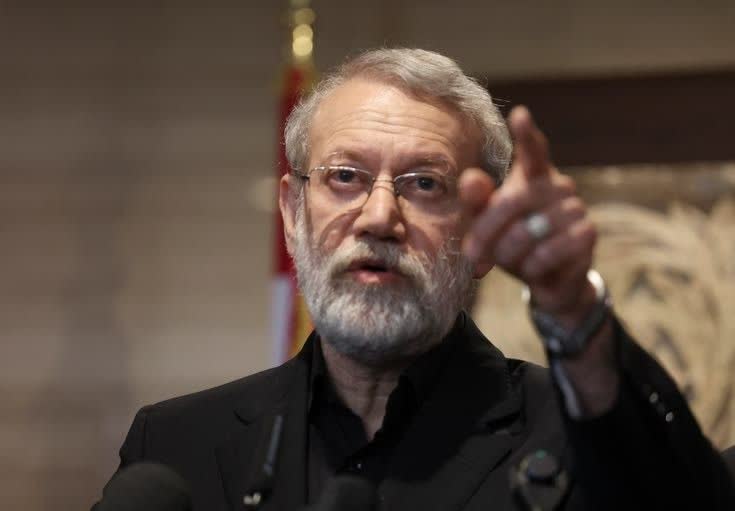
The Secretary of Iran’s Supreme National Security Council emphasized that no written response was provided to U.S. demands during the recent Muscat talks; rather, the sessions involved an ongoing exchange of perspectives.
Tehran – IranView24
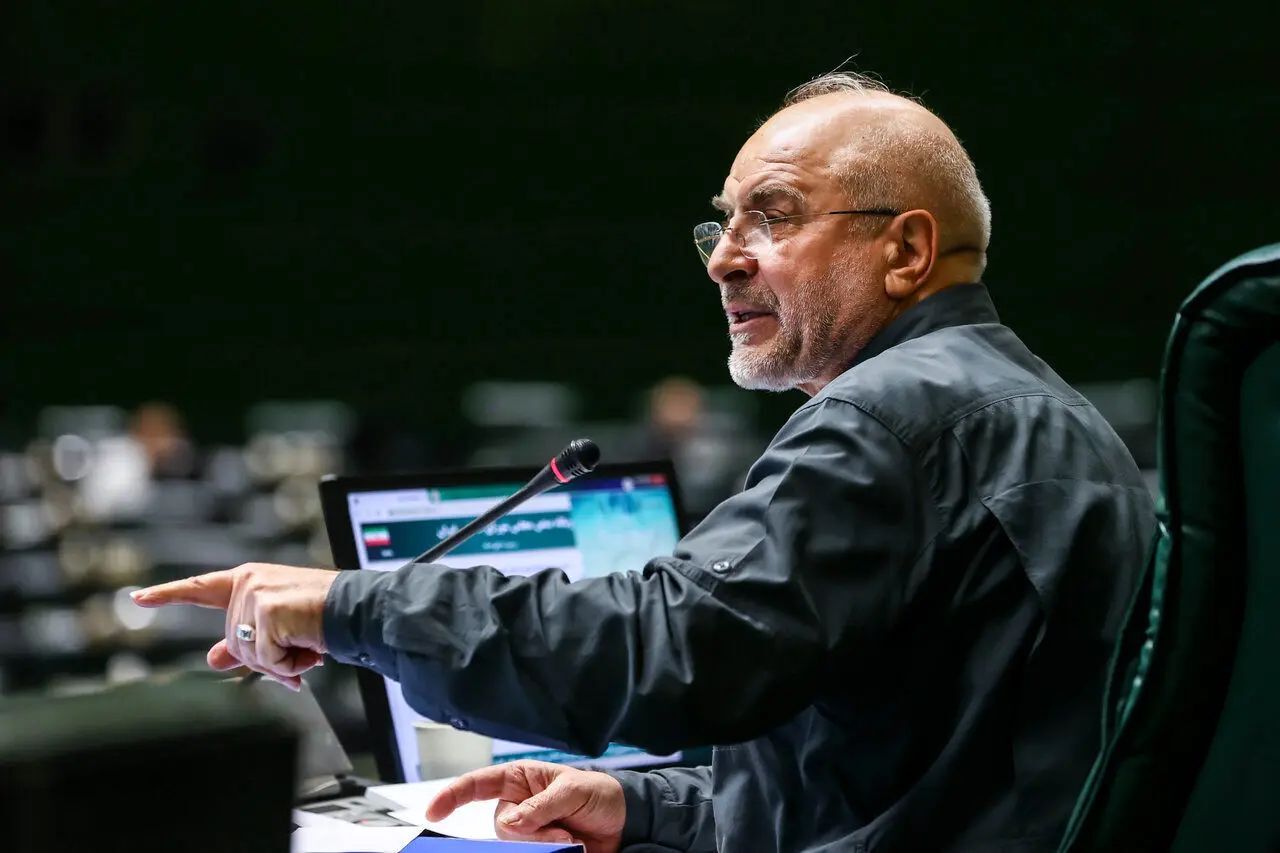
Ali Larijani, the Secretary of the Supreme National Security Council (SNSC) of the Islamic Republic of Iran, detailed Tehran’s positions on nuclear negotiations, the possibility of war, and regional developments in a televised interview with Al Jazeera’s Al-Muqabala program on Sunday.
Larijani addressed recent security concerns, acknowledging that espionage networks linked to the Zionist regime had exploited a “reduction in caution” within certain Iranian domestic institutions. However, he asserted that these gaps and weaknesses have been identified and rectified, leading to an increased level of national security readiness.
Fair Negotiations and Nuclear Rights
The SNSC Secretary emphasized that the Islamic Republic is ready for “fair” nuclear negotiations that address concerns without compromising Iran’s national security.
Clarifying the nature of recent diplomatic efforts, Larijani stated: “No written response to U.S. demands was provided in the recent Muscat talks. What occurred was merely an exchange of views, which remains ongoing.” He added that regional countries support a political settlement of the nuclear file.
“Tehran maintains a positive view of negotiations, provided they are ‘fair and reasonable’ and do not become a tool for stalling or imposing issues outside the nuclear framework,” Larijani noted. He suggested that preventing Iran from obtaining nuclear weapons is a point of commonality that can serve as a basis for advancing talks.
Underlining Iran’s rights, he stated that while Iran accepts International Atomic Energy Agency (IAEA) inspections within the framework of the Non-Proliferation Treaty (NPT), the concept of “zero enrichment” is unrealistic. “Nuclear knowledge cannot be eliminated by political decision, and Iran has legitimate medical and research needs in this field,” he clarified.
Defensive Deterrence and Counter-Espionage
Larijani firmly stated that Iran’s missile program was not raised in recent negotiations. “This program is fundamentally part of the country’s national security complex and cannot be included in nuclear talks. Defensive deterrence is non-negotiable,” he said.
Regarding the infiltration of Zionist espionage networks, Larijani distinguished between the actual scale of infiltration and media exaggeration. “Recent events were not the result of extraordinary infiltration, but rather a decrease in caution within some apparatuses,” he said, noting that effective blows have since been dealt to these networks.
The Resilience of the Axis of Resistance
Discussing the “Axis of Resistance,” Larijani noted that while Lebanon’s Hezbollah suffered heavy losses—with approximately 3,000 martyrs in recent conflicts—the movement has successfully restored its capacities. “The nature of war is an exchange of blows. Israel was also targeted by missile attacks and forced to retreat. The criterion of stability is not the amount of damage, but the ability to continue the path,” he asserted.
On the situation in Gaza, Larijani remarked that despite two years of heavy bombardment and the destruction of the region, Israel has failed to eliminate Hamas, which continues to administer Gaza.
“The assassination of Iranian commanders and scientists has not broken the country’s strength either,” Larijani said. “Israel assassinated a number of our commanders and scientists, but Iran’s missiles forced it to back down.”
Regional Diplomacy and Global Partnerships
Larijani assessed the probability of an all-out war as low, stating that past experiences show escalation does not benefit the initiator. “Iran has prepared itself for all scenarios without seeking to ignite conflict,” he said.
He praised the positions of countries like Saudi Arabia, Turkey, and Egypt in opposing military action against Iran, viewing it as an understanding of the risks of regional explosion. He also expressed appreciation for Qatar’s mediation efforts in preventing escalation.
Regarding relations with China and Russia, Larijani stated that cooperation is based on mutual interests. “Tehran’s ‘Look to the East’ policy is a result of the broken promises of Western countries,” he added.
Ali Larijani concluded by reiterating that Iran does not seek war but will not surrender to threats. He emphasized that Iran’s approach is a combination of “negotiation and deterrence,” asserting that the Axis of Resistance has proven its ability to overcome the shock of assassinations and has reorganized its forces for the future.