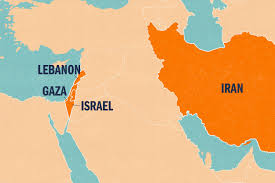
Since the outset of the US and Israeli offensive against Iran, and the entry of Lebanon’s Islamic Resistance—Hezbollah—in support of the Islamic Republic’s positions, along with its clashes with the Israeli regime, the Iran and southern Lebanon files have become intertwined. It was therefore only natural that any decision concerning Iran would also affect Lebanon.
Tehran – IranView24
The temporary ceasefire that took shape in Iran, coupled with Tehran’s emphasis on halting hostilities in Lebanon under the proposed ten-point provisions, led to a similar situation being established in Lebanon shortly thereafter. In effect, the Iran-US ceasefire can be seen as the primary foundation, with the southern Lebanon issue functioning as a subsidiary track—effectively part of that broader arrangement.
However, the United States initially pushed back, attempting through multiple statements and releases to carve out the southern Lebanon issue from the Iran negotiation file. The convening of a meeting between Lebanese officials and the Israeli regime in Washington—through which the ceasefire was announced—thus appears to have followed a prearranged path designed to avoid tying the ceasefire directly to the Iran-US agreement.
Both Washington and the Israeli regime appear reluctant to place these developments within the framework of an Iran-US ceasefire. As such, the scenario that unfolded in Washington can be seen as a form of cover aimed at playing down Iran’s role in this context. Nevertheless, most analysts believe that the underlying basis of this ceasefire lies in the Iran-US understanding.
Alongside this, another key factor was the resistance of Hezbollah fighters and the people of southern Lebanon. Over roughly 40 days following the escalation in the south, they played a decisive role. The Israeli regime had moved in with full ground and air capabilities, occupying significant parts of southern Lebanon. It was this resistance that ultimately led to the formation of the temporary ceasefire agreement.
However, there is little expectation that Israel will remain committed to such agreements. Past patterns suggest that once agreements are reached, they are often walked back as soon as conditions shift. Accordingly, both resistance forces in the south and the Lebanese population—drawing on extensive experience in dealing with Israel—are well aware that the ceasefire should not be overly relied upon.
A highly cautious approach is therefore required.
Indeed, Shiite leaders, including Sheikh Naim Qassem, have stressed that residents of southern Lebanon should refrain, for now, from returning to their villages and homes, given the risk that Israel could again breach the agreement and resume attacks. Reports also indicate that the ceasefire has already been intermittently violated.
It is important to note, however, that since the Iran and Lebanon files are closely intertwined, disruptions in one track can directly affect the other. As long as Iran-US negotiations continue to move forward, the Lebanon ceasefire can play a positive role and potentially yield favorable outcomes, with similar conditions taking shape in southern Lebanon. For instance, the reopening of the Strait of Hormuz is a result of the ceasefire taking hold in southern Lebanon—something that had been a key demand of Iran.
At present, Israel is under pressure from the United States and appears unlikely to take steps that would derail the progress of ongoing tracks. While a ceasefire holds on the Iran front and negotiations continue, any Israeli deviation could provide Iran with leverage to reengage in actions that would once again increase pressure on Israel. Specifically, pressure could be reapplied via the Strait of Hormuz by disrupting maritime traffic, or Iran could signal a potential withdrawal from negotiations. Whether acknowledged or not, the Islamic Resistance in southern Lebanon is aligned with Iran in this conflict, and it is unlikely that Iran would abandon its regional ally under difficult circumstances.
Conversely, if the Iran negotiations fail to reach a conclusion, the Lebanon ceasefire would inevitably be affected as well.
Source: Iran Daily