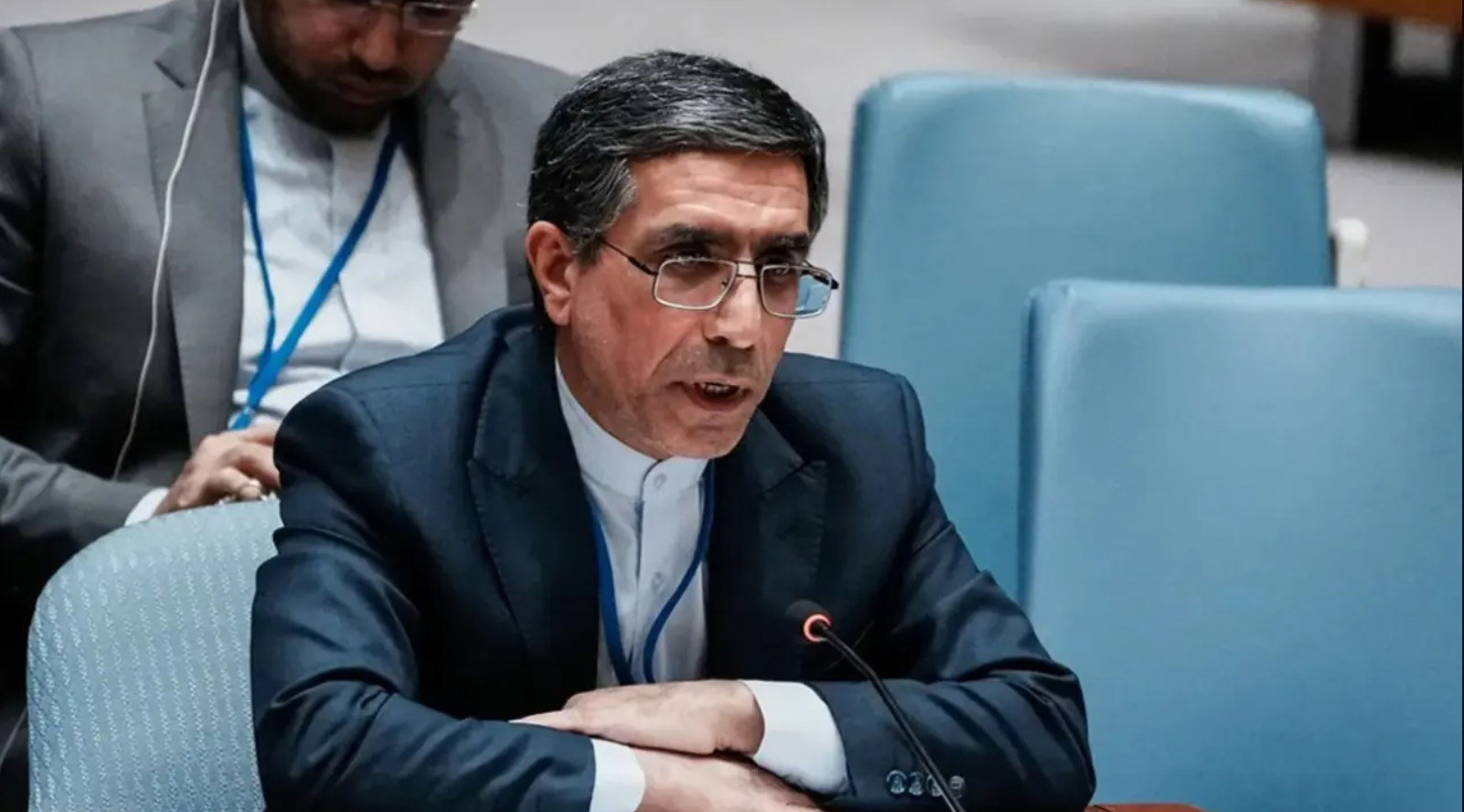
Iran’s ambassador and chargé d’affaires to the United Nations says that if Washington is genuinely committed to a diplomatic solution, it must immediately and unconditionally end its aggression against Iran, lift the maritime blockade and other unlawful unilateral measures, and provide credible guarantees against renewed attacks.
NewYork-IranView24
Gholamhossein Darzi also said insecurity surrounding the Strait of Hormuz is a direct consequence of US-Israeli aggression against Iran, calling on the UN Security Council to address the root causes of regional tensions and uphold international law.
The full statement is as follows:
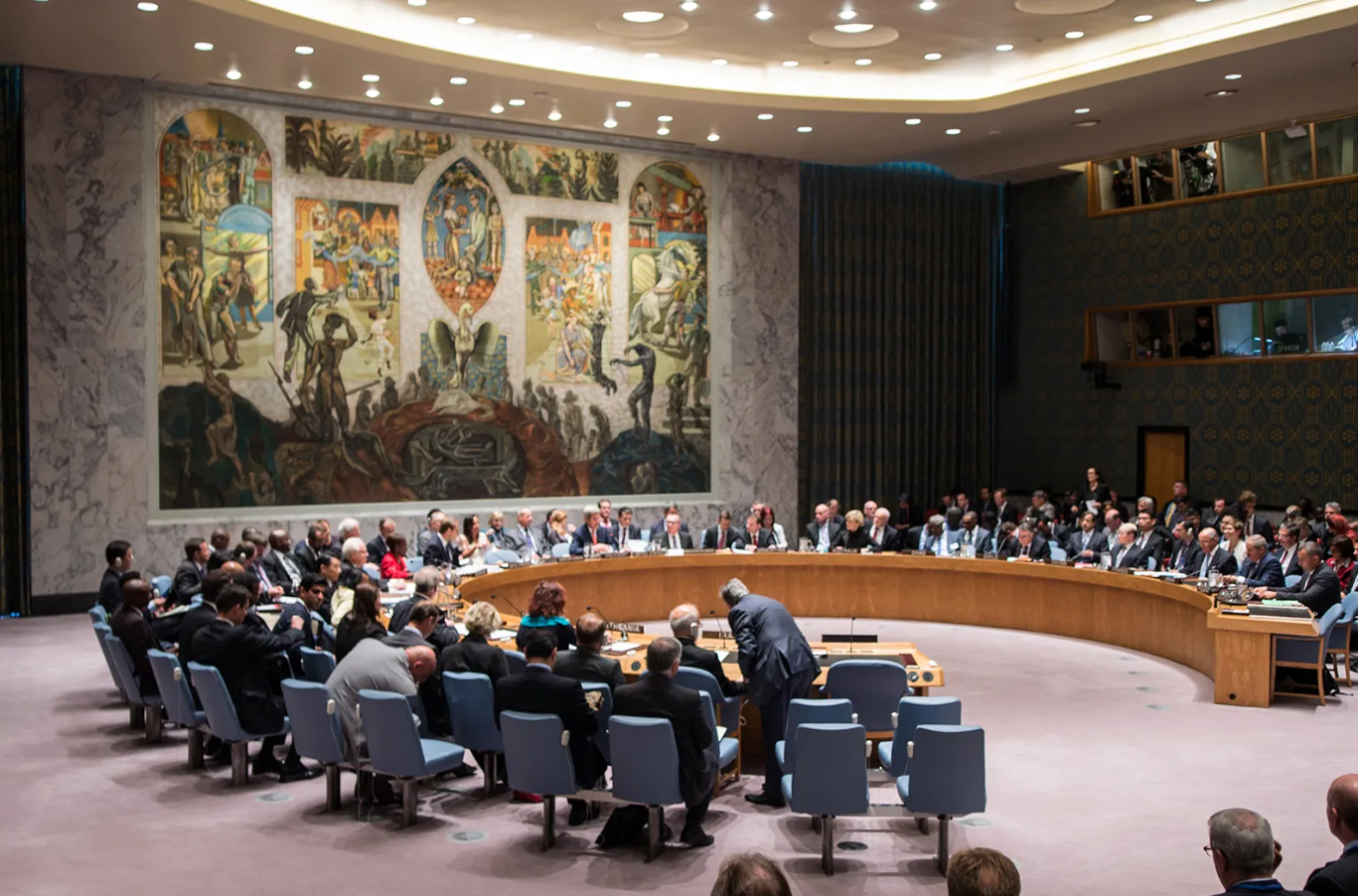
“Our participation in today’s meeting is intended to clarify the root causes of the current situation in the Persian Gulf region.
Certain members of this Council, in particular Western members, in coordination with the aggressor, are attempting to distort the facts, ignore the root causes of the situation, and reverse the roles of victim and aggressor.
We listened carefully to the briefers and the statements of Council members.
We regret the positions taken by some Council members, particularly its Western members. Their statements reflect a familiar pattern of double standards and blatant hypocrisy.
Similarly, the representative of the United States is in no position, legally, politically, or morally, to lecture or accuse Iran.
The United States is the aggressor, not the victim. It launched an unwarranted war of aggression against Iran in flagrant violation of the UN Charter and fundamental principles of international law.
Against this background, I wish to make the following points.
First. The root causes of the current situation are clear:
The United States and the Israeli regime launched unprovoked and premeditated wars of aggression against Iran on 13 June 2025 and again since 28 February 2026.
Throughout these aggressions, they showed complete disregard for international law, especially basic principles of international humanitarian law.
During these brutal wars, Iran’s Supreme Leader, senior political and military officials, nuclear scientists, and academics were assassinated.
Widespread and indiscriminate attacks also targeted civilians and civilian infrastructure, including industrial facilities, bridges, hospitals, airports, transport networks, cultural heritage sites, sports facilities, and energy infrastructure.
More than 5,000 innocent people, including 254 children and 251 women, have lost their precious lives in these brutal wars.
On the first day of the February aggression, two waves of U.S. Tomahawk missiles struck a school in Minab, killing 168 children.
On the same day, a U.S. strike on Lamerd Stadium killed at least 21 civilians, including children, and wounded approximately 100 others.
It marked the first combat use of the Precision Strike Missile (PrSM).
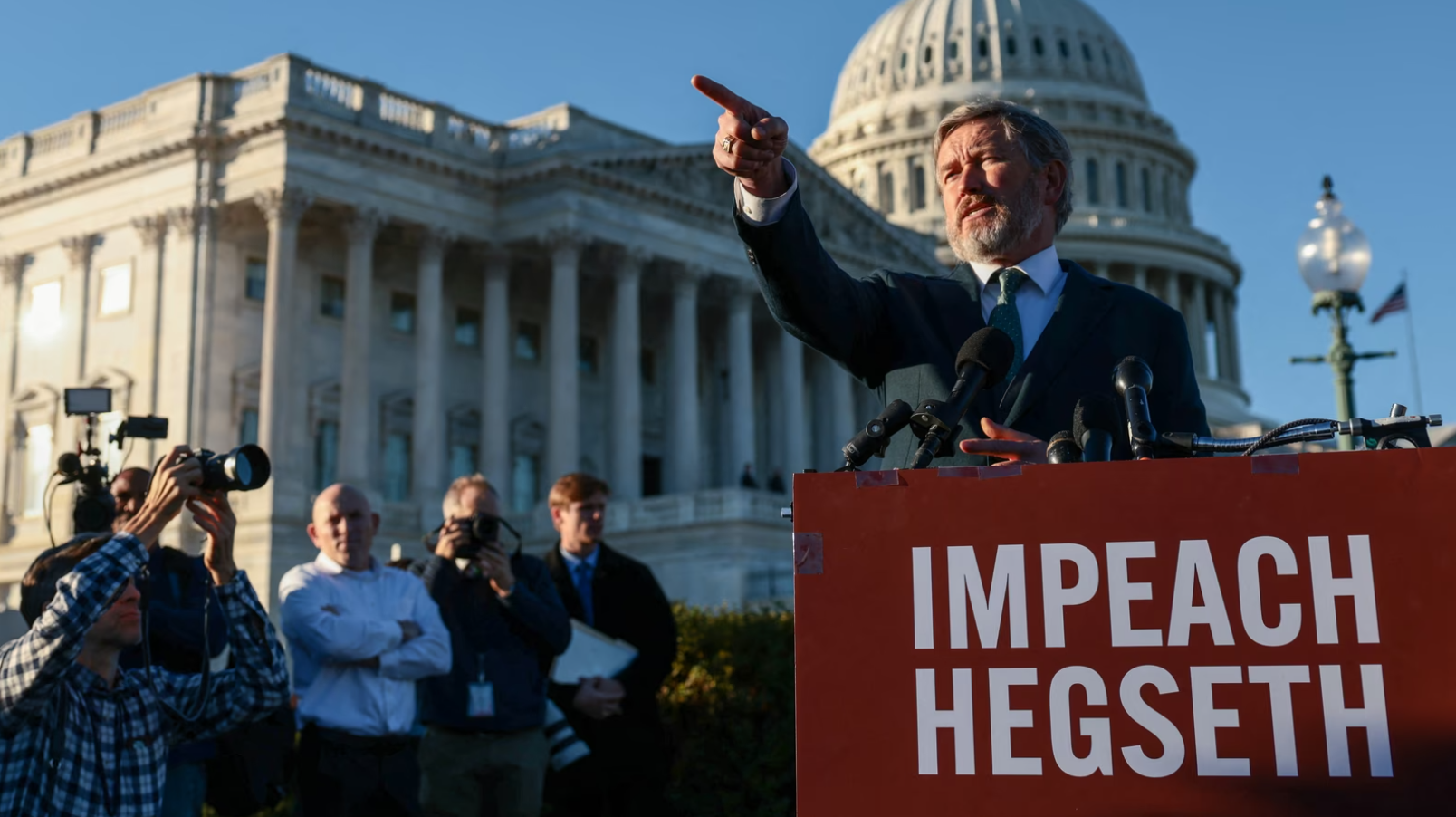
On 13 March 2026, U.S. Secretary of War Peter Hegseth declared: “No quarter, no mercy.”
International humanitarian law prohibits such a declaration and classifies it as a war crime.
The U.S. President subsequently threatened to destroy Iran’s power plants and bridges.
U.S. forces then struck five bridges in a single night.
As recently as 8 November 2026, the U.S. President threatened again to destroy 38 identified bridges across Iran within one hour. These are war crimes.
In response to these acts of aggression, Iran exercised its inherent right of self-defence in accordance with Article 51 of the UN Charter.
Its defensive and lawful measures were directed against U.S. military facilities, bases, and assets in the region used to launch attacks against Iran.
Second. The insecurity surrounding the Strait of Hormuz is a direct consequence of the aggression against Iran and the United States’ unlawful measures.
These measures include attacking Iran’s ports and maritime installations and commercial vessels, and the military and maritime blockade of Iran’s ports imposed with the aim of collectively punishing an entire nation.
The deliberate deprivation of an entire civilian population of food, medicine, and other essential necessities constitutes a grave violation of international humanitarian law and amounts to war crimes and crimes against humanity.
Responsibility also extends to those States that enabled and facilitated the aggression by making their territories, military bases, airspace, logistical facilities and intelligence infrastructure available to the aggressors, in violation of their obligations under international law and the UN Charter.
The United States cannot attack and bomb Iran, violate its sovereignty and territorial integrity, and target civilian infrastructure, threaten Iran with annihilation, impose a military and maritime blockade, and resort to unlawful coercive schemes—including the so-called “Economic Operation Outcast” and “Iron Gate Task Force”—to collectively punish a population of 90 million, and then expect the Strait of Hormuz to return to normal as if nothing had happened.
Third. Iran remains committed to peace and stability in the Persian Gulf.
Iran has consistently maintained that regional security arrangements must be established by the countries of the region themselves, without foreign interference and in accordance with international law and the UN Charter.
The U.S.-Israeli aggression has once again demonstrated that the presence of foreign military forces and U.S. military bases in the region are major sources of insecurity, instability, and tension. They also place maritime safety at serious risk.
Fourth. Iran’s position on Security Council resolution 2817 (2026) is clear and well documented.
Our legal position has been set out in detail in communications circulated as official documents of the Security Council (S/2026/202) and the General Assembly (A/80/680).
Iran rejects this politically motivated resolution. It was adopted through a one-sided and politicized process that ignored the root causes of the situation, denied Iran’s inherent right of self-defence, and failed to identify the United States and the Israeli regime as the aggressors.
In fact, the adoption of Resolution 2817 was a grave abuse of the Security Council’s authority, using the Council to legitimize aggression, reverse the legal roles of aggressor and victim, and undermine the peremptory prohibition of the use of force enshrined in Article 2, paragraph 4, of the UN Charter.
Let me reiterate: no Security Council resolution can deprive a Member State of its inherent right of self-defence in the face of an armed attack.
Fifth. Iran has never closed the door to diplomacy.
Over the past two years, Iran has repeatedly engaged in negotiations in good faith. Yet, on each occasion, the United States chose aggression and threat over diplomacy, which continues to this day.
These repeated experiences have created profound distrust and serious doubts about the prospects of renewed negotiations without credible guarantees against the repetition of such unlawful actions.
The way forward is clear.
If Washington is genuinely committed to a diplomatic solution, it must immediately and unconditionally end its aggression, provide credible guarantees of non-repetition, respect Iran’s sovereign rights, lift the maritime blockade and all other unlawful unilateral coercive measures, and demonstrate a genuine commitment to diplomacy.
Let us be clear: Any renewed war of aggression by the United States and the Israeli regime will be met with an immediate and decisive response, without hesitation, directed against the source of aggression wherever it may be.
Iran will exercise its inherent right of self-defence in accordance with international law as it has done before.
Iran will continue to take all necessary and appropriate measures to defend its people, its security, vital interests, and its sovereignty and territorial integrity, maintain a credible and sustainable deterrent, and ensure that no further aggression is repeated.
This Council must direct its demands at the aggressor, not the victim. It must call upon the United States to cease all its unlawful actions and threats, honour its obligations under the UN Charter, and fully comply with international law.
Sixth. On the situation in Yemen:
We categorically reject the baseless accusations directed against my country concerning Yemen.
Iran has consistently advocated peace and stability in Yemen and remains committed to respecting its sovereignty, unity, independence and territorial integrity.
It is high time for the Security Council to adopt a realistic, balanced and forward-looking approach.
Achieving lasting peace in Yemen requires a fundamental shift in the Council’s approach.
The Council must acknowledge the realities on the ground, respect the will of the Yemeni people and their right to determine their own future, uphold Yemen’s sovereignty, unity and territorial integrity, and, above all, address the root causes of the conflict.
Without such an approach, a lasting political solution will remain elusive.
The statement by Mr. Albudaiwi and the Representative of Bahrain were unbalanced, one-sided, and politically motivated. We categorically reject their baseless allegations. They read the book from chapter 3 or 4, and later confuse the chapters.
The fact is that Certain countries in the Persian Gulf region have knowingly facilitated US- Israeli aggressions by placing their territory, airspace, military facilities, and other logistical and operational capabilities at the disposal of the aggressors for the planning, preparation, and execution of attacks that clearly amount to war crimes.
Such internationally wrongful acts, in themselves, constitute a violation of the Charter of the United Nations and fundamental principles and norms of international law and entail responsibility.
Furthermore, such actions constitute participation in and assistance to an act of aggression within the meaning of General Assembly resolution 3314 (XXIX).
Accordingly, States concerned bear responsibility for their internationally wrongful acts, including their participation in and assistance to acts of aggression, and remain under an obligation to make full reparation for all injury, including material and moral damage, caused to the Islamic Republic of Iran, its nationals, and its civilian and public infrastructure as a consequence of those wrongful acts.”