When Donald Trump issues a preemptive threat of attack and unveils the “manufactured killing” project, what scenario is taking shape, and where does public opinion stand in this game?
The recent threat of Donald Trump, the U.S. president—stating that the United States would “attack Iran if protesters are killed”—although presented in media discourse as a conditional warning and a political stance, must at the security level be assessed as part of a predesigned project within the framework of a “manufactured killing” scenario and hybrid warfare against the Islamic Republic of Iran. This threat is neither accidental nor merely the result of the harsh rhetoric of a populist actor; rather, it functions as an activating and driving element of a multilayered, carefully designed scenario.
The so-called “manufactured killing” project has an established history in Western–Zionist pressure strategies against Iran and has repeatedly been used over past decades as a launchpad for manufactured crises. On the one hand, within the framework of cognitive warfare, it aims at producing the threat perception, disrupting domestic decision-making systems, eroding social capital, and deepening the state–nation divide. On the other hand, it serves a complementary role in intensifying international pressure and justifying confrontational and war-mongering actions against Iran.
Following the experience of the recent summer war and the defeat of the US–Israeli axis in the first war, Trump’s threat finds meaning precisely at the junction of two levels: linking internal pressure to external pressure. From the perspective of cognitive warfare, this stance constitutes a form of pre-engineering of perception—a targeted mental space-building that seeks to immediately interpret any potential future incident as a structural accusation against Iran and to smooth the path for implementing the next stages of the project.
A review of historical experiences shows that over the past four decades, almost any event with the capacity to stir public emotions or carry human and symbolic weight—once narrativized—has quickly been turned into raw material for a political project: from suspicious deaths and urban accidents to law-enforcement clashes, medical incidents, and even events that occurred entirely outside Iran’s geography. In this pattern, the incident itself is not decisive; what matters is its capacity to be placed within a predesigned narrative.
However, what distinguishes the current situation is that Trump’s threat has prepared this narrative in advance. More precisely, the “political activation” phase of the manufactured killing project has begun even before any incident occurs, creating conditions in which any potential event can be immediately transformed into an accusatory narrative and ultimately into an instrument of international pressure. As a result, the time gap between the occurrence of an incident and the launch of a media–political wave against Iran is reduced to a minimum, and a project that previously required time and groundwork can now be executed with greater speed, coordination, and lower cost.
In the logic of manufactured killing, the central issue is not “what happened,” but “what perception must be constructed.” Cognitive warfare sidelines objective reality and focuses on entrenching a dominant narrative within the shortest possible time frame. Trump’s threat precisely serves this purpose: closing off the field of interpretation and imposing a pre-determined semantic framework in which Iran is cast as the culprit from the outset and the United States is positioned as the savior.
In the first step of this project, narrative preemption is carried out with such intensity that it leaves virtually no room for technical questions or the examination of ambiguities. Trump’s threat reinforces this stage by linking the accusatory narrative from the very beginning to a harsh response—whether maximum pressure or military action.
In the next step, targeted symbol-making rapidly takes shape. The deceased individual is detached from a specific incident and turned into a symbol of a grand narrative of “victimhood in the face of systematic violence.” At the same time, a predesigned media network, through coordinated message reproduction, creates a kind of social illusion in which any alternative or data-driven narrative is marginalized.
Ultimately, the consolidated narrative moves beyond the media sphere and enters the arena of hard confrontation, where it is used to justify the execution of the designed scenario. In this cycle, Trump’s threat plays the role of a political catalyst—an element that lowers the cost of entering a phase of military action or escalation of confrontation in the eyes of Western public opinion.
In sum, Trump’s threat should be understood as part of the overarching architecture of the manufactured killing project—a constantly active project within the hybrid war against Iran that not only engages public opinion but also absorbs a significant portion of the focus and capacity of the country’s intelligence and security institutions, while simultaneously paving the way for advancing other hostile intelligence and security measures.
How Can Public Opinion Avoid Falling into the “manufactured Killing” Trap?
Neutralizing the manufactured Killing project is directed less at official intelligence and security institutions and more directly at the country’s public opinion, which would be the victim of any hostile action by the enemy. It should be noted that this project relies on human emotions, news shock, and high-speed dissemination to construct, before reality becomes clear, a definitive image of a “culprit” in the audience’s mind—at a moment that also evokes the tangible prospect of an imminent US–Zionist war. Therefore, the first step in avoiding this trap is understanding the logic of the game.
First: “Not rushing” to judgment:
In the manufactured Killing project, speed matters more than truth. Any news released with an intense emotional wave, provocative images, and a definitive narrative is designed precisely to deprive audiences of the opportunity to think and to reinforce a fabricated storyline. If public opinion delays final judgment by a few hours or even a few days, it effectively neutralizes a large part of the project.
Second: Distinguishing “news” from “narrative:”
Much of what is published in such situations is not news but narrative—that is, a combination of predesigned falsehoods, partial truths, manipulated information, biased analysis, and emotional inducement. Simple questions must always be asked: What exactly has been proven? What is being said? What is not being said? Who benefits? This distinction prevents the widespread acceptance of pre-fabricated false narratives.
Third: Being sensitive to “emotional symbol-making:”
When an individual or incident is rapidly transformed from a specific event into a symbol of “systematic oppression,” it is time to pause. The manufactured Killing project is activated precisely at this point—where a human story becomes a tool for generalization and sweeping judgment. Human empathy is necessary, but it must not replace analysis or be turned into a tool for the enemy.
Fourth: Paying attention to recurring patterns:
Looking at the past, we see similar scenarios: breaking news, emotional narratives, social-media waves, the removal of various accounts, and recently, AI-manipulated stories and images turned into front-page headlines of Western–Zionist mainstream media—followed by external political pressure. Recognizing this pattern helps audiences understand that they are not facing an isolated incident, but a process designed by the enemy.
Fifth: Skepticism and critical questioning:
Absolute distrust of official institutions is exactly what the manufactured Killing project needs. Conscious questioning—neither blind acceptance nor emotional rejection of everything—is the most important mental shield for public opinion. Asking questions is a right; rushing to conclusions is not.
Sixth: Not resharing emotions:
Every emotional reshare, even with good intentions, can help strengthen a hostile psychological operation against the country. Public opinion must understand that in cognitive warfare, “sharing” sometimes equals “unwitting participation in the enemy’s intelligence and security operation.”
Seventh: Avoiding high-risk and ambiguous situations:
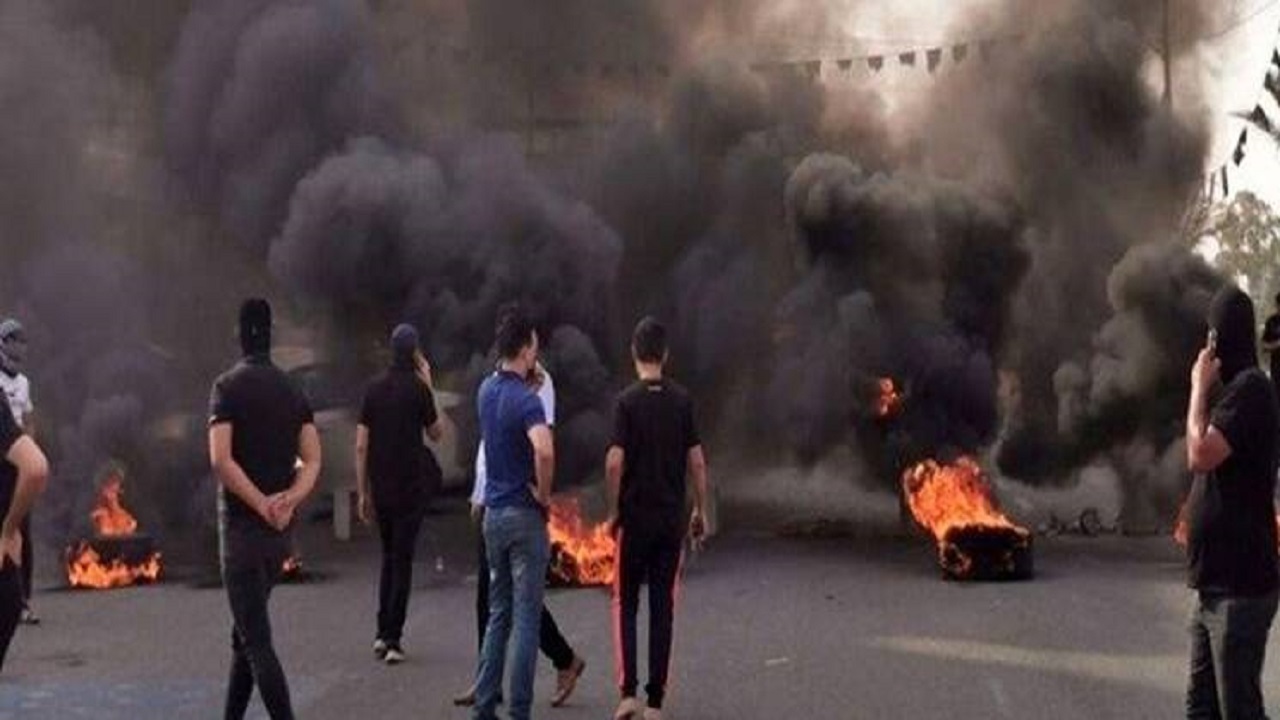
The manufactured killing project seeks situations with high narrative potential and ambiguity: unstructured gatherings, emotionally charged and chaotic spaces, sudden clashes, or conditions where security, emergency response, and fact-finding become difficult. Consciously avoiding such situations is the first and most important way to prevent individuals from becoming subjects of a political project. Simply put, do not put yourself in harm’s way.
Finally: Not sacrificing rationality to emotion:
The manufactured killing rides on waves of human emotion, but its objective is political and security-oriented. Empathy with people must not become a tool for pressure and manufactured crisis against society and the country. Wherever emotion replaces analysis, that is precisely where public opinion becomes vulnerable to an enemy intelligence and security operation.
The conclusion is simple: public opinion avoids falling into the manufactured killing trap by becoming less emotionally reactive, asking more questions, avoiding haste, and recognizing that every fast-moving, emotional narrative is not necessarily the truth. In the war of narratives, the people’s greatest power is the right to pause, not giving weight to a false narrative, and the right to think.