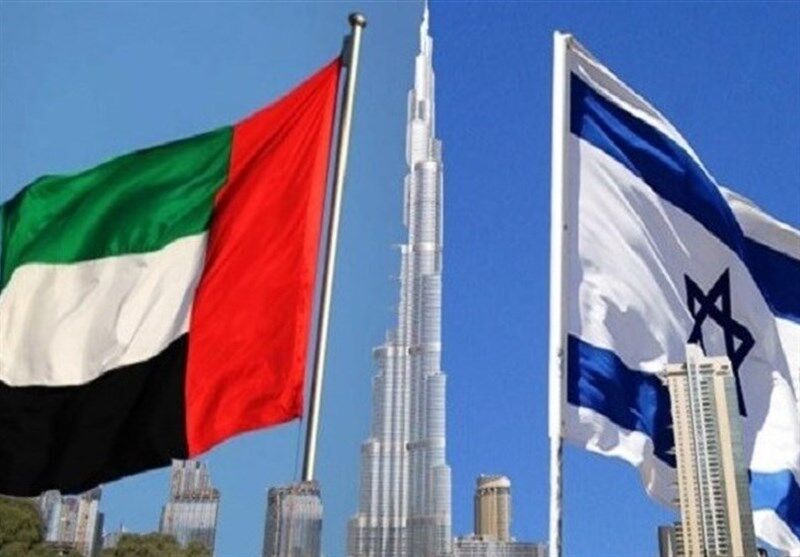
From Tel Aviv to Abu Dhabi, a shared definition of “threat” is taking shape: “social and assertive Islam.” The alliance between the United Arab Emirates and Israel, aimed at reshaping the geopolitics of West Asia, has translated this definition into actionable policy, turning cognitive warfare against Islam and Muslim identity into a coordinated and joint arena.
Tehran- IranView24
The release of documents by the European Parliament as part of investigations known as “Abu Dhabi Secrets” (AbuDhabiSecrets) has once again drawn public attention to the UAE’s role in the covert projects of psychological warfare and Islamophobia. According to these documents, the UAE, by financing a Switzerland-based company, has systematically engaged in the dissemination of disinformation, targeted defamation, and influence operations against Islam, Muslims, mosques, Islamic institutions, and even journalists and politicians in at least 18 European countries.
The central question is this: why does the UAE, as an Arab and Muslim-majority state, pursue such a policy, and how is this approach connected to its strategic alliance with Israel?
Why Abu Dhabi’s Islamophobia?
Some analysts argue that the UAE’s policy should not be understood as “hostility toward Islam as a faith,” but rather as opposition to “independent, social, and assertive Islam.” The UAE is a hereditary authoritarian system whose legitimacy is derived from neither citizen political participation nor independent religious institutions, but from a combination of oil wealth, Western security backing, and tight social control. Within such a structure, any form of Islam capable of social mobilization, generating moral authority, or articulating political demands is viewed by Abu Dhabi’s rulers as a potential threat.
From this perspective, active mosques, Islamic civil institutions, transnational intellectual networks, and even non-violent social Islam are all classified as “security risks.” The distinction between “political Islam” and “religious Islam” is deliberately blurred in official Emirati discourse, as this ambiguity gives the government room for broader repression and its international legitimization.
Accordingly, in recent years the UAE has promoted a model of “state-managed Islam”—an individualized, ritualistic, apolitical Islam fully aligned with the prevailing security and economic order. In this model, religion is not a source of accountability or critique of power, but a tool for consolidating it. By contrast, any interpretation of Islam that emphasizes justice, social responsibility, or transnational solidarity is labeled “extremist” or “radical,” even when it bears no connection to violence.
Europe as an Arena of Cognitive Warfare
Why has Europe become a primary theater for this strategy? Europe simultaneously has a sizeable Muslim population, open human rights and media environments, and political structures responsive to the discourse of “security.” The UAE has concluded that direct repression in West Asia is not feasible, however, it can use the tools of cognitive warfare to export the suppression of political Islam from the West to the East: producing pseudo-academic reports, creating artificial networks, infiltrating media outlets and think tanks, and promoting the narrative that an active Islamic presence equates to a security threat both cause political pressure by European countries on Islamic countries in West Asia, and fuels the global spread of Islamophobia. Within this framework, Islamophobia is not a spontaneous social reaction, but a top-down, engineered project.
A Structural Convergence with Israel
These policies cannot be analyzed separately from the UAE’s strategic alliance with Israel.
The fundamental point of convergence between the two is “the securitization of Islam.” For decades, Israel has linked identity-based Islam to terrorism and civilizational threat narratives, thereby reproducing, within Western discourse, the legitimacy of suppressing Palestinians and Islamic institutions. Following normalization, the UAE has adopted this model and replicated it in Europe through financial, diplomatic, and corporate mechanisms.
This alliance extends beyond politics and economics to include the transfer of experience in psychological operations, cognitive warfare, and the discrediting of civil society institutions. What is occurring today in Europe against mosques and Islamic organizations often mirrors the same models Israel has long employed against Palestine, Iran, Iraq, Syria, Lebanon, and even Saudi Arabia and Turkey.
For Israel, the linkage between Islam, justice, and resistance underpins the legitimacy of the Palestinian cause. For the UAE, that same linkage carries the potential to inspire social demands and transnational solidarity. The shared objective, therefore, is to weaken this connection—either by reducing Islam to a toothless, individualized phenomenon, or by framing every form of social Islam as a security threat.
Conclusion
The UAE’s anti-Islam policies in Europe should be understood as part of a broader project: engineering a preferred order in which “compliant Islam” is tolerated, while “assertive Islam” is treated as a threat. The strategic alliance with Israel has elevated this project from the margins to the center of Abu Dhabi’s foreign and security policy.