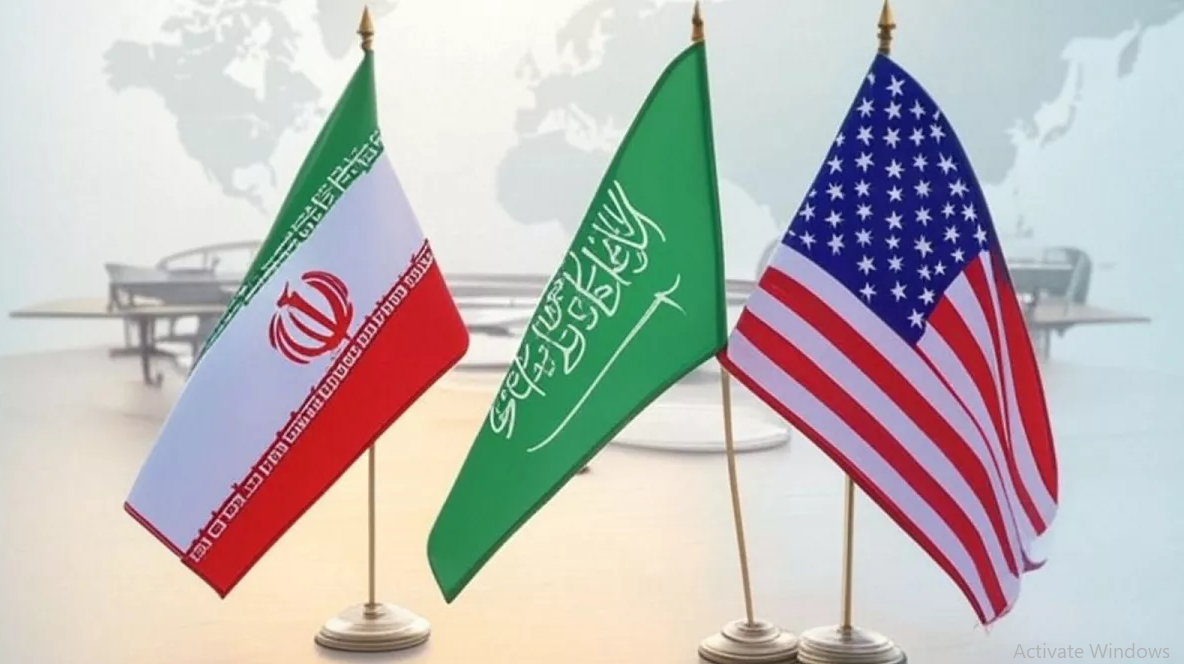
Following the 12-day war and amid the shifting balance of power in the Persian Gulf, Saudi Arabia’s name has become highlighted in the midst of Tehran–Washington dynamics. The narrative began with a confidential letter and has now become tied to a broader scenario: Can Riyadh become a new channel for managing Iran–U.S. tensions, or is this merely part of a new power-engineering project devised by Iran’s rivals?
Tehran – IranView24
Within the geopolitical dynamics of the Persian Gulf and the post–12-day war landscape between Iran and Israel, Western and Israeli media have recently focused on Saudi Arabia’s potential role as a mediator between Iran and the United States relations. These narratives are largely based on reports that Masoud Pezeshkian, President of the Islamic Republic of Iran, sent an official letter to Saudi Crown Prince Mohammad bin Salman on the eve of his recent trip to Washington (November 2025). While this scenario is not entirely implausible, a realistic analysis of these speculations—beyond the superficial level—points to deeper strategic layers involving the reconstruction of the regional balance of power and the advancement of the hegemonic interests of the U.S. and its allies.
This article examines three main pillars of this media narrative: representing Iran as an active actor in negotiations, elevating Saudi Arabia’s geopolitical standing, and exploiting Riyadh to exert structural pressure on Tehran.
1. Representing Iran as an Actor Within a Negotiating Framework
A dominant pattern in Western and Israeli media narratives is the attempt to depict Iran as an actor that, under external pressure, is being actively pushed toward negotiation with the U.S. There is significant evidence of Washington’s desire to revive nuclear talks after the 12-day war, but under imposed conditions. Meanwhile, statements by U.S. President Donald Trump focus on “Iran’s inherent need to negotiate” and “Tehran’s initiative.” The narrative consistent with the Western media’s framing of Iran not only bolsters the U.S. claim of “victory in the 12-day summer war,” but also represents Iran in a reactive situation and under economic-military pressure.
For example, the alleged content of Pezeshkian’s letter, according to Reuters—emphasizing “no desire for confrontation” and readiness for nuclear diplomacy provided that Iran’s rights are guaranteed—is interpreted as a sign of Tehran’s weakness while Iranian officials, including Foreign Ministry spokesman Esmaeil Baghaei, have described the message merely as mutual appreciation over Hajj cooperation.
2. Elevating Saudi Arabia’s Geopolitical Status: Turning Riyadh into a Diplomatic Hub
The second factor is the symbolic elevation of Saudi Arabia’s position within the Persian Gulf’s geopolitical structure. Western and Israeli media present Riyadh as a “natural mediator,” citing its economic and security influence and portraying it as capable of managing regional energy and security crises.
This elevation not only mitigates Arab distrust toward Israeli hegemony but also provides a platform for Saudi–Israeli strategic convergence—a process rooted in the Abraham Accords and potentially advancing toward an anti-Iran coalition.
3. Using Saudi Arabia as a Diplomatic Pressure Channel on Iran
Finally, Western and Israeli analysts acknowledge that the 2023 China-brokered restoration of Iran–Saudi relations has pushed Tehran toward balancing its interactions with Western actors through Saudi Arabia. Iran seeks to draw Riyadh closer as a cooperative—or at least neutral—player in the contentious U.S.–Israeli equation. But from the Western perspective, Saudi Arabia can serve as an effective diplomatic channel for steering Iran back to negotiations under Washington’s preferred conditions.
Thus, the recent speculation from Western and Israeli media reflects not only diplomatic developments but also an instrument for re-shaping the regional balance of power.
A New Scenario with Emerging Opportunities?
Despite the interpretations above—and regardless of the exact content of the Iranian president’s message to the Saudi crown prince—Saudi Arabia could, from a strategic perspective, act as a mediating channel facilitating indirect talks between Tehran and Washington. Compared with previously tested models, this role could utilize emerging opportunities and introduce lower-cost mechanisms for managing tensions.
However, this scenario is also confronted by a significant structural risk: Washington’s attempt to link the revival of nuclear negotiations to Iran’s defensive capabilities and deterrence mechanisms. Such linkage could shift the talks into a far more complex and multidimensional domain.
In this context, Saudi Arabia’s strategic will and its perception of the regional balance-of-power patterns will play a decisive role—either steering Riyadh toward a genuine facilitator role or turning it into an amplifier of structural pressure on Tehran.