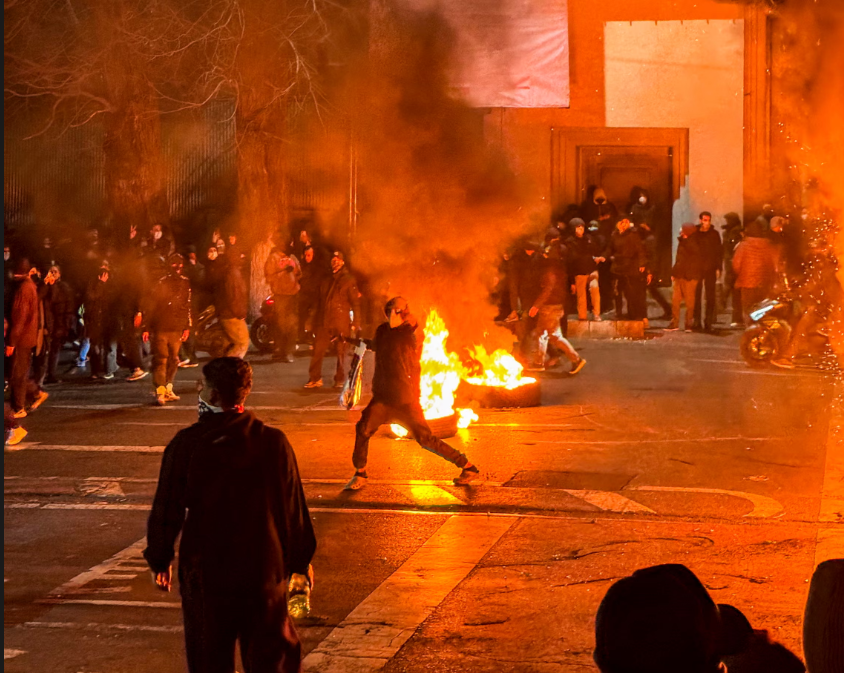
Samir Saul, Canadian historian and political economist, who holds a doctorate in history from the University of Paris and is a professor at the Université de Montréal, in an interview with Tehran Times, situates recent developments in Iran within a long historical continuum of Western intervention, regime-change strategies, and coercive pressure.
Tehran – IranView24
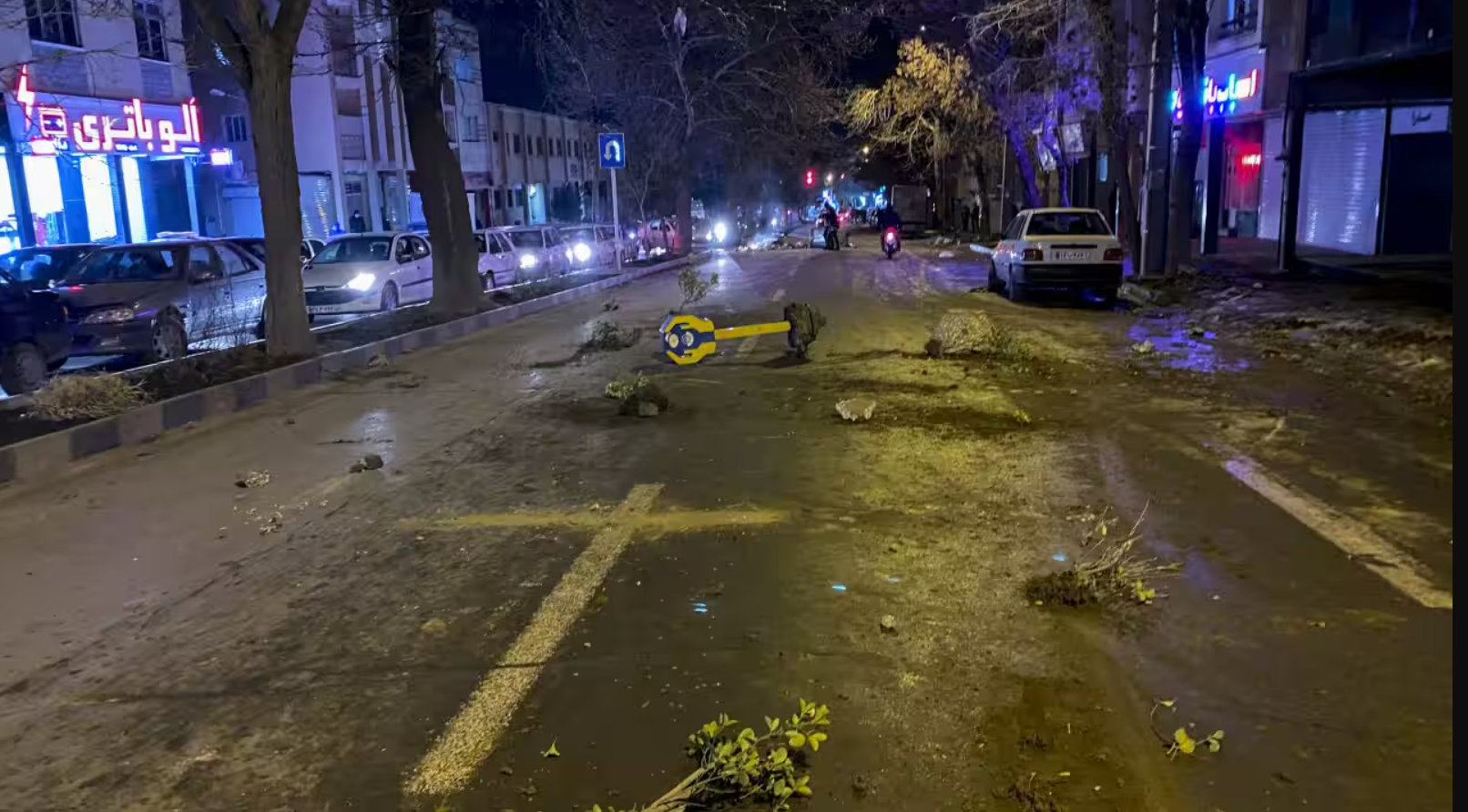
The United States and Israel pushed the peaceful protests in Iran that began on December 28 toward anarchy and violence through provocative remarks. For example, in messages posted in Persian on its official account, Israel’s Mossad openly told protestors: “We are with you. Not only from afar and with words. We are with you on the ground.”
In a post on his X account on January 2, Mike Pompeo, CIA chief and state secretary in Trump’s first administration, also said: “Happy New Year to every Iranian in the streets. Also to every Mossad agent walking beside them.”
Drawing on past U.S. interventions and contemporary geopolitical dynamics, Saul analyzes the use of sanctions, the instrumentalization of unrest, and the increasingly overt Israeli role, while warning of the broader regional consequences of foreign interference in Iran’s internal affairs.
The following is the text of the interview:
From a historical perspective, how do Trump’s statements encouraging Iranian protests fit into longstanding U.S. strategies of influence and pressure in the Middle East?
The U.S. has always encouraged protests in Iran. Its policy has long been to promote regime change through either:
1. riots (so-called “color revolutions”), or
2. military aggression, as seen in June 2025.
In June 2025, the plan appears to have been that a military attack would provoke revolts or a coup, leading to regime change. However, this strategy failed because there were neither revolts nor a coup, and Iran’s missile capabilities proved effective.
Thus, in December 2025–January 2026, all indications suggest that the sequence was reversed: revolts were intended to destabilize the regime and weaken Iran militarily in order to facilitate a military attack. The U.S. and Israel were waiting to see the results of the riots, but these were unsuccessful, and the military attack had to be aborted.
One novelty in December 2025–January 2026 was how openly Israeli intervention was displayed throughout. In the past, it had been kept out of sight.
Could the encouragement of unrest in Iran be seen as part of a broader pattern of engineered instability in states the U.S. regards as strategic foes?
Clearly yes. This is not even concealed.
Trump frames his statements as “support for the Iranian people,” yet economic sanctions and threats of military escalation continue. How should we interpret this mix of rhetoric, coercion, and moral posturing?
Sanctions, embargoes, and blockades are ancient weapons of war aimed at making a population suffer and capitulate. They are obviously the opposite of concern for a population. Claims of humanitarian concern are pure demagoguery, designed to mislead public opinion.
What lessons can explain the risks of foreign provocation of domestic protests in the Iranian context today?
The risk is that legitimate protests may be infiltrated and taken over by hostile foreign states for their own geopolitical ends. Protesters must therefore remain vigilant to avoid being manipulated for objectives that are not their own.
To what extent do you think Israel has leveraged U.S. statements to project influence?
It is now publicly recognized in the West that Mossad and the CIA are active on the ground in Iran. Israeli flags were visible at demonstrations (by the Iranian diaspora) in Western cities. This is new, as in the past, Israel’s role was kept out of public view.
Israel has been engaged in Iran through its local intermediaries and would very likely have participated with the U.S. in an aerial bombing campaign had the revolts succeeded in making the regime totter. This was manifestly part of the new strategy elaborated after the failure of the June 2025 attack.
What is the main goal of the U.S. and Israel in destabilizing Iran and the wider Middle East?
The U.S. and Israel’s objective is to consolidate their joint hegemony over the entire Middle East. There are many obstacles, but the most important one is Iran. If Iran were to collapse, cease to be independent, and be turned into a satellite state, all countries in the region would lose whatever room for maneuver they still possess and would be placed completely at the mercy of the U.S. and Israel.