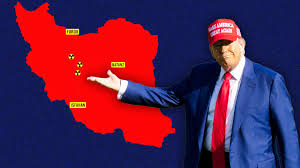
In analyzing the possible landscape of negotiations between Iran and the United States in Turkey, according to WANA News Agency, one key point should not be overlooked: Tehran does not see itself in a position of weakness.
From the Islamic Republic’s perspective, entering any form of dialogue comes after the Trump administration was previously forced into retreats that, at the international level, were widely perceived as a clear setback for Washington.
That said, expectations for a quick breakthrough or a comprehensive agreement remain low. At this stage, Iran’s primary objective is de-escalation—aimed at containing the psychological and economic effects of tension at home—while also opening a space in which the U.S. administration can navigate its current political situation without further escalation.
From Tehran’s viewpoint, negotiations are acceptable if they create a scenario in which the U.S. president can claim a symbolic victory through media maneuvering, without Iran crossing its own red lines. Failing that, the Islamic Republic considers itself prepared for a broader confrontation with the United States.
So far, developments have not unfolded in Washington’s favor. Even if an agreement were reached and the outcome amounted to a revised version of the JCPOA, it would still represent a form of defeat for Trump. He had previously abandoned a deal that was portrayed in Washington as “better,” only to find himself compelled to return to a framework that would be even more restrictive than before.
On the issue of enriched uranium, Iran’s policy has been reactive from the outset. Raising enrichment levels from 3.67 percent to 20 percent and later to 60 percent has been framed as a direct response to U.S. violations of its commitments, and Tehran has used this escalation as leverage.
According to official reports by the International Atomic Energy Agency (IAEA), only around 460 kilograms of Iran’s enriched uranium have been formally recorded—this at a time when, following the expulsion of inspectors, the Agency no longer has direct oversight of Iran’s nuclear activities. Some Western sources even claim the existence of additional, undeclared facilities in Iran that have yet to be identified.
Within this framework, even if Iran were to agree to remove or reduce its stockpile of uranium enriched above 3.67 percent, decision-makers in Tehran would argue that it has “lost nothing.” Iran’s true red line is the preservation of its nuclear program and enrichment capability, not the size of its current stockpiles. Highly enriched uranium has consistently been a bargaining tool, not an end goal.