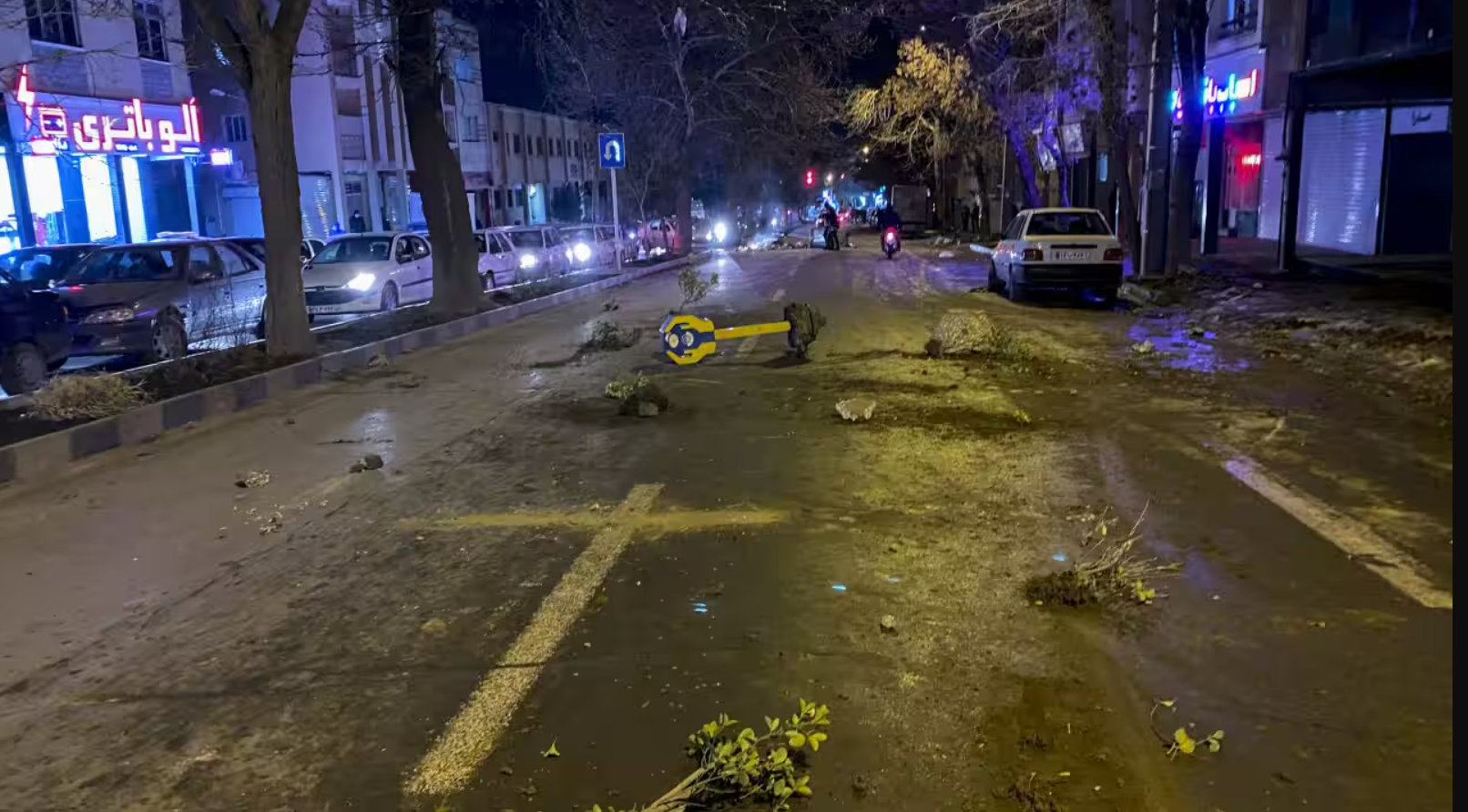
A special session of the UN Human Rights Council concluded Friday with the passage of a resolution condemning what it termed the “violent suppression” of protests in Iran. The resolution, stemming from recent economic demonstrations in Iran that escalated into violence and resulted in casualties, was approved by 25 votes, with 14 abstentions, and 7 opposed. Despite Iranian officials’ explanations regarding the involvement of Israel- and US-backed terrorist groups in instigating violence and forcing security forces to intervene, the resolution highlighted the Council’s continued human rights scrutiny of Iran and proposed extending the mandate of a fact-finding mission and special rapporteur to continue gathering information and issuing reports. Iran’s permanent representative to the UN in Geneva condemned the resolution as “politically motivated” and “completely devoid of genuine concern for human rights.” Iran Daily spoke with foreign policy expert, Mansour Haghighatpour, to delve into the implications of this development. He believes that Iran must define parallel human rights mechanisms under multilateral organizations of which it is a member to counter such actions, given the weakening of the UN agencies.
Mansour Haghighatpour, Iran Daily
IRAN DAILY: How do you assess the UN Human Rights Council’s performance regarding Iran? Considering the passage of this resolution against Iran and the Council’s track record with other countries, can it be said that the Council’s standing has been undermined by adopting double standards?
HAGHIGHATPOUR: This Council is not only undermined but has a truly ridiculous standing. These international organizations today are completely duplicitous, entirely partisan, and completely instrumentalized. It’s a shame to use the title of “human rights” for a Council where some who are not even truly human nor understand humanity want to comment on these rights, and whose commentary has no authenticity.
They don’t see the 70,000 victims in Gaza. They see the shooters, arsonists of mosques and religious centers, the killing of ordinary people in Iran, and they defend them. They don’t see the diminished rights of a nation in Venezuela. The president of a nation was taken from his home, near his family, and spirited out of the country, and the Council said nothing. But today, a group of knife-wielders, shouters, and mosque and Quran burners have become “human beings” in the eyes of this Council, who must be defended. This Council is a very laughable plaything and simply operates to serve the interests of the United States and Western colonial powers.
What repercussions do such actions have for the international order? What threats do they pose?
Such actions breed distrust in the international system regarding what the UNHRC claims to be, and no member of the international community has trust or confidence in it. This pushes the world towards unilateralism, where everyone plays whatever tune they want, and there is no credible and impartial international arbiter to be trusted.
What tools does Iran have at its disposal to counter such moves against it in international organizations? What other strategies can be considered to strengthen Iran’s position in this regard?
Iran should, in multilateral assemblies where it is a member – for example, Shanghai, BRICS, and the Organization of Islamic Cooperation (OIC) – strive to define parallel human rights mechanisms. Iran alone does not have a decisive weight in the world. While it rejects and condemns such resolutions in the media and statements, if it can define new mechanisms within larger, multilateral frameworks and foster a consensus in resisting such proxy movements in the world with member countries of those organizations, that would be a suitable countermeasure. Furthermore, to facilitate more coordinated response in the world, Iran certainly can cooperate with countries that voted against this resolution and assist them when statements against those countries are to be made at the international level.
What is your analysis of the role of European countries in proposing and approving this resolution? Can it be seen as a sign of a more hostile stance by Europe or just playing in the hands of the United States and Israel?
Not exactly. Iran’s enemies, led by the United States, are using all their tools but don’t want to become more discredited, so they put forward a few lightweight countries. This way, they can also display a broader scope of confrontation with Iran across the world. Although these countries appear to be the proposers, the United States certainly has a fundamental role in this process.