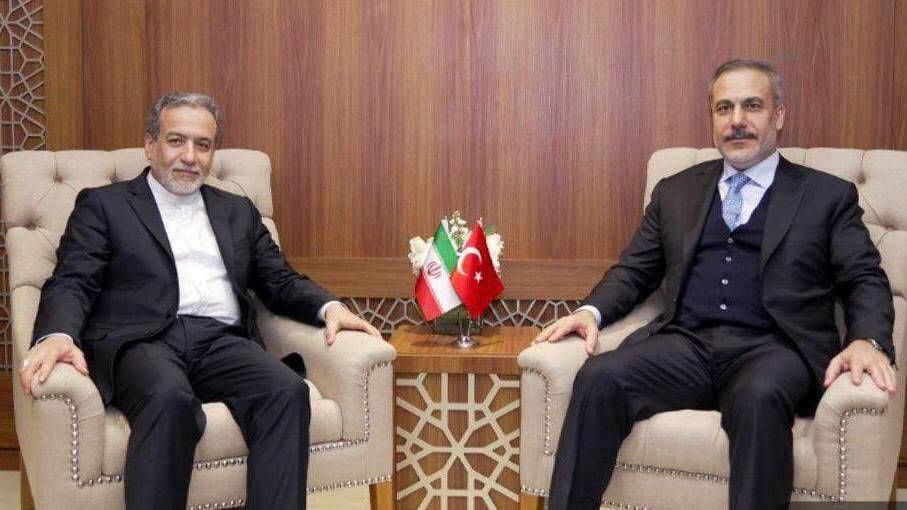
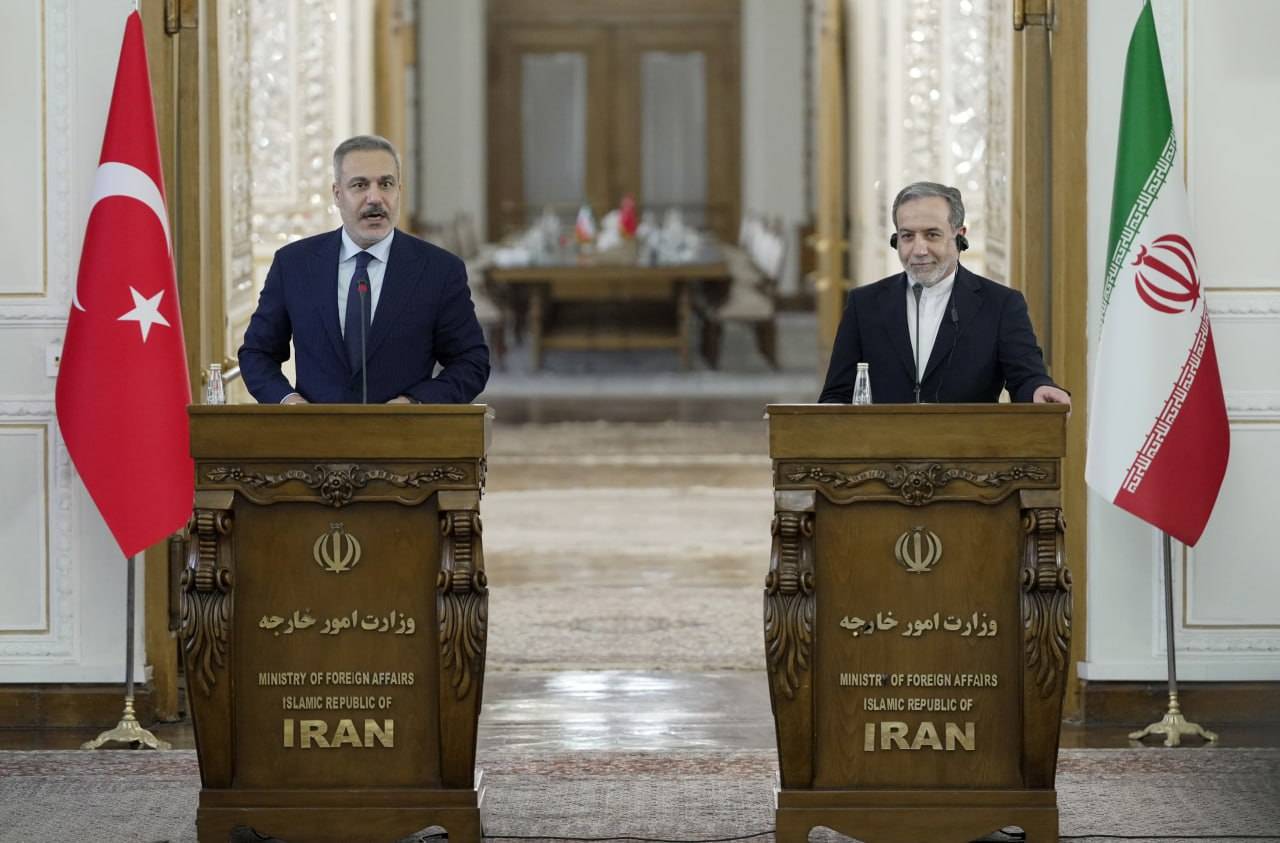
The visit of Hakan Fidan to Tehran is not merely a diplomatic appointment; it is a signal that Iran – Turkey relations are entering a new phase -one in which geopolitical rivalries, regional tensions, and the structural pressures of the international order are giving way to a more complex model of tactical cooperation, mutual deterrence, and a recalibration of West Asia’s security landscape. Tehran and Ankara now stand at a juncture that could reshape the balance of power in the Caucasus, Syria, Iraq, and the broader region in the months ahead.
IranView24 – Foreign Policy
Today’s visit by Hakan Fidan, Turkey’s Minister of Foreign Affairs, to Tehran can be interpreted within the framework of an ongoing “reconfiguration of the security and political architecture of bilateral and regional relations” between Ankara and Tehran—a process which, over the past two years, has managed to advance on a relatively stable and predictable path despite external structural pressures, numerous geopolitical ambiguities, and both overt and covert competition within spheres of influence.
The Governing Approach in Tehran–Ankara Relations
To understand the relatively stable trajectory of relations between Tehran and Ankara, it is essential to note that Iran and Turkey—distinct from most actors in the Middle East—manage their bilateral relationship through a paradigm of “managed competition” combined with “purposeful tension-containment.” This model, which blends realism with diplomatic pragmatism, enables both countries to:
-
pursue their national strategic interests and traditional spheres of influence without fundamental compromise;
-
while simultaneously recognizing, albeit implicitly, each other’s red lines and preventing the relationship from crossing into a phase of direct and irreversible confrontation.
This tension-management mechanism rests on three core pillars:
-
Maintaining high-level communication channels, even in periods of acute crisis;
-
Deliberately compartmentalizing competitive files (Syria, the Caucasus, Iraq, Kurdish issues) from areas of mutually beneficial cooperation (energy, trade, transit);
-
Employing multilayered diplomacy, in which competition in one domain is offset or balanced by compensatory cooperation in another.
Within this framework, Fidan’s visit to Tehran is more than a routine diplomatic engagement; it is an indication of the consolidation of this bilateral architecture against regional shocks—ranging from developments in Syria to tensions in the South Caucasus—and a joint effort to prevent proxy-driven crises from spilling over into the Tehran–Ankara axis.
2. The Architecture of Iran–Turkey Relations
As demonstrated in today’s meetings between the Turkish foreign minister and Iranian officials, the Tehran–Ankara relationship operates through a combination of four key layers:
1. Complementary Economies: Energy, Trade, and Transportation
At this level, the mutual economic needs of Iran and Turkey—particularly in energy, transit, and complementary markets—create a foundation of durable convergence. Iran, with its energy resources and strategic geography, and Turkey, with its logistical capacity and economic connectivity to Europe, function as two complementary actors within a shared regional framework.
Currently, approximately 26% of Turkey’s gas imports—around 10 billion cubic meters annually—are supplied by Iran. The long-term 25-year contract (expiring in 2026, with an option for extension) remains one of the central pillars of Turkey’s energy stability. For Tehran, the continuation—and potentially the expansion—of these exports not only ensures steady foreign-exchange revenue but also constitutes a significant strategic lever in Iran–Turkey relations.
Turkey is now Iran’s second-largest trading partner after China, and the volume of formal and informal exchanges between the two countries surpassed $14 billion in 2024. Mechanisms such as barter arrangements, financial swap channels through smaller Turkish banks, and the use of the lira and rial in settlement processes represent key economic pathways that enable Tehran and Ankara to mitigate the pressures of secondary banking sanctions.
Iran, by linking its railway infrastructure to Turkey (through the Razi–Kapıköy crossing and the ongoing Van–Tabriz–Rasht project) and by activating the North–South Corridor via Bandar Abbas and the Caspian Sea, aims to position itself as a critical node in both East–West and North–South transit chains. Turkey, for its part, cannot complete the “Middle Corridor” of the modern Silk Road -stretching through Kazakhstan- without cooperation with Iran.
This geo-transit synergy generates mutual, non-negotiable interests that, even at moments of peak political tension, act as a buffer preventing any structural rupture in the bilateral relationship.
2. Divergences and Tactical Convergence in Regional Files
The dossiers of Syria, Iraq, and the Caucasus constitute the primary arenas of geopolitical competition between Iran and Turkey. Yet, unlike the hostile and zero-sum models seen elsewhere in the region, this competition has remained manageable, with communication channels consistently kept open.
The South Caucasus is the most challenging file in Tehran–Ankara relations. Following the Second Nagorno-Karabakh War (2020) and developments surrounding the Zangezur Corridor, Turkey has sought to solidify the Baku–Ankara axis and secure a direct route to the Caspian Sea and Central Asia. Iran, however, has declared any alteration of geopolitical borders—particularly any disruption of its territorial connection to Armenia and, by extension, to Europe—as a national security red line. Despite this strategic divergence, both countries rely on a mechanism of parallel diplomacy and controlled pressure, preventing escalation into open confrontation.
In the Syrian file, the landscape is undergoing rapid transformation. Since December 2024—when Turkey regarded the collapse of Bashar al-Assad’s government as a strategic victory over Iran—Syria has paradoxically turned into a high-risk Achilles’ heel for Ankara. While the presence of Assad had ensured Turkey that Israel would not directly encroach into northern Syria, the new government in Damascus has shown limited capacity or willingness to resist Israeli expansionism. As a result, Israel is incrementally becoming a direct neighbor of Turkey, a development Ankara views as a significant strategic threat.
Consequently, the potential for tactical cooperation between Iran and Turkey regarding Syria has increased considerably. This evolving coordination is likely to extend into the Iraq file and the broader South Caucasus, signaling a shift from pure competition to calibrated collaboration where the security interests of both states intersect.
3. The Added Layer of Influence Competition in the Cultural–Security Geography
Iran possesses political and security instruments of influence across Shi’a communities and within the Axis of Resistance. Turkey, by contrast, leverages a combination of soft power, political currents aligned with Ankara, and economic depth. These two influence models do not necessarily collide in all arenas; in several cases, they function as a form of “soft division of labor.”
Nevertheless, Ankara’s emphasis on pan-Turkic policies in areas adjacent to Iran -and its rhetorical targeting of Iran’s Azeri-speaking population- has become a persistent source of mistrust between Tehran and Ankara.
4. Shared Perception of Structural International Pressures
The intensifying U.S.–China rivalry, the redefined role of Russia after the Ukraine war, and the unstable security environment in West Asia have pushed both Tehran and Ankara toward recalibrating relations with their neighbors. One dimension of Fidan’s visit can be analyzed precisely within this broader structural context.
Notably,, despite Turkey’s membership in NATO, Ankara’s relationship with the West lacks organic cohesion and has therefore remained an object of continuous security hedging in Western capitals. Over recent decades, Turkey has been characterized in Western strategic thinking as an “unreliable independent variable”, prompting the United States and Europe to adopt various deterrent, managerial, and at times restrictive policies aimed at preventing Turkey from evolving into a fully autonomous regional power or a potential disruptor of Western security architecture.
These dynamics have pushed Ankara toward greater diversification in its foreign policy orientation and expanded tactical engagement with independent regional actors—including Iran.
Conclusion
From Iran’s perspective, Hakan Fidan’s visit signals the transition of bilateral relations from a phase of uncertainty to one that is more manageable, predictable, and politically and strategically beneficial.
Despite persistent areas of competition, the architecture of Tehran–Ankara relations now rests on three principal pillars:
-
Mutual economic–energy interdependence
-
Sophisticated management of geopolitical files
-
Strategic use of international structural gaps
While this does not constitute a strategic alignment between the two states, it yields an important outcome for Iran: under current regional and international conditions, Iran and Turkey function less as threats to one another and more as components within each other’s mechanisms for managing environmental risks. Fidan’s visit underscores the consolidation of precisely this model.