
The Secretary of the Strategic Council on Foreign Relations has stated that the consultations of the country’s highest security official regarding the negotiations are highly significant, reassuring, and confidence-building, and will have a positive impact on the future of the talks.
Tehran – IranView24
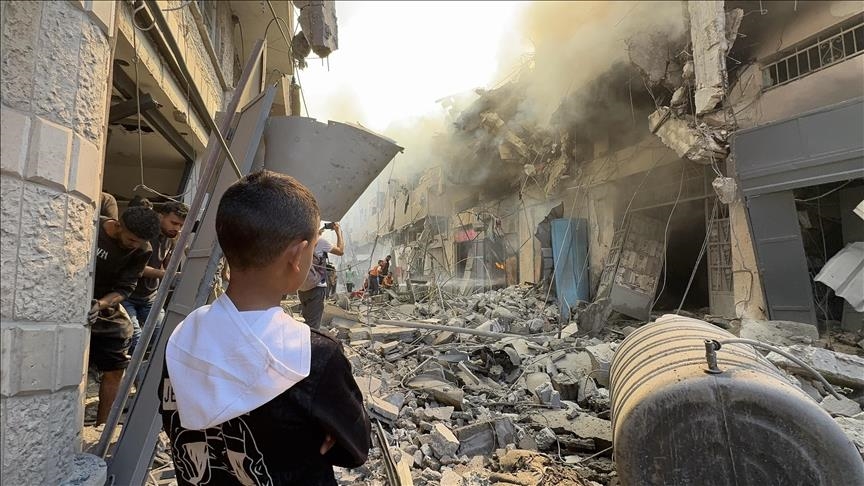
The new round of negotiations between Iran and the United States was held last week in Muscat, facilitated and mediated by Oman. This occurred while the United States had previously breached its commitments at the beginning of this year during ongoing talks between Tehran and Washington, and in alignment with the Zionist regime, conducted a 12-day imposed war against Iran. Seven months later, after the Americans failed to achieve their objectives—particularly in their military operations—the issue of negotiation was raised again. In this regard, Iran’s Foreign Minister, during his visit to Muscat for nuclear and sanctions-lifting talks, met with his Omani counterpart and, referring to the Islamic Republic’s approach of utilizing diplomacy to secure national interests, emphasized full readiness to defend national sovereignty and security against any excessive demands or adventurism.
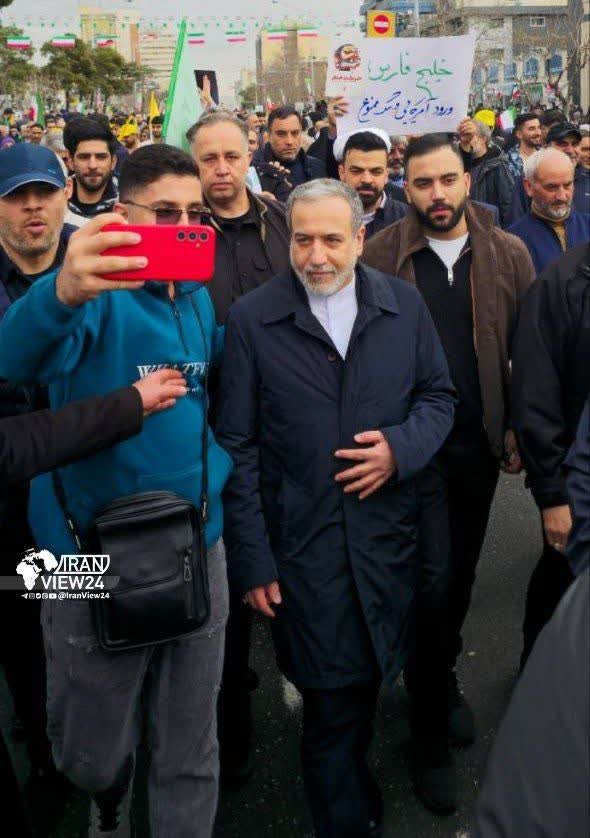
On Friday, February 6, 2026, a new round of indirect talks between Tehran and Washington took place in Muscat. At the end of this round, Foreign Minister Seyed Abbas Araghchi described it as a “good start.” Furthermore, U.S. President Donald Trump remarked that Iran is now “more ready” for an agreement with the United States, claiming to reporters: “They are willing to do much more than they were a year and a half ago or even a year ago.” The U.S. President called the consultations “very good” and stated they would continue “next week.” Ultimately, after this first round, both Iranian and American delegations expressed hope for the continuation of the dialogue.
Analysis of the Deception Operation and Increased Mistrust
Jalal Dehghani Firoozabadi, Secretary of the Strategic Council on Foreign Relations, stated in an interview with ISNA that the conditions of the current negotiations are fundamentally different from previous ones because “we have experienced a 12-day war, which makes dialogue extremely difficult.” He noted that negotiating with an entity that has attacked you makes the psychological and political atmosphere of the talks heavier, with the most significant impact being the intensification of mistrust toward the United States. He clarified that after the first Muscat talks, when everyone expected diplomacy to prevent war, the attack by Israel and then the U.S. led to those negotiations being dubbed a “deception operation.” He warned that “we must be careful that those conditions do not repeat.”
The Professor of International Relations at Allameh Tabataba’i University stated: “Diplomacy does its job, and military forces do theirs; neither should wait for the other.” While diplomacy is deterrent and seeks to prevent war, he emphasized that the primary deterrence is created by military force, calling them “two sides of the same coin.” He pointed out that the most significant operational difference today is that in the first Muscat talks, the Americans believed they could achieve their goals through military force if diplomacy failed—which led to their attack on our nuclear facilities—but today, that experience has failed. He stressed that Trump constantly claims Iran cannot have nuclear weapons and alleged during and after the war that Iran’s facilities were destroyed; “Well, if they were destroyed, what is he planning to attack?”
No Military Solution for the Nuclear Program
Firoozabadi emphasized that it has been proven to the Americans that Iran’s nuclear program has no military solution. He noted that even during the era of George W. Bush, this discussion existed. “They attacked and have now returned to the negotiating table… I hope the Americans have learned their lesson; if this issue is to be resolved, the only way is diplomacy.” He described the relationship between field operations and diplomacy as “armed diplomacy,” asserting that diplomacy must be accompanied by military readiness.
He further noted that the fact that Americans were willing to negotiate is an achievement for Iran. According to the Foreign Minister, the first round was mainly for determining the framework, principles, roadmap, and explaining red lines. “Certainly, the parties have not yet entered substantive and detailed negotiations.” He analyzed Ali Larijani’s visit to Oman in this context, stating that in international relations, one must prepare for the worst-case scenario while examining others.
U.S. Military Buildup: Bargaining or War Strategy?
Addressing the current atmosphere of mistrust, Firoozabadi noted that while the U.S. claims it lacks trust, it is Iran that is truly distrustful because it was the U.S. that launched a military action during previous talks. He mentioned two hypotheses regarding the U.S. military buildup in the region: one, that it is part of a bargaining process to reach a deal, and two, a pessimistic view that negotiations are part of a war strategy to prepare the ground for action. He suggested the reality might lie between the two. He also reminded that there was no agreement firmer than the JCPOA, yet Trump withdrew from it, proving that “national power is the only true guarantee.”
Regional Dynamics and the “Common Evil”
Regarding the role of regional countries, he stated that while many believe cooperation creates deterrence, countries like Türkiye and the Persian Gulf Arab states are mediating to prevent war for their own interests, not Iran’s. “War is detrimental to everyone… everyone is working to repel a ‘common evil’.” He highlighted that Arab countries have realized they have been acting as a “shield” for Israel’s security, paying the costs for it, and have now concluded that they should not bear the burden of Israel’s security expenses. He added that since the 12-day war, Arabs have realized Iran’s value as a strategic balancer; “The weakening of Iran means the strengthening of Israeli hegemony.”
Firoozabadi clarified that in the 12-day war, Iran showed restraint for the sake of regional countries, but if aggression repeats, “restraint will be very difficult.” He warned that any attack on Iran means a regional war, as Iran would inevitably have to retaliate, including targeting U.S. bases in the region.
The Significance of Larijani’s Diplomatic Mission
On Oman’s role, he noted that Iran has concluded it can trust Oman as a neutral mediator that does not seek to build prestige at Iran’s expense. Regarding Ali Larijani’s visit to Oman and Qatar, he stated it serves multiple purposes: first, to confirm and strengthen Iran’s positions declared by the Foreign Minister and reinforce red lines, signaling that the Foreign Minister has the full authority of the system. Second, it shows Iran is serious about a diplomatic solution, strengthening the negotiators’ hand. Third, Larijani likely received the U.S. response to Iran’s initial proposals and discussed regional developments. He concluded: “Success depends on the U.S. acting realistically and abandoning bullying… and most importantly, not prioritizing Netanyahu’s interests over U.S. national interests.”
The Absence of Europe and Strategic Autonomy
Regarding the absence of Europeans, Firoozabadi stated that “Europeans removed themselves,” especially regarding the Snapback mechanism. He argued that Europe has shown it lacks “strategic autonomy” and cannot act independently of the U.S. He noted that even after the U.S. withdrawal from the JCPOA, Europe failed to act independently, and the German Chancellor played a “very negative role” in the Snapback issue. He stated that while Iran did not remove them, the Europeans’ recent non-constructive positions have sidelined them.
Relations with Russia and China
Addressing Iran’s strategic partners, he noted that every country pursues its own interests. He explained that part of U.S. policy toward Iran is defined within the strategy of “containing China,” just as Trump’s stance on Russia in the Ukraine war is an attempt to distance Moscow from Beijing. He stated that China and Russia realize that Iran’s resistance is important for them, with some seeing Iran as China’s “western defense wall” against the West. He concluded by warning that if war breaks out, the Strait of Hormuz will be closed, which would harm China more than anyone. Regarding expectations, he stated it is unrealistic to expect China and Russia to fight the U.S. for Iran as there is no mutual defense treaty, but this does not negate the strategic assistance they provide in rebuilding Iran’s deterrence and defense capabilities.