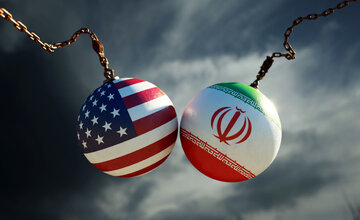
In Washington, there remains a persistent temptation to treat a confrontation with Iran as a modular option. Limited strikes, punitive operations, calibrated actions aimed at restoring deterrence without altering the broader strategic balance. That logic has proven effective in other contexts, but with Iran, it is increasingly less so. A US attack on Iranian territory would not be interpreted as a discrete operation or as another episode in a long-standing rivalry. It would be read as a strategic rupture: the moment when the accumulated power of the United States in the Middle East begins generating adverse effects that reinforce one another.
Xavier Villar, Tehran Times
This is not a moral argument, nor a humanitarian plea. It is not an ideological defense of Tehran. It is a matter of strategic accounting. The question is not whether the United States can strike Iran. Technically, it can. The question is what it begins to lose the moment it decides to act.
Recent statements by senior Iranian officials should be read in this context. When Tehran warns that any attack will be treated as total war, it is not establishing precise operational red lines, nor signaling incremental escalation. It is eliminating an analytical category: the notion of a limited strike ceases to exist as a credible option. This position does not stem from bellicosity, but from decades of strategic management in a hostile environment, in which the Islamic Republic has maintained security through calculated prudence.
For years, Iran has relied on indirect deterrence, asymmetric influence, and careful escalation management as instruments of risk control. Restraint has been a deliberate and sustained choice, designed to project capacity and resolve without compromising operational flexibility. This approach has allowed Tehran to build a resilient set of capabilities, capable of absorbing shocks, deterring aggressors, and maintaining relative stability under persistent pressure. The current strategic clarity seeks to replace the ambiguity that once allowed shocks to be absorbed without triggering major escalations. It is not about provoking conflict; it is about precisely defining the consequences of any external action.
The inversion of the regional balance
For decades, the United States has not treated Israel merely as a political ally. It has integrated it as an advanced platform for power projection—a logistical, technological, and intellectual node that amplifies the effectiveness of US presence in the Middle East. This base has functioned as a control center from which intelligence is coordinated, indirect operations are planned, and regional influence is projected at relatively low cost.
A war with Iran would alter this equation. Tehran’s response would not be oriented toward symbolic gestures or theatrical displays. It would be designed to generate cumulative operational effects. Its objective would not be damage for its own sake, but to undermine the reliability of Israel as a platform from which the United States projects power. Sustained pressure on critical infrastructure, transport networks, economic activity, and civilian life would have consequences that extend beyond immediate impact. Israel would cease to function as a strategic multiplier and become a net absorber of resources. The United States would not project power from Israel; it would have to redirect power to maintain its operational viability.
This shift has broader implications. At moments of maximum strategic demand, Washington would find its most valuable regional platform compromised—not through a single defeat, but through a progressive inversion of priorities. Deterrence would not be restored; it would become costlier and less reliable. Layered atop this is a doctrinal asymmetry: while US military power is designed to impose outcomes through technological superiority, speed, and concentration, Iran has structured its strategic approach around endurance. In a protracted conflict, it would avoid direct confrontation on terms favorable to Washington, instead betting on time, dispersion, and the gradual accumulation of costs.
Once engaged, the United States faces a structural dilemma. Withdrawal would incur a high reputational cost. Remaining would produce a gradual erosion of capability. Every escalation deepens commitment; every deployment reduces forces available elsewhere. This is not a conventional defeat, but sustained, silent attrition. Historical experience demonstrates that this form of wear is often more corrosive than visible losses. Iran’s strategy of persistent resistance transforms patience into an advantage and predictability into a constraint on the adversary’s options.
Systemic costs and external consequences
The economic implications of a conflict with Iran would be profound. It would not be funded through shared fiscal sacrifice, but through borrowing and monetary expansion. Predictable consequences include inflationary pressure, higher energy costs, and a diversion of capital from productive investment to military expenditure. The cumulative effect would be a weakening of the domestic core required to sustain peripheral commitments—a pattern that rarely produces lasting stability and has repeatedly appeared in the history of great powers attempting to maintain distant hegemony.
At the same time, such a conflict would reorder global strategic priorities. While the United States concentrates attention and resources in the Middle East, other actors gain strategic space. China, in particular, would benefit from the redistribution of focus: every missile expended in the Persian Gulf is one less available in Asia; every naval group committed is one removed from the balance in the Pacific. Systemic competition is altered without China firing a shot.
Moreover, a strike against Iran would be perceived globally not as a bilateral conflict, but as a reaffirmation of force as Washington’s primary instrument. That perception would generate diffuse pressures on US interests across multiple theaters, persistent and cumulative. The threat would not be in immediate magnitude, but in dispersion and constancy. The United States would face an environment where its very presence becomes a catalyst for attrition, a scenario of structural erosion rather than direct confrontation.
Ultimately, power rests on credibility. If the United States initiates a war, it cannot conclude, fails to secure key trade routes, and exports economic instability to its allies, and confidence erodes. Partners diversify; competitors probe limits. The central question is not immediate military capacity, but the cumulative effect on America’s relative position in the international system.
The conclusion is subtler than often portrayed, but no less consequential. The principal risk to U.S. influence does not stem from Iran’s capabilities alone, but from the miscalculation of a state that has long mastered strategic patience and resilience. Any decision to confront Tehran militarily would not be a mere tactical error; it would represent a deliberate strategic gamble against a system designed to absorb shocks, impose cumulative costs, and safeguard regional equilibrium. The result would not be an immediate catastrophe for either side, but a protracted sequence of attritional pressures, gradual, systemic, and difficult to reverse, that would ultimately test the credibility, focus, and operational reach of the United States.
This is not ideology. It is a strategic autopsy written before the outcome. An attempt to understand how a technically feasible decision can accelerate dynamics that ultimately redefine the balance of power it was intended to preserve. Prudence and clarity in planning, risk perception, and management of conflict duration are determinants that exceed the sum of military capabilities or force deployments. In this sense, Iran’s strategy rests on the logic of protracted resistance, where patience and operational consistency become instruments of relative stability under external pressure.