
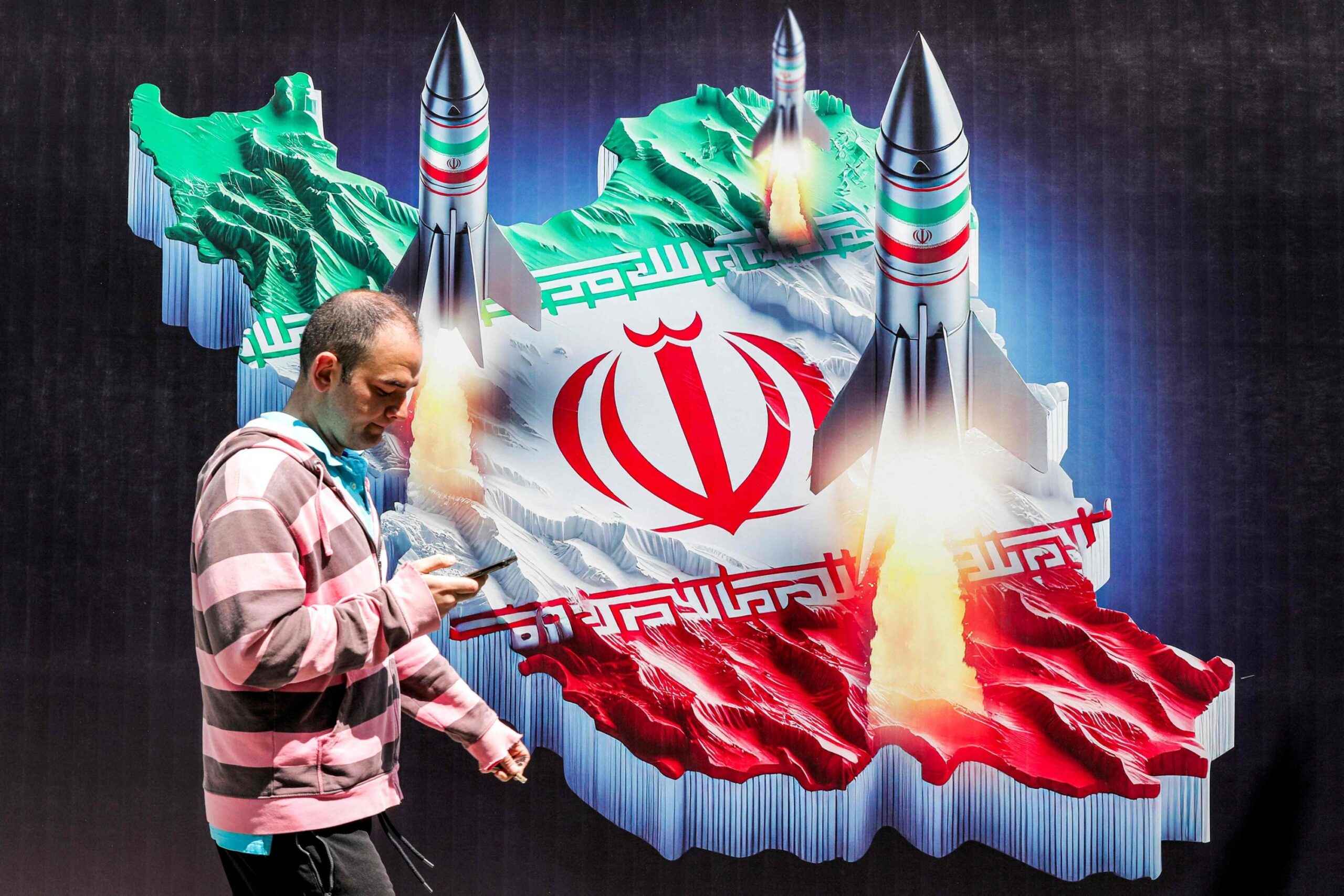
The claim circulated in Zionist media about Iran moving toward a “fourth-generation nuclear weapon” is an Israeli attempt to redefine the threat—an effort to shift the file from the level of worn-out dossiers to that of civilizational, future-oriented threats.
Tehran-IranView24
The allegation raised by Israeli sources—that prior to the U.S.–Zionist imposed war last summer Iran examined the concept of a “fourth-generation nuclear weapon” based on pure fusion—is less a technical report or an intelligence disclosure than part of a targeted narrative-shaping operation. The appearance of this claim in outlets such as Yedioth Ahronoth, and its recirculation by the hostile network Iran International, underscores that it should be analyzed within the framework of Israel’s narrative war to redefine the Iranian threat—a war aimed not at proving a scientific reality, but at reshaping the perceptions of Western-Arab and Zionist political and security audiences, and even the global audience, through new and ambiguous concepts. In explaining this narrative line, several of its perceptual effects can be highlighted.
1. Shifting the Level of Threat: From “Breach of Commitments” to “Civilizational Threat” In past years, Israel’s primary narrative about Iran’s nuclear program has revolved around “violations of commitments,” “advances in enrichment,” and “approaching breakout.” Raising the concept of a “fourth-generation weapon” is considered as a narrative leap: transferring the case from the threadbare dossier of enrichment percentages to the level of a civilizational, future-oriented threat that is the first signal in the new wave of newsmaking about Iran’s alleged pursuit of the unknown technology of a “fourth-generation nuclear weapon.”
By highlighting this concept, Yedioth Ahronoth seeks to extend the issue from Iran’s conventional and missile capabilities to a new alleged threat, portraying Iran not as an actor on the verge of noncompliance, but as a country “crossing the known rules of deterrence.” This shift has a direct function: alongside justifying the U.S. breach of commitments in nuclear negotiations with Iran—reported recently by U.S. media as deliberate—it can serve as a pretext for any kind of new warmongering or aggressive action outside accepted international frameworks by the U.S.–Zionist alliance.
By highlighting this concept, Yedioth Ahronoth seeks to extend the issue from Iran’s conventional and missile capabilities to a new alleged threat, portraying Iran not as an actor on the verge of noncompliance, but as a country “crossing the known rules of deterrence.” This shift has a direct function: alongside justifying the U.S. breach of commitments in nuclear negotiations with Iran—reported recently by U.S. media as deliberate—it can serve as a pretext for any kind of new warmongering or aggressive action outside accepted international frameworks by the U.S.–Zionist alliance.
2. Producing Controlled, Non-Falsifiable Ambiguity: A key feature of Israeli reports, including Yedioth Ahronoth, is the presentation of vague and even imaginary details that are neither verifiable nor readily deniable or answerable. In this style of allegation—one with ample precedent on the Zionist side—no concrete evidence is offered, nor are specific institutions or projects named. This informational void is not accidental; it is part of the “controlled ambiguity” technique in narrative warfare.
In this model, the claim is grand enough not to be ignored by curious audiences, yet sufficiently vague to make categorical denial difficult. The result is the creation of a space of “strategic doubt” in public opinion and among Iranian decision-making institutions regarding how to respond—a space that raises the cost of caution and gives Israel greater latitude to exert political and security pressure on American and European allies to intensify pressure on Iran.
In this model, the claim is grand enough not to be ignored by curious audiences, yet sufficiently vague to make categorical denial difficult. The result is the creation of a space of “strategic doubt” in public opinion and among Iranian decision-making institutions regarding how to respond—a space that raises the cost of caution and gives Israel greater latitude to exert political and security pressure on American and European allies to intensify pressure on Iran.
3. Recasting Iran’s Scientific–Military Image as “Unpredictable”: In public discourse, “pure fusion” is associated with extremely advanced and even science-fiction technologies. The use of this term, deliberately or otherwise, places Iran in the position of an actor not merely developing weapons, but redefining the rules of military technology and altering deterrence equations.
Through this narrative, Yedioth Ahronoth attempts to elevate Iran’s image from a rational, calculating actor to an “unpredictable” one—an image that is far more threatening to Western audiences than a classic nuclear program and that can be used to justify Israel’s aggressive and war-provoking plans.
In fact, this report should be seen as part of the media complement to the battlefield. From this perspective, Yedioth Ahronoth is not merely a media outlet, but one of the tools for shaping the “perceptual environment” ahead of major security decisions.
Through this narrative, Yedioth Ahronoth attempts to elevate Iran’s image from a rational, calculating actor to an “unpredictable” one—an image that is far more threatening to Western audiences than a classic nuclear program and that can be used to justify Israel’s aggressive and war-provoking plans.
In fact, this report should be seen as part of the media complement to the battlefield. From this perspective, Yedioth Ahronoth is not merely a media outlet, but one of the tools for shaping the “perceptual environment” ahead of major security decisions.
Conclusion
The claim that Iran has examined a “fourth-generation nuclear weapon” is less an exposure of a real program than the construction of a new narrative threat—one that, through exaggeration, ambiguity, and future-fear rhetoric, seeks to tilt the perceptual balance in Israel’s favor. Understanding this pattern is essential for Iran, because responding to such claims is not merely a technical matter or a simple denial; it requires a counter-narrative strategy and active management of international public opinion.